
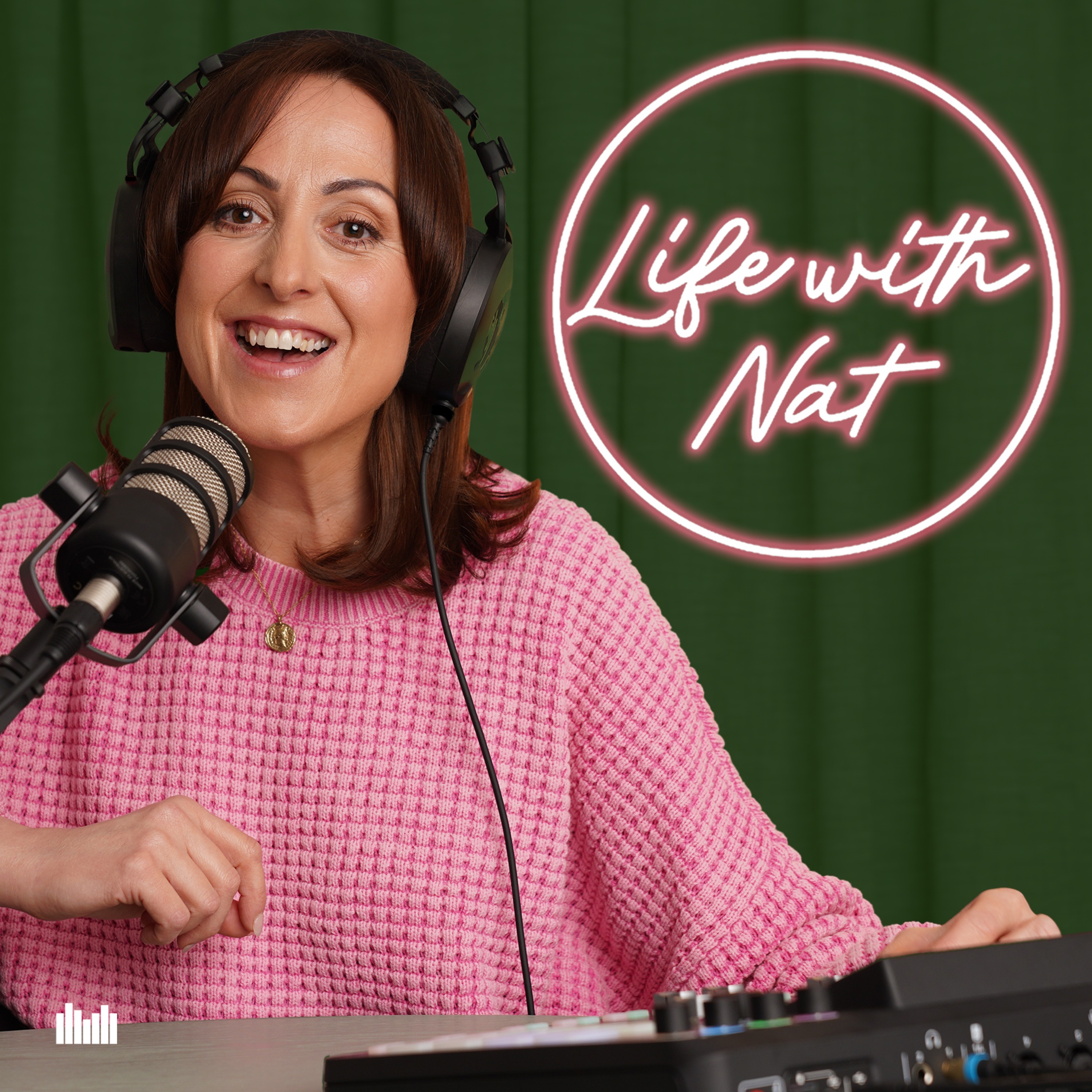
In this bonus episode of Life with Nat, Natalie Cassidy is joined by Gabi Field from Great Ormond Street Hospital Charity to discuss the Build It Beat It appeal, which aims to raise £300 million for a new Children's Cancer Centre. Nat's close friend Abi also joins to share her daughter Arianna's experience of being treated for high-risk neuroblastoma at GOSH, and explains why the new centre will be life-changing for families.
Topics children's cancer research, Great Ormond Street Hospital, Build It Beat It appeal, neuroblastoma treatment, childhood cancer funding, GOSH fundraising, cancer centre build
Mentioned in this episode Gabi Field
Chapters
- 0:02:04 Nat and Abi catch up
- 0:04:30 Introducing the Build It Beat It appeal
- 0:05:16 Arianna's diagnosis and time at GOSH
- 0:11:03 What the new Children's Cancer Centre will offer
- 0:19:57 Arianna's full treatment journey
- 0:27:02 How to get involved and donate
- 0:33:30 Underfunding of children's cancer research
Partner with Natalie Cassidy’s Life With Nat
Natalie Cassidy’s Life With Nat is produced by Audio Always. We work with brands on sponsorship, advertising and partnerships across our network of podcasts, reaching engaged listeners and viewers.
Advertising categories Children's Health, Cancer, Running And Jogging, Eldercare
Show notes
Two incredible guests join Nat for this bonus episode.
The first is Gabi Field from Great Ormond Street Hospital Charity, speaking today about the importance of the charity’s Build it. Beat it. fundraising appeal, which is raising vital funds for a new Children’s Cancer Centre at Great Ormond Street Hospital.
The second guest is Nat’s very dear friend Abi, who some may recognise from episode two of Natalie Cassidy: Caring Together. Abi is also the mother of Joanie’s bestie Arianna. Arianna was diagnosed with Neuroblastoma at 5 years old, and Abby has first-hand experience of what it’s like to need the medical services GOSH have on offer, knows the pressure of spending lots of time in the building whilst that happens, and knows how important this new building will be to help beat cancer for more children.
To support the Build it. Beat it. campaign or find out more about GOSH Charity, visit – www.gosh.org
Follow Arianna’s journey www.instagram.com/ariannatherealwonder
Solving Kids Cancer charity, which Nat is an ambassador of www.solvingkidscancer.org.uk
Get in touch with Nat, buy tickets for upcoming live shows and find the family on Instagram: https://lifewithnatpod.komi.io/
Hosted on Acast. See acast.com/privacy for more information.
Full transcript
Natalie Cassidy 0:02:04 Hello and welcome to Life with Nat on this very, very special Wednesday where I am doing a lovely bonus episode all about Ormond Street Hospital and an amazing fundraising appeal that they've got going on. But firstly, I am joined by a dear friend of mine, lovely Abi. Hi. You all right? I'm good. Why haven't we done this before, actually? It's mad that I've been doing this for 2 years and you've not been in here.
Abi 0:02:47 I just think you are to blame. I just don't think that that's down to me.
Natalie Cassidy 0:02:52 It is actually not true.
Abi 0:02:53 You did invite me once, but I can't remember why I couldn't do it. I don't, I can't remember.
Natalie Cassidy 0:02:57 I can't remember. But all is good, yeah?
Abi 0:03:00 Yeah, yeah. Good.
Natalie Cassidy 0:03:00 I feel like our lives are very, very busy and we haven't been together for ages. Always. So we need to get a nice date in the diary for an evening.
Abi 0:03:08 Yeah, we do.
Natalie Cassidy 0:03:09 Me and Rach, nice catch up.
Abi 0:03:11 We say that, but then we book it in and then it's done. So we just need to actually book it in the diary.
Natalie Cassidy 0:03:15 I know, but what about when the birthday present you got me took about 2 years to do?
Abi 0:03:20 Yeah, literally. Basically a birthday present to do this colour therapy. It was a really cool idea. Yeah. And I think it was like her following, your following birthday that we actually done it. I'm sorry about that. No, it's fine. But no, it wasn't even just you. I mean, it was mainly you. It was mainly me. Absolutely. Yeah.
Natalie Cassidy 0:03:36 What was funny about the colour therapy is both of us, it was really good, wasn't it? Yeah, yeah, it was wicked. We chose our colours, found out what suits us and whatever, and then a week later we're both wearing black again. It was really good. It really was.
Abi 0:03:55 We really listened to that advice not to wear black.
Natalie Cassidy 0:03:57 Really worth the afternoon of colour therapy. Don't wear any colours that the lady told me to wear, to this day.
Abi 0:04:04 Same, same.
Natalie Cassidy 0:04:05 Oh dear. So we are here to talk about GOSH, Great Ormond Street Hospital, and joining us is lovely Gabby.
Abi 0:04:14 Hello.
Natalie Cassidy 0:04:15 How are you?
Abi 0:04:16 Good, thank you.
Natalie Cassidy 0:04:17 Welcome to the pod, welcome to my house.
Abi 0:04:19 Thank you for having me, I'm very excited to be here. It's a pleasure.
Natalie Cassidy 0:04:22 Very, very pleased, and you've come a long way, so it's much appreciated. You are very welcome. So, how did this come about then, us doing this pod? You tell me.
Gabi Field 0:04:30 So, at the moment, at Great Ormond Street Hospital, we are halfway through our biggest ever fundraising appeal, which is called the Build It Beat It appeal. So, we're building the new Children's Cancer Centre, the world-leading Children's Cancer Centre at Great Ormond Street Hospital. And I'm here to talk a bit more about that today, as well as Abi talking a bit about that today too.
Abi 0:04:51 Yeah.
Gabi Field 0:04:52 And to bring to light what we're doing, why we're doing it, and the importance around supporting more children who are experiencing cancer.
Natalie Cassidy 0:04:59 Absolutely fantastic. And the reason we're sat here is, Abi, you've had an experience which no mother would ever want. And, you know, you've got firsthand experience of how important this cancer centre will be.
Abi 0:05:16 Yeah, massively. There's so much that when we was fully within that, and just, I don't, we've not kind of introduced that to my daughter. No, absolutely. Arianna, she's now 10, but when she was 5, she was diagnosed with high-risk neuroblastoma, and we went through 2 years of pretty intense treatment, and predominantly at Great Ormond Street Hospital. That was like our second home, quite literally our second home.
Abi 0:05:38 We were there sometimes more than even being at home. So it is, yeah, such an important appeal that we're doing, and there's just so much that you can get out of what is being built at the moment. And went there obviously a couple of weeks ago actually, and you can see, I mean, it's all covered, isn't it? Yes. It's all completely like hidden and covered.
Natalie Cassidy 0:05:56 Whereabouts is it? Because obviously I've been down to the building when I was visiting you and visiting Arianna. So where is it? Where's it?
Gabi Field 0:06:02 It's right in the front entrance. So the whole front building has come down.
Natalie Cassidy 0:06:05 Okay.
Gabi Field 0:06:06 So we took all that down, that came down last June.
Natalie Cassidy 0:06:08 Right.
Gabi Field 0:06:09 And they're building the foundations at the moment, and then the build will happen over the coming years.
Natalie Cassidy 0:06:13 Wow.
Gabi Field 0:06:13 Set to open in about 3 years' time.
Natalie Cassidy 0:06:16 2030 then, roughly? Yeah, 2029.
Abi 0:06:18 2029, okay.
Abi 0:06:19 Yeah, yeah, so yeah, the front of the building. What I think's really cool is Ariana and a few other children have been, not chosen, 'cause they weren't chosen, but they, we had to apply and whatnot, but they are helping like design like elements of it. So Ariana helped design the entrance, which is so cool. She literally got to like do some drawing designs and they spoke to, I think there's about 5 other children there, and Maya as well. Yeah.
Abi 0:06:41 One of my other daughters was there as well, just helping with the colour designs and what would, like the whole walkthrough on the entrance, like what would kind of make them excited to go to the hospital.
Natalie Cassidy 0:06:51 And what a fantastic idea to do that, to see it through a child's eyes, especially a child that has been within that environment for 2 years and over. Yeah. And to know what she would've liked to see.
Gabi Field 0:07:05 It's an important part of the hospital, actually, the co-production and everything that we do with children that have experienced being in Great Ormond Street Hospital, and parents as well. And the point of the Children's Cancer Centre is that it's gonna be child-centred. And so, actually, getting Arianna and other children involved in helping us to understand what is really needed, and parents, is really important as part of the design itself.
Natalie Cassidy 0:07:26 Yeah. So, obviously, Arianna and Joni are besties, and For listeners, you may have seen Abi. If you've watched my BBC documentary, Natalie Cassidy: Caring Together, Abi is in episode 2 with me, where I go on my placement with community nurses. And we, obviously you were in the doc with me, and you were brilliant, by the way.
Abi 0:07:49 Oh, really? Yeah. Thank you. Did you enjoy it? I loved, absolutely loved watching it. Yeah. I watched it with all my kids, and actually my 5-year-old, 'cause all of them watched it with me, but my 5-year-old was so into it. She woke up the next morning and was like, I wanna carry on watching the nurses. Natalie Cassidy Show. Bless her. Like she didn't know who you were, do you know? Like, it was so cute. But no, we loved it. It was like absolutely brilliant.
Natalie Cassidy 0:08:13 I just think it's, it was a lovely show to do to highlight care. Yeah. In general.
Abi 0:08:17 So important.
Natalie Cassidy 0:08:18 And it being Carers Week last week, you know, it's just lovely. It's so good that we're doing this. It just all ties together. It feels really good. Yeah. I've actually got a voice note from somebody which is really special that I'd like to play now for you.
Abi 0:08:30 Hi Nat and Gabby, this is Susie from Hitchin, Hertfordshire. I just wanted to say that this new leading children's cancer research building at Great Ormond Street is going to be incredible. I was a carer for a delightful family whose daughter had a brain tumour. She unfortunately did pass away from the brain tumour a couple of years ago, and I was doing a lot of her education and care for her simply just at side on the wards when she wasn't able to attend school, and this centre would have been absolutely life-changing. We did actually start fundraising for this during her stay, her final stay at Great Ormond Street, and I could see how much it would benefit the staff and the children and the families and the carers and the grandparents on the wards.
Abi 0:09:23 I really can't wait to see this come to fruition, and I just hope that everybody listening can find a pound or help contribute in some way, even just reading about it, because it really is going to be life-changing for so many people.
Speaker K 0:09:37 Keep up the great work. Lots of love.
Natalie Cassidy 0:09:39 Oh, isn't that lovely?
Abi 0:09:41 That's so sweet.
Natalie Cassidy 0:09:41 Thank you, Susie. Thanks so much. And you're an angel for being a carer.
Abi 0:09:45 For what she does, yeah. Yeah, definitely.
Natalie Cassidy 0:09:47 So tell me more about the centre, because obviously I don't know. When I came to visit Arianna, the ward seemed amazing. You always said there were wonderful, you know, What did you call them? Play—
Abi 0:09:59 Play team.
Natalie Cassidy 0:09:59 The play team were there to help.
Abi 0:10:02 That's like Ariana's absolute, and I think most children, the play team, I didn't even know that that job existed until we went to Great Ormond Street. The play team were just so amazing. And if you ask Ariana now, what do you remember from hospital? She will always say the play team.
Abi 0:10:17 Remember the play team? Always, always the play team. And that they would bring in messy play because she loves messy play and she's not allowed it at home. And she could, you know, play with the most amount of sand, but they would always come in and they really got to know the children. And so they would come in and be like, Ariana, do you want arts and crafts or do you want messy play?
Abi 0:10:35 And that would always be Ariana, whereas other children might want toys or might want, you know, whatever it might be. But they knew Ariana down to a T. And when Ariana was there, sometimes they'd even lay out the room to, like, when she arrived and when she was admitted, they would, like, have the room laid out full of arts and crafts or messy play or whatever it might be. Just things that she, that they know she'll get excited about walking into the room. So they were such, such a big part.
Natalie Cassidy 0:10:58 So in terms of the centre, I would imagine that this is kind of is going to be amplified.
Gabi Field 0:11:03 Yeah, so the play team is fully funded by Great Ormond Street Hospital Charity, and there's 60 members of the play team. We've got one of the largest in the UK. And the play team, as you just said, Abi, like, the thing that people remember is the memories that were built as part of play, whether that be messy play, as you said, but actually they use play to support children who are really anxious around different procedures. They will use play to support children to put in a cannula into a teddy bear, put on an anaesthetist mask, and they are a big, like, heart of the hospital. Mm-hmm.
Gabi Field 0:11:34 And so many families and children, from a distraction point of view, as well as that sort of joy, celebrations, birthdays, different festivals that the play team will support and get involved in, is really important. And in the new Children's Cancer Centre, what will happen is a huge amount of services that are needed to support children will all come together in a space that is much more modern, huge advances in the technology that will be in there, from our intensive care unit through to our cancer day centre as well. And it just means that all the staff and teams will be in a space much closer together to give the greatest care for children when they need it most.
Abi 0:12:09 Also, within the Children's Cancer Centre, we will have a bigger school.
Gabi Field 0:12:12 As you were talking about, the sort of need for children and their education, I know that I've bumped into a couple of our school teachers in the hospital, and, you know, there are children taking their GCSEs while they're in the hospital with us. And so, that normality of childhood and having school is really important. And we will also have more outdoor spaces. So, there's gonna be a rooftop garden as well.
Natalie Cassidy 0:12:31 Which is massive. Oh yeah.
Abi 0:12:34 Absolutely, because there's obviously currently no outdoor space on any of the cancer wards at Great Ormond Street, and obviously some children are there for weeks, months sometimes.
Natalie Cassidy 0:12:44 I suppose you would have really appreciated that at the time.
Abi 0:12:47 Yeah, because they can't, a lot of them don't have the immunity to go downstairs and kind of be with everyone else, so actually just having a little bit of outdoor space for them to just go and get some fresh air, and the parents of course, to just go and get some fresh air, that's That's absolutely undervalued, I feel.
Natalie Cassidy 0:13:03 Yeah, and the garden itself will obviously be made for children to come out in their beds as well.
Abi 0:13:09 It's not— it's gonna be accessible for any child who needs that. Yeah, it will be hugely changing. That's a really important aspect. Yeah, that's massive. For many families.
Gabi Field 0:13:16 We know how important nature, fresh air is for all of us anyway. So yeah, it will be really incredible for families to have that in the new centre.
Natalie Cassidy 0:13:26 Incredible.
Abi 0:13:27 Like bigger rooms as well, which, you know, Obviously, if you're there for so long, you bring so much stuff with you.
Natalie Cassidy 0:13:32 Yeah.
Abi 0:13:33 I do remember when you came to visit, and, you know, anyone would come to visit, it was, everyone was so surprised that where the parents' beds were, you know, you always had to then put the bed back up to get out, get that out of the way, so that you could actually just have a little bit of floor space. So that's, yeah, that's massive as well.
Natalie Cassidy 0:13:49 In terms of your experience there, obviously it's the worst thing ever, and you never want to be in Great Ormond Street Hospital.
Abi 0:13:56 No.
Natalie Cassidy 0:13:57 Really?
Abi 0:13:57 Never. To be honest.
Natalie Cassidy 0:13:58 Yeah. It's, you know, we're talking about it, but no one wants to be there.
Abi 0:14:01 No.
Natalie Cassidy 0:14:01 What do you think the build will do for families who are either there now or unfortunately will be going there?
Abi 0:14:10 There's so much that, that is going to change with it that it's, it's really hard to kind of put into words how life-changing it is, right? Ariana, the most amount of time she spent there was 7 weeks, um, straight, obviously, where she couldn't even leave. And that, to be in one room where it has no outside space. The playroom actually wasn't open because it was during COVID Mm-hmm. And the playroom actually wasn't open at that time.
Abi 0:14:37 So for her just to be secluded to one room that didn't have aircon either, and some days it was absolutely sweltering in there, I have to say. Didn't have TV screen, or they did, but the TV screen are just the really old school ones that pull down, has like channels 1 to 4 or something like that. You know, it's, it's, gonna make such a huge difference, because there's just not a lot to do there. And as amazing as the team are there, 'cause they are so amazing, the nurses work so hard, it's unreal, that, you know, and that's obviously not gonna change. But the actual space and the environment is just gonna change so massively for that family who has to be there weeks on end.
Abi 0:15:17 And when they do have visitors coming down, like when all of my kids will come down, and Chris, obviously, my husband, will be there, it was just, the room was just too small. Yeah. to kind of cater for all of us, and then it would get really overbearing, far too hot in there. The bathroom was tiny, had like the smallest little shower in there. So for adults who were there, of course, we still need to shower and everything.
Abi 0:15:38 Yeah, of course. In fact, it was just really uncomfortable for everyone being there, you know. So actually having like some decent floor space to sit on, some outdoor space as mentioned, having, you know, really good facilities in that play team and in the play area, and just facilities in the room for the child to be able to utilise, and the parents of course to utilise, is it really will be life-changing, and they— it will be a home from home, a proper home from home experience. Yes.
Gabi Field 0:16:04 And that's the vision of the Children's Cancer Centre, exactly what you just said, Abi, home from home.
Natalie Cassidy 0:16:07 Yes.
Gabi Field 0:16:08 And that's why we're driving the Build It Beat It fundraising appeal, 'cause the Build It Beat It appeal is a £300 million fundraising appeal. The reason for us doing it, we know that cancer diagnosis is the biggest killer of children under 14. It has actually increased by 13% since—
Natalie Cassidy 0:16:22 It says here cancer is the biggest killer, aged 1 to 14 in the UK, with 5 children being diagnosed every single day. The number of children with cancer has grown by 13% since the early 2000s, and children aged under 5 make up almost half of all the cases of children's cancer in the UK. And it's not funded properly.
Abi 0:16:42 No.
Natalie Cassidy 0:16:43 But that's another story. Mm-hmm. £300 million sounds like a lot of money, but I'm sure that it goes very, very quickly when you're doing something like this. Yeah. In terms of, rooms, for instance, and how many children it's going to hold. Can you tell me a bit of detail about that?
Gabi Field 0:16:56 The centre itself will actually be able to hold, well, I say hold more, that doesn't seem quite right, but we'll have the space for more children to be supported. 'Cause as you just said, Natalie, the statistics sort of speak for themselves.
Abi 0:17:08 And again, to your point, Abbie, we wanna make sure that it is as comfortable and a home-from-home experience.
Gabi Field 0:17:14 Even the small things, you know, are really important for families. As you said, it's an absolutely life-changing moment when you're told what's happening to your child, and suddenly the speed at sometimes you move to come to the hospital and your whole world is turned upside down. It can be the really small things that make all the difference, and how do we make sure we make that as comfortable as we can for the child, obviously, but for parents too, who are ultimately living in the hospital as well.
Gabi Field 0:17:37 So the facilities themselves, pioneering research that we also fund as well, so things around how we can make kinder treatments for children as well, particularly with a cancer diagnosis, is gonna be really important, a big part of what the centre will be able to help us do, because as well as the medicine that we have now. We know that there's much further we need to go around research and to make kinder treatments for children.
Natalie Cassidy 0:17:57 Absolutely.
Natalie Cassidy 0:19:57 The treatments in which Arianna went through, do you wanna just explain to the listeners?
Abi 0:20:06 Yeah, of course.
Natalie Cassidy 0:20:07 In some detail of what she went through, um, and where we are now.
Abi 0:20:10 Yeah, absolutely. So, as I said, Arianna was 5 years old when she was diagnosed. On the 19th of November, 2021, we knew that she had cancer. That was when they found the tumour at our local hospital. We was transported to, or blue-lighted to Great Ormond Street the day after. She had her official diagnosis of high-risk neuroblastoma on the 26th of November, and she started treatment on the 27th of November, which I really wanted to make clear how quickly—
Natalie Cassidy 0:20:38 Yeah.
Abi 0:20:39 Mm-hmm. So, to think that week 1, your daughter has cancer, and week 2, she is being treated for stage 4 cancer, and having her first chemotherapy drug, that was the most mind-blowing thing ever for us. And she went through 80 days of chemotherapy. That was 5 different chemo drugs that she had for 80 days. We was in hospital most of the time during that period.
Abi 0:21:01 She then had reassessment scans, and we found out that her disease Because she had it all over her body, she had 36 spots all over her body, her disease wasn't clearing quickly enough, and she was classified as refractory, which means she then had to go on a trial drug, which was offered by Great Ormond Street Hospital. So she went on a trial drug, which again was more chemotherapy, different types of chemo. And it's really important to note that, because I didn't know how many different types of chemotherapy drugs there were. There are a lot of chemo drugs, but But the reality is, with neuroblastoma, it's so aggressive that if you use the same chemotherapy drugs, or any drugs, it then starts to recognise that.
Natalie Cassidy 0:21:43 They say it's the most clever children's cancer, don't they? It is, yeah, exactly that.
Abi 0:21:47 It starts to recognise that, and then it becomes immune to it. So you have to keep changing drugs, and you have to keep changing the treatment programme, which is really difficult because there are a lot, but the reality is there's not enough. There's not enough options for something like that. So, Arianna did 2 different trials.
Abi 0:22:04 One was not in Great Ormond Street Hospital, that was run by Southampton Hospital and UCLH, and then went back to Great Ormond Street Hospital after having however many types of chemotherapy drugs orally and obviously intravenously. And then Arianna went into and had immunotherapy. That was part of the trial that we'd done at UCLH. Wow. And she also had internal radiation.
Abi 0:22:26 It's called MIBG therapy, which all the neuroblastoma community will know about. And then we went back to Great Ormond Street, Ariana had high-dose chemo, which is strong chemo. And then Ariana had to have stem cell transplant.
Natalie Cassidy 0:22:40 I remember that. I remember the stem cells.
Abi 0:22:43 Yeah, that was the—
Natalie Cassidy 0:22:44 It was so good, wasn't it?
Abi 0:22:45 Yeah, it was. It was.
Natalie Cassidy 0:22:46 In terms of what you got, am I right? Because I remember those messages. I remember you saying it might not be a lot, but they managed to harvest a lot. So that was, yeah.
Abi 0:22:53 So yeah, I forgot to even mention that actually. So that was before. So they had to harvest her. That's it. Yeah, they had to do stem cell harvest. I was heavily pregnant at the time. I'd never forget that. And I was put in the smallest room on Elephant Ward. I would honestly never forget that. And it was 100 million degrees just 'cause I got so hot at the time.
Natalie Cassidy 0:23:11 To be fair, the ward was the right name for you at that point, wasn't it? Elephant Ward?
Abi 0:23:15 That's so true. She needs— she's an elephant. They've got the elephant coming in.
Natalie Cassidy 0:23:20 I'm joking. I'm joking.
Abi 0:23:21 Thanks for that, Nat. You're making me feel a bit conscious of that.
Natalie Cassidy 0:23:22 Friendly banter between friends.
Abi 0:23:25 And yeah, the smallest room. I was like, really?
Abi 0:23:28 Anyway, and yeah, Ariana had to have send-stell, So basically, they extract her stem cells, which is really clever, really clever. And when you watch the massive machine that comes in with it as well, I was like, really? It's already a million degrees in here and you're bringing in this huge machine, honestly. Anyway, it was really clever, 'cause she ended up harvesting, I believe it was 19 million cells, and all she needed, I say all she needed, she needed 10 million. But the first few days, it was looking quite negative, and it was looking like she wasn't gonna harvest— I remember really well.
Abi 0:23:58 That many. I think she harvested like 3 million on day 1, 1 million on day 2. So then, obviously, had to have an injection every 6 hours in her leg to really try and boost her stem cells, which clearly did the job. Mm-hmm. Made her a little bit unwell, but not massively unwell compared to everything else.
Abi 0:24:15 And then she ended up harvesting 19 million, which was huge, but over 4 days. Mm-hmm. But normally it's, it's over a day or 2. Mm-hmm. So it was elongated out, but yeah, we managed to get what we needed, of course.
Abi 0:24:25 And so then during the high-dose chemo, they then put in her stem cells, so back in her. So because of the high-dose chemo, it strips everything. Mm-hmm. absolutely everything internally for Ariana, and that is where it will kill things like her ovaries, things like that. So, it completely stripped her, so then her stem cells then had to be re-put back in her, and then, in the hope that obviously then she then starts growing her immunity again, which obviously she did, which was great.
Abi 0:24:57 There's so many side effects that come with high-dose chemo, but Ariana was actually, Although she couldn't eat for 4 weeks, she couldn't drink for 4 weeks, nothing could go through her. She was being fed through her Hickman line. That was obviously awful, and she was just really sad the whole time because she obviously just felt really unwell. But actually, she handled it so well. Yeah.
Abi 0:25:17 She's handled— In comparison.
Natalie Cassidy 0:25:18 She's handled everything.
Abi 0:25:20 Yes.
Natalie Cassidy 0:25:20 So well.
Abi 0:25:21 Yeah. She has.
Natalie Cassidy 0:25:22 We call her our Wonder Woman, don't we?
Abi 0:25:24 Of course.
Natalie Cassidy 0:25:24 And listeners, if you're interested within this story, please follow @AriannaHickman. The Real Wonder Woman, because everything's on there really from sort of day of diagnosis right up until this day, isn't it? Yes, exactly.
Abi 0:25:36 And it is the most incredible story.
Natalie Cassidy 0:25:38 Every— you know, we'll go on to where we are now.
Abi 0:25:40 Yeah.
Natalie Cassidy 0:25:41 But to watch you as my friend, what you've been through, what Arianna's been through, Chris, and all the girls, and your whole family, is just incredible.
Natalie Cassidy 0:25:51 And what I do wanna say, Gabby, about Abbie is she is a Wonder Woman. It's ridiculous how she has over those 5 years just carried on. Of course, she's had bad days and, you know, as anyone would. But I don't know if I would've ever been able to do what she did. Yeah.
Natalie Cassidy 0:26:09 In terms of being pregnant at the time. Yeah. Having another child, having 4 girls, Ariana being the eldest, and going through what she's been through over these 5 years, creating an amazing business. I mean, it is mind-blowing. Oh, thank you.
Natalie Cassidy 0:26:24 What you do. And I can say that 'cause you're my friend, but it is incredible.
Abi 0:26:29 I know. But I do also feel that when you're obviously put in that situation, you just don't have any other option, do you? No, it's fight or flight, isn't it? Exactly that, yeah. So you do kind of just have to do it. And, you know, whenever I see any of the parents in Great Ormond Street, it was always exactly that, like, wow, you're pretty amazing, you know, just the way how everyone kind of handles themselves. So, yeah, thank you. I do really appreciate that. That's good. That's good. Thank you.
Natalie Cassidy 0:26:53 But that's why we're here, and that's why it's so important to talk about this appeal. So £300 million. Yes. Where are you? Do we know where we are with the numbers? Show me the numbers.
Gabi Field 0:27:02 We are on track. There's still quite a long way to go.
Natalie Cassidy 0:27:06 Yeah.
Gabi Field 0:27:06 So as I said, the centre itself will be due to open in '29.
Abi 0:27:10 Obviously with anything like that, it depends around as it gets built.
Natalie Cassidy 0:27:13 Yeah.
Gabi Field 0:27:13 But yes, the Build It Beat It appeal, we're asking for anybody who wants to get involved. So how do we get involved?
Natalie Cassidy 0:27:19 Tell me how we get involved. So you can go to gosh.org.
Gabi Field 0:27:22 You'll find everything on our website, how you can get involved, whether you wanna give a cash donation, whether you wanna take part in an event, You could, if you're feeling like running a London Marathon or taking on a trek, you could do it.
Natalie Cassidy 0:27:32 I'm not doing any more marathons, Gabby. Are you sure? Absolutely. I don't believe you. What do you mean?
Abi 0:27:36 You just said to me day before yesterday, oh, we've gotta go out for a run again. No, I know, but that's just— You've gotta start getting back into it.
Natalie Cassidy 0:27:41 We do need to get back into it, but I don't think I could do a marathon.
Abi 0:27:44 I mean, I think you're pretty crazy.
Natalie Cassidy 0:27:46 I think you should be doing a marathon, really, 'cause you've not done one yet.
Abi 0:27:49 Have you done a marathon? I've done a half, and that was like— That's great. No, but that was hard. That was hard work. You're the best. I could not imagine finishing that half and being like, oh, I'm halfway there. I need to do it all over again.
Natalie Cassidy 0:28:00 Yeah, but your brain doesn't compute, you don't think like that when you're doing it at the time.
Abi 0:28:03 I dunno, I think I would. I'm 5K level, so I can't even imagine half marathon, let alone a marathon. No, I'm 5K level.
Natalie Cassidy 0:28:09 I was like a tortoise by the end of it, but I did it.
Abi 0:28:12 No, you've done it, you've done it. I think you've done it in really good time, I think.
Natalie Cassidy 0:28:16 5:27.
Abi 0:28:17 That's amazing.
Natalie Cassidy 0:28:18 And 5:28, I think. But I did, I jogged all the way. It was a very slow jog all the way.
Abi 0:28:23 But when I go with you, that's the only time that I, I actually run continuously, because I get bored easy when I'm running. I know, I know you get bored all the time. And then I stop and then— I do, I do.
Natalie Cassidy 0:28:33 You get bored when I talk to you.
Abi 0:28:34 That's not true. Yeah. I stop and then I'm on my phone, and then I'm like, oh, and then I'm like, okay, I've gotta carry on going. You know, but when I'm with you, actually, we do just run. You're good at that. You are good.
Natalie Cassidy 0:28:48 Yeah. Determined, determined. Yeah, you are.
Abi 0:28:50 Yeah. And then you start talking and I'm like, I can't talk when I'm running. I'm about to die. Come on.
Natalie Cassidy 0:28:57 We've gotta start going out again in the mornings. It's good. Yeah, yeah, yeah, it is good, it is good. So when you say events, there's lots online to look at.
Gabi Field 0:29:04 Yes, there is, yeah. So any form, you know, you think of it, you wanna do a bake sale, your school wants to get involved, your club wants to get involved, there's all the information on the website that you can do to get involved in fundraising, or make a donation yourself easily at gosh.org. But yeah, anybody who wants to get involved, obviously, it's gonna transform the life for children and their families. And as you know, we've spoken a lot today about a cancer diagnosis and the sort of the missed childhood memories that then happen as part of that, a child having care at Great Ormond Street Hospital. And so I think that the centre itself is going to enable more of those incredible moments to happen, from simple things such as birthdays, riding a bike, you know, all the things that should happen within childhood that with a cancer diagnosis stops those memories.
Gabi Field 0:29:50 And, you know, a big part of the Build It Be It appeal and the transformation centre itself is that children and their families can have the best chance and best childhood possible.
Natalie Cassidy 0:29:58 How long have you been working for GOSH, Gabby?
Gabi Field 0:30:01 2 years.
Natalie Cassidy 0:30:02 2?
Gabi Field 0:30:02 I've been, yes, at GOSH 2 years, and I absolutely love it. I actually studied human biology at university, and I did a workday placement in the special feed unit in Great Ormond Street Hospital in 2008, I think it was, the first time I went.
Abi 0:30:15 And I remember thinking, it'd be really interesting to work here. And then this job came up for me. From so long ago. It does feel like so long ago. Definitely, yeah, it is.
Gabi Field 0:30:22 And, you know, of course, I'm biassed, but it is an incredibly special place. It is a very special place. But as you said, Natalie, you know, no parent wants to be there. I appreciate that as well. No, not at all. But yeah, the stuff that— yeah, the medicine and the research that happens, and even down to the play team, as we've already spoken about, it's all there to try the best to make it a home from home, recognising what's actually happening for families.
Abi 0:30:45 I mean, when we was on our way to Great Ormond Street, the amount of messages that we got were saying, you're going to the best place. And we knew that, we knew that we was going to the best place, but obviously you still don't wanna go. No, of course.
Natalie Cassidy 0:30:55 But you're right. Definitely. It is the best place. Great Ormond Street has the most wonderful reputation, and it deserves to have the best facilities, you know, and especially for children with cancer. Because, I mean, obviously we are involved with Solving Kids' Cancer, the charity for neuroblastoma. And I've done quite a lot of work, and I'm proud to say that I am a patron of it now, which is so lovely. So great. Ambassador. But there's not enough funding that goes into it. No. It's appalling.
Abi 0:31:28 It is, and it's really shocking because obviously, before this, you always know about childhood cancer. You know, you hear about the stories, but you never really get yourself involved because it is a bit of a taboo subject, isn't it? You know, but It's so important to understand the lack of funding that goes into it. So the treatments that Ariana and all of the children, or any child that's going through childhood cancer, the treatment that they're receiving is adult treatment.
Abi 0:31:55 Yes. It's treatment designed for adults. So things like, it does stunt children's growth. It does— I mean, Ariana's quite tall, actually, so lucky in that instance. But it does make them infertile.
Abi 0:32:06 It does give them all these awful long-term side effects. So we was told that Ariana will never be able to be a runner, for example. she would never be able to do a marathon because her lungs would be— The capacity. Massively affected by the treatment. We were told her heart would be affected.
Abi 0:32:23 Pretty much every vital organ is affected. And that's long-term for Ariana. That is for the rest of her life. You know, so the— it just blows my mind that we are in 2026 and there are not treatments designed for kids. Yeah.
Abi 0:32:40 And the fact that even things that we have to raise money— so we raise money to go to New York for a year a maintenance treatment based in New York. It just blows my mind that we have to do that, because that's the only place in the world that offers this treatment for neuroblastoma.
Natalie Cassidy 0:32:56 Yes.
Abi 0:32:57 And for maintenance treatment, it's, it's, yeah, it's, it's mad.
Natalie Cassidy 0:33:00 It is mad, but we raised the money, didn't we? We got there.
Abi 0:33:03 We did. We did it. £300,000.
Natalie Cassidy 0:33:05 Yeah.
Abi 0:33:05 It's amazing.
Natalie Cassidy 0:33:05 And she's having it. And when's her next one?
Abi 0:33:07 December. December. That's her last one.
Natalie Cassidy 0:33:09 Yeah. Yeah. Absolutely amazing, isn't it?
Abi 0:33:11 Absolutely, yeah. Yeah, it is.
Natalie Cassidy 0:33:13 And as you said, regarding what we're talking about, this centre is gonna be another hub for research into treatments for children. So it is essential. It's not only about the people that are ill, the people that are staying there and those facilities, but it's gonna have more space and more room for research for children to be done.
Abi 0:33:30 Yes, yeah.
Gabi Field 0:33:32 'Cause currently 5% of funding goes into child—
Natalie Cassidy 0:33:35 5%, yeah.
Gabi Field 0:33:36 Health research.
Abi 0:33:37 Why is it that? What do we think?
Natalie Cassidy 0:33:39 That's fantastic news. Why do we— I don't wanna get political, but it sort of blows my mind a little to why that is when they are the future. Surely. It's a bit like women.
Gabi Field 0:33:52 Women's health also has a very small percentage.
Natalie Cassidy 0:33:53 Yes.
Gabi Field 0:33:54 Research funding.
Abi 0:33:55 I didn't know that either.
Natalie Cassidy 0:33:56 Oh, that's very true, yeah.
Abi 0:33:57 I didn't know.
Natalie Cassidy 0:33:58 It was like the research—
Abi 0:33:59 10%?
Natalie Cassidy 0:33:59 The research that went into Viagra, it was very, very large and very, very speedy.
Abi 0:34:05 Oh, really?
Natalie Cassidy 0:34:06 Yes. So one of the, you know, one of these really only sort of men's problems as you get older has been sorted out in a flash.
Abi 0:34:14 Yeah, of course.
Natalie Cassidy 0:34:15 I hope I'm right to say that. It's true though.
Abi 0:34:21 It's true.
Natalie Cassidy 0:34:21 Well, we're living in a time at the moment also where, you know, life's hard for people. It is, yeah. It's hard for people. You know, food banks are on the rise, bills are going up, people haven't got a lot in that pot at the end of their month.
Abi 0:34:38 Yeah.
Natalie Cassidy 0:34:38 But even if it's, you know, the tiniest amount makes such a difference. It really does.
Abi 0:34:43 I think giving up a coffee a day. Exactly. You know, like, not a day, but giving up one coffee that one day and actually donating it.
Natalie Cassidy 0:34:48 I mean, the coffees you have would probably pay for the fundraiser.
Abi 0:34:52 As I was saying that, I could see your eyes on me.
Natalie Cassidy 0:35:04 Coffee addict. I'm gonna play this voice note in, um, and, and see— well, let's just have a little chat about it.
Abi 0:35:12 Yeah.
Speaker O 0:35:13 Hi, I'm a palliative care nurse by trade, actually, and I've just left a job where our children's hospices worked very closely with GOSH, and I've got to say that their palliative care team are amazing. The thing is, they don't have enough community outreach, and it falls to Children's hospices and other community services to pick it up.
Speaker O 0:35:38 So it's great when they're in, or they're going to be in this new cancer centre, but how do they then build the neighbourhood around that? So all of the different requirements that families need once their child is there, they're receiving treatment and support in the centre, but they go home. And as we know, and as you know, Nat, from your care work, care is 24/7. it's needed in whatever environment you're in. So whether that's hospital, whether that's at home, whether that's in a hospice, whether that's in a school, there needs to be better.
Abi 0:36:12 The only thing that I would say to going back to that, um, because obviously, yeah, I understand that. And when we first went to the hospital and then we were sent home and we were like, oh my God, we're completely blinded. What do you mean we have to go home and give Ariana all this medication and whatnot? But then they do hand you over to the local hospitals and the local hospitals they get to know you as much as, and as well as, Great Ormond Street. Because in my, in my understanding anyway, that's the local hospital's position to then take over.
Abi 0:36:43 They come out to you, that it's the community team around you, rather than that being Great Ormond Street. Because how can Great Ormond Street do that? Well, they can't.
Natalie Cassidy 0:36:51 From Great Ormond Street, you've got people coming from Birmingham, Manchester, you know, all over the UK, going to the epicentre of, you know, the best place to be for children's health.
Abi 0:37:02 Yeah.
Natalie Cassidy 0:37:02 But I remember you saying again, and this is where it came in with episode 2, you then had community nurses, you then had—
Abi 0:37:09 Which you really get to know, you know, and like with Arianna right now, she's having some stomach pains. With that, we call our local team, we, you know, we let Great Ormond Street know, of course, but we call our local team and we know them, you know, as well, and they know Arianna as well as we do. as the team at Great Ormond Street. So I really like that, because if there's ever an issue, or when Arianna was on treatment, we rushed straight to our local hospital, which is 10 minutes away.
Abi 0:37:34 Which is 10 minutes away, yeah. Rather than Great Ormond Street, an hour and a half on a good day away. So I don't necessarily agree with that. I do think that when they go home, they need to be, it needs to be run by the community team, because they're local.
Natalie Cassidy 0:37:46 No, it's good. That's my opinion on that. Good point.
Gabi Field 0:37:48 And Great Ormond Street Hospital is a tertiary hospital, so we are funded by the NHS, and part of then the connections, as you've just said, into much more local hospitals, local services as well, because people think of Great Ormond Street as just the hospital being in London. But as you said, Natalie, we care for children all over the UK and actually globally as well. And therefore, we work with multitude of services to ensure that that transition at any point can be as best supported within the NHS system that we have.
Abi 0:38:15 Yeah, what a hard job though.
Natalie Cassidy 0:38:17 Just an amazingly hard job. And I think there's a lot here. I would love to hear from people what they think about All of it really. Fundraising, what are their views on charities?
Abi 0:38:27 Yeah.
Natalie Cassidy 0:38:28 Have you had any experience? I did put a call out, um, but I think it was a little bit late in the day, so apologies for that. But, you know, please get in touch with your voice notes and questions. It's— we can easily do a part 2 of this in 3 or 4 months to see how it's all going and, you know, catch up with people.
Natalie Cassidy 0:38:45 So 07788 20 1919, get in touch with me on the WhatsApp number and let me know what you think about this, um, special bonus episode. Um, I can't thank you enough for coming up. Oh, it's been a pleasure. Honestly. Honestly, what a great conversation.
Natalie Cassidy 0:39:01 It's been so, so lovely. I think it's really important to open up these conversations. It is a difficult listen, but this is happening to families all over. And as you said, did you say 5? 5 every day?
Natalie Cassidy 0:39:14 Yes. 5 children a day. 5 children a day. It's frightening, isn't it?
Abi 0:39:19 It is. And that's what I hate, right? You know I hate the word rare. Yeah. Because that's why they say that there's not so much funding that goes towards children with cancer, because it's rare. But the reality is, actually, one day, I think I told you, I was sitting in Great Ormond Street, went into the kitchen, and there was 4 other mums there, and they were all from around our local area.
Natalie Cassidy 0:39:39 Yeah.
Abi 0:39:40 All of us. And I thought, how can each of us, all with children of different ages, different diagnoses, but I was like, how can all of us just be in Great Ormond Street Hospital, hospital in the world, right? And there's only us in the kitchen right now.
Natalie Cassidy 0:39:52 It'd be from heart for sure.
Abi 0:39:53 And we're all from 5 minutes away from each other. I find that mad. It's not as rare as people think. No. So actually, helping raise money for such vital things and research and Great Ormond Street Hospital and anything towards childhood cancer, that could be actually helping you out.
Abi 0:40:13 I'm talking to the audiences here, that could be helping you out in future. And God, you always hope that it never ever happens to you or anyone that you know. Yeah. But that was exactly the position that we were in, of course. Yeah.
Abi 0:40:24 And then, when it hits you, it hits you like a ton of bricks. And then, you're on the back foot trying to raise money, trying to help, trying to do whatever you can. But the reality is we should be doing that from the start because it's our children who are impacted, and it's our future, and it's our children's future. And our children can't do this for themselves. No.
Abi 0:40:42 So we need to do that for them.
Abi 0:40:46 Thank you. Thanks.
Natalie Cassidy 0:40:49 Fabulous way to end this little bonus. Thank you so much. I'll see you in a minute at the school run anyway. Yeah, literally. Gabby, thank you so much. Thank you. Thank you both. All of the details will be at the bottom of this podcast wherever you find it. Once again, Gabby, just give the details if anyone wants to pop online and look straight away.
Abi 0:41:09 Yep. So if anybody wants to get involved, involved in supporting the Build It Beat It appeal, you go to gosh.org and you'll find out more there.
Natalie Cassidy 0:41:15 Easy peasy. And remember, please send me a WhatsApp voice note or message if you've had any experiences with GOSH or you wanna talk about children's cancer. And let's, let's make this happen and let's raise this money. Thank you so much for listening. I'll be back with you tomorrow for a very normal episode. Have a nice evening. Cheers. Thank you.
This transcript was generated automatically and may contain errors.