
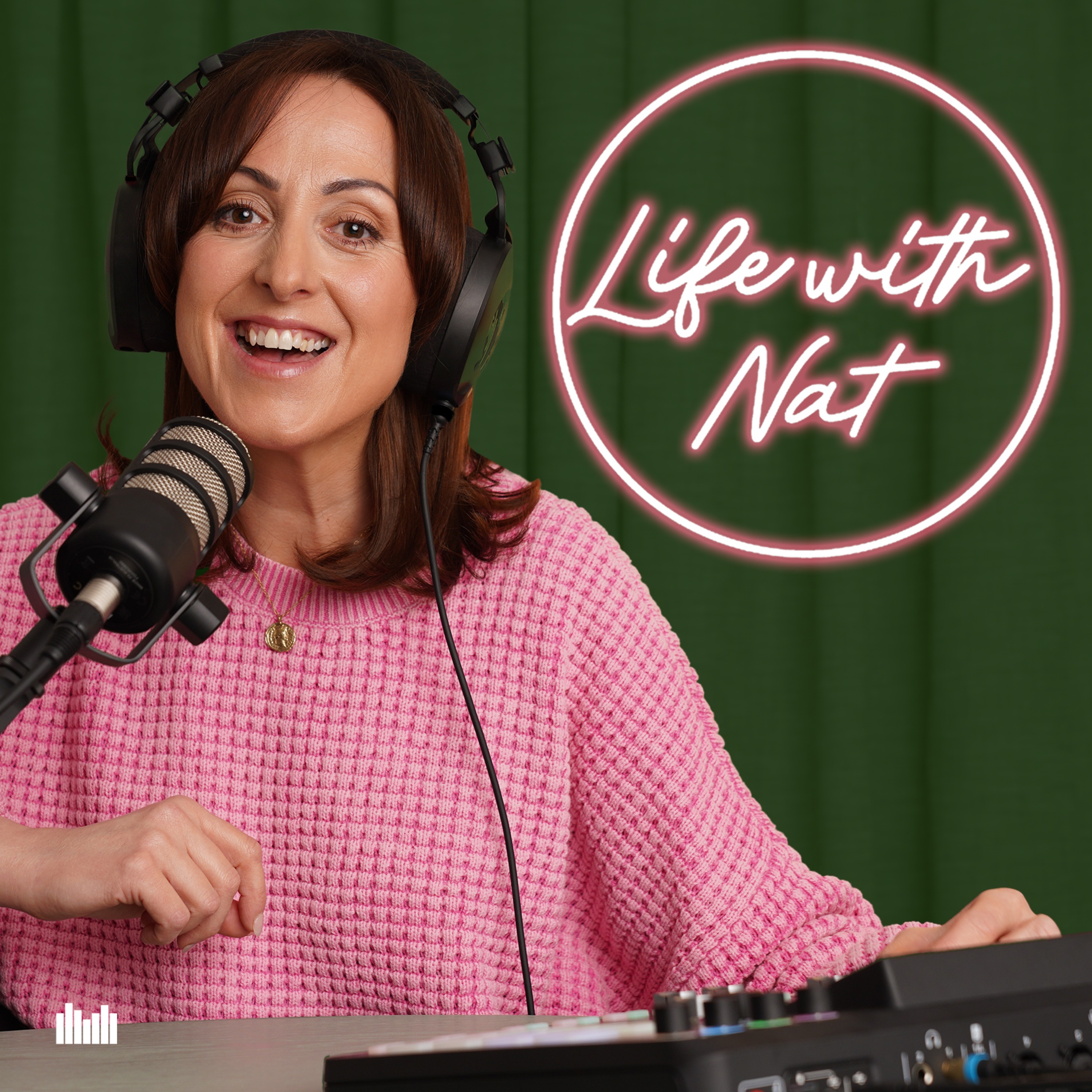
In this episode of Life with Nat, Natalie Cassidy speaks with Tony Jordan, one of EastEnders' most celebrated writers. Tony shares how he bluffed his way into the show as a market trader, discusses iconic storylines including Who Shot Phil and the creation of the Slater family, and talks about his later projects including Hustle, Dickensian, and Death in Paradise.
Topics EastEnders behind the scenes, iconic soap storylines, TV writing process, creating the Slater family, Dickensian BBC drama, Red Planet Pictures, soap opera history
Mentioned in this episode Tony Jordan, June Brown, Lacey Turner, Jessie Wallace, Michelle Ryan, Jason Donovan, Martine McCutcheon, John Yorke, Adrian Lester, Ben Miller, Johnny Briggs, Brooke Kinsella
Chapters
- 0:03:57 Tony Jordan's unexpected route into writing
- 0:08:52 The East End bluff and getting the EastEnders job
- 0:16:17 Writers, cast, and the EastEnders machine
- 0:25:30 Writing the Dot Cotton one-hander with June Brown
- 0:30:56 Creating the Slater family and the big secret
- 0:41:20 Dickensian: Tony's favourite project
- 0:49:00 Red Planet Pictures and life after EastEnders
- 1:00:05 Family life and looking back
Partner with Natalie Cassidy’s Life With Nat
Natalie Cassidy’s Life With Nat is produced by Audio Always. We work with brands on sponsorship, advertising and partnerships across our network of podcasts, reaching engaged listeners and viewers.
Advertising categories Soap Opera TV, Screenwriting, Freelance Writing, Special Interest TV
Show notes
Nat has a chat with Tony Jordan. This episode is a really fascinating, and occasionally nerdy, look at what it means to be one of the most revered Eastenders writers, and we also chat about his MANY other projects since (including Dickensian, which Nat mentions as one of her favourites from his body of work – linked below)
Dickensian – https://www.bbc.co.uk/iplayer/episodes/m002p6sr/dickensian
Get in touch with Nat, buy tickets for upcoming live shows and link to Patreon, all the family's Instagrams, and more: lifewithnatpod.komi.io
Hosted on Acast. See acast.com/privacy for more information.
Full transcript
Natalie Cassidy 0:02:57 Hello everybody, I hope your week's going well. Welcome to Life with Nat. This week I have got a fantastic guest for you today. His name is Tony Jordan, and he— I know him from writing EastEnders. And he has done some of the most amazing storylines for EastEnders, including Sharon Gate with the baby monitor, Who Shot Phil, The One-Hander with lovely June Brown, Dot Cotton's episode that was just her, which was BAFTA-nominated.
Natalie Cassidy 0:03:27 I could go on and on and on. Cats Later, You Ain't My Mother. And then Tony went off, he had his own production company. He created Holby Blue, Hustle, Death in Paradise, and— And— my favourite, Dickensian, which was an amazing series about 10, 11 years ago that you should go and have a look at. We're gonna have a chat today about his career and peek behind the curtain of how you write television.
Natalie Cassidy 0:03:53 I hope you enjoy it.
Natalie Cassidy 0:03:57 Where's my Tony? I can't see his face now.
Tony Jordan 0:03:58 I'm here.
Natalie Cassidy 0:03:59 Oh, there you go. There you are. Thank you so much for coming on.
Tony Jordan 0:04:03 No, this is great. Well, look, I've been waiting obviously until you were ready, and I thought, well, Now the Prime Minister's been on.
Natalie Cassidy 0:04:09 You know what I mean?
Tony Jordan 0:04:11 It's time for me. So here I am.
Natalie Cassidy 0:04:14 You know, I, I, I, what, what's the, what's the phrase? That was my starter and here's the main, is what I'd like to say.
Tony Jordan 0:04:20 I wish, I wish.
Natalie Cassidy 0:04:21 I think the listeners are really gonna love the fact having you on is that inside info and that sort of peek behind the curtain that people love so much, you know?
Tony Jordan 0:04:34 Yeah, of course.
Natalie Cassidy 0:04:35 You've done so much. so much over the years. People are gonna wanna talk about EastEnders, but firstly, I think we should start by just talking about you. Because from a very young age, I've known you, and you have always been such an amazing influence, a very kind, warm influence, someone that I've always felt comfortable around, although also quite scared. Because you're so good at what you do, there's this level of respect that— Oh, thank you. Whenever I saw your name on a piece of paper, I thought, Tony's written this. I need to do this the best I can for Tony.
Tony Jordan 0:05:14 Oh, wow. That's amazing.
Natalie Cassidy 0:05:16 Oh, it's true.
Tony Jordan 0:05:17 These things are really weird because you don't— you have no sense of that, especially on a show like EastEnders. We just all— we're kind of— you know what it's like. It's like a huge machine. We're all little cogs within, and we all do our little bit, and you don't really get that sense of, how you interact with every other moving part all the time.
Natalie Cassidy 0:05:35 Yeah.
Tony Jordan 0:05:36 So that's really nice to hear.
Natalie Cassidy 0:05:37 No, and I think people would love to hear how you started, 'cause there's loads of people, you know, and we can talk about the telly industry as well, which I think is really important, but I'm sure there's many people at home who would love to have done that sort of thing and write things, or they love watching television and they think, gosh, how do people write it? So if we go back to the beginning, You know, I love the fact— I'd love to talk about the little white lie you told.
Tony Jordan 0:06:03 Yeah, it was a bit bigger than a little white lie, really.
Natalie Cassidy 0:06:06 But, um, let's go into it.
Tony Jordan 0:06:07 Yeah, look, okay, so look, I was, I was like 32, 33, and I was on the market. So I was a market trader. So I was little Jack the Lad and running up and down the country around the south coast and doing kind of Weymouth and Dorset and then down to Bristol and Burnham-on-Sea. And I moved house and I moved next door to a guy who was an aspiring screenwriter.
Tony Jordan 0:06:32 So he wanted to— so he'd been working for years writing scripts and being turned down, and that's all he wanted to do. So we used to talk about it and I gave him some stories from the market. And, uh, one day, literally, he said, why don't you— you keep the way you tell your stories, why don't you try and write a script? So that's what I did. I literally just sat down.
Tony Jordan 0:06:51 I didn't know how I was expelled from school when I was 14, so I didn't know how to write. I hadn't read much. And so I just did something about being on the market, about kind of market life. And I sent it in to the BBC. He made me do this.
Tony Jordan 0:07:07 I didn't want to do it, but he made me send it to the BBC. And I remember I actually wrote on the envelope BBC London, and that was it.
Natalie Cassidy 0:07:15 Yeah.
Tony Jordan 0:07:16 And put stamps on it and posted it. Brilliant. And about a month later, I got a call from— it was the BBC New Writer Initiative. At the minute, it's called the Writersroom. Back then, it was called the Writers Unit or something. But somebody from there phoned me and said, the producer of EastEnders would like to talk to you.
Natalie Cassidy 0:07:34 Wow.
Tony Jordan 0:07:35 And what I didn't know at the time, and this is what's fascinating, is that EastEnders was about 3 years in. So it had its kind of glorious start. You know what it's like in this country sometimes. when things get too successful, we think they're getting a bit uppity, so we like to give them a little slap just to remind them who's in charge. So EastEnders was going through a bit of a patch where the media were bringing people from the East End to say, this is nothing like the real East End.
Tony Jordan 0:08:02 So they were getting that, it's not authentic, and all your writers are kind of white middle-class people from the Home Counties. And it was kind of a bit nasty, a bit like that. So of course, my script landed on their desk, about a market trader. They made this assumption that I was an East End barrow boy for some reason. I don't know why.
Tony Jordan 0:08:23 So of course I was attractive to them because they thought I was, I was an authentic voice.
Natalie Cassidy 0:08:27 Yeah. You are that character that everyone's slagging off that they needed.
Tony Jordan 0:08:31 Yeah. I could give them that authenticity so they could hold me up and say, well, actually you are wrong.
Tony Jordan 0:08:36 We've got this guy from the East End. And, and, uh, what people don't know about me because of my accent, and my accent comes from the markets. It's like mock me because all the lads were all from London, but I'm actually Scouse. I was born in Merseyside. So I went for this interview with— I can't remember the exact name.
Tony Jordan 0:08:52 I think it was Mike Gibbon, I think, and John Maynard, script editor. And the first thing they said to me was, we're so pleased to have a real true East End barrow boy that wants to write for the show. And suddenly my market trader kind of instincts clicked in and I saw money and I turned into Dick Van Dyke.
Natalie Cassidy 0:09:13 Brilliant.
Tony Jordan 0:09:13 He was like, full-blown, yeah, you'd never guess. And I remember him saying, whereabouts in the East End do you— did you live? Were you brought up? And I went, oh, uh, you know, East, like proper East, like East of East, the East I was born. Yeah, that was me. And I was literally hilarious, but their eyes lit up like beacons. The saddest part of the story is obviously my next-door neighbour who'd been trying for 10 years to get scripts accepted, and then this bloke comes along in his van, writes one script, and gets a job.
Natalie Cassidy 0:09:46 Well, it must have been good though, Tony. That's the thing, isn't it?
Tony Jordan 0:09:49 One thing is what I learned later, which I didn't know at the time, was obviously I didn't know anything about story structure or all the complicated stuff— or not complicated, but all the technical stuff. But I did, because I was 32 and I'd been on the markets for 20-odd years, I did know how people spoke to each other. So my dialogue was great.
Natalie Cassidy 0:10:08 Mm.
Tony Jordan 0:10:09 I have an ear for dialogue and that's what they read. So they discounted all the story and all the other stuff, which probably wasn't very good, but my dialogue kind of came off the page. And then the story finished about— so that's after I got a— they gave me a job, they gave me one episode. And to me, you've got to understand, I was on a market for a whole week and I'd earn— if I took home £500 maybe, and then I'd have to spend £150 on that fixing the van. And it was like, you know, it's tough. It was really tough. And my first script fee for EastEnders was £1,100.
Natalie Cassidy 0:10:44 I bet you couldn't believe it, could you?
Tony Jordan 0:10:47 So it was like, hang on a minute. So wait, so I take 30 pieces of blank paper and I'd just fill them up and you give me £1,100. And it was like, yeah, okay, I'm in. And it used to get— I think it was like 8 weeks to write an episode and I was doing 3 a week. It was like I just couldn't believe my luck.
Tony Jordan 0:11:08 And I also thought at some point they'd find out I was a fraud and I'd get sacked. So I was just trying to milk it while I was there. And then about 4 years later, 4 years after that, Yeah. I'd written about 50, 60, 70 episodes. Or something.
Tony Jordan 0:11:22 And the exec producer called me into their office and said, we're very excited. We've had the Daily Mail on and they want to do like a double-page spread in the centre of Sunday's paper or whenever it was about you growing up in East End and how that affected you writing for the show. And we'd like to take some photos of you growing up in East End. and put them next to images from EastEnders, and it's gonna be great. It's gonna be a celebration of the show.
Tony Jordan 0:11:52 We are so excited.
Natalie Cassidy 0:11:54 What happened?
Tony Jordan 0:11:56 There were 2 little things in my mind at that moment. One was my market trader brain kicked in and I went, oh, I think I could get away with this. Yeah, I could mock up some photos. They wouldn't notice me. A 4-year-old didn't. I could do that. And then the other side of me thought, No, you can't, because you've now gone out in public and people will write and say, hang on a minute, last time I saw him, he was asking for chicken.
Natalie Cassidy 0:12:21 Yeah, yeah.
Tony Jordan 0:12:23 So, so I said, look, I'm sorry, I've got to, I've got to admit I lied and I've never lived in the East End. I drove through it once. I'm Scouse. It'll be a disaster. So they all panicked. And then about a couple of days later, I thought I was going to be sacked.
Natalie Cassidy 0:12:43 Yeah, yeah, yeah, of course.
Tony Jordan 0:12:44 But they said, well, just tell them you're busy.
Natalie Cassidy 0:12:46 Brilliant.
Tony Jordan 0:12:47 And that was it. They just went away, and I didn't get sacked, and I kind of— and they let me stay, which was great.
Natalie Cassidy 0:12:52 Well, that's obviously because of your talent. And I know that you've told a porky to get in somewhere, but listen, I think it's bloody brilliant. You know, you— why not? To get on in life, sometimes you need to do things to get places, to elevate yourself, and you've not harmed anybody. Do you know what I mean? It's a white lie about yourself. You're not harming anyone. So to me, that's fine.
Tony Jordan 0:13:12 Yeah, exactly. And do you know what? Look, I was ahead of the curve because like obviously 20 years later I was hearing things like fake it till you make it, and I thought, yeah, I did that. That's, that's— I did that. I was first.
Natalie Cassidy 0:13:21 Yeah, absolutely.
Tony Jordan 0:13:22 So yeah, sometimes you need to do that. Sometimes you just need to, to just, um— and like you say, it didn't hurt anybody. It was only about me. It didn't involve anyone else. I was just trying to— I was just somebody trying to, trying to earn a living to feed my, my kids. That was all.
Natalie Cassidy 0:13:36 Yeah. And were you with lovely Tracy at the time?
Tony Jordan 0:13:39 It was a really weird part of my life because I was coming to the end of one marriage and, and then Tracy was my— was then my second wife. So that was good and bad. And let me explain that.
Natalie Cassidy 0:13:51 Yes, she'll kill you otherwise.
Tony Jordan 0:13:53 So it's good because obviously for 2 reasons. One is the amazing Tracy, who you know. Yes, she sends her love.
Natalie Cassidy 0:14:00 Yes.
Tony Jordan 0:14:01 And then secondly, it gave me a— it gave me lots of material to write about that whole period of my life. And that's true because as a writer, you, you have to draw on your own, on your own experiences, and you have to draw on your own pain and your own, you know, when times things are not as they should be, perhaps then you need to bank that stuff and be able to write it because at some point in your life you're going to have to write what you're living in that moment. Yeah. You have to write it for someone else.
Tony Jordan 0:14:29 So you have to hold on to that stuff. So yeah, so it was in that whole period. So it was a whole Kind of almost like I started a new life around that period.
Natalie Cassidy 0:14:37 And at the time then, when you were writing for EastEnders, were you at Elstree a lot of the time back then? Because for me, growing up there from '93, you know, you didn't see many writers. It was a real treat to see a writer in a bar, or I'd see you, or Geoff Povey, or, you know, someone hanging about. But you kind of did a lot at home. Am I right in saying that, or was it different back then?
Tony Jordan 0:15:00 Yeah, a writer's life is, it's like a game of two halves always. So I've, I've always had a shed in the back garden, so a little writing shed. So I, I sit in my shed and we've just built this house. So I know it's the first time I'm actually indoors with an office.
Natalie Cassidy 0:15:14 Lovely.
Tony Jordan 0:15:15 And it's really weird because Tracy just appears in the doorway and at 2:00 in the afternoon says, I'm a bit bored, should we do something? It's like, well, I'm right, I'm working.
Natalie Cassidy 0:15:25 Yeah, yeah.
Tony Jordan 0:15:26 Well, she couldn't do that when I was in the shed because it was a little bit of a walk and she'd have to put a coat on. So yes, it came too hard. So you're— it's splendid isolation because you're literally just in your own space on your own writing. But then there's all the meetings, and particularly with a show like EastEnders, there's all the storyline meetings and storylining days and stuff.
Tony Jordan 0:15:46 But I mean, the main reason you probably didn't see me or see too many writers is it's really tough to mix with cast because It's, you know, you're gonna be in a room in 10 minutes and someone's gonna say, I think we should kill off Sonia.
Natalie Cassidy 0:16:02 Yes, yes.
Tony Jordan 0:16:03 And that's a really tough conversation to have.
Natalie Cassidy 0:16:06 I really wanted to talk to you about that stuff 'cause I think people will love it, right? So going back, listeners, when I tell you Tony Jordan, who we've got here, I— it's— he's one of the best writers EastEnders ever had.
Natalie Cassidy 0:16:17 We'll go into who he's created, the storylines that you've watched and that are iconic that Tony's mind has created. But I did want to talk to you about that relationship with production, writers, cast, because I am, and I always have been, someone who wants to talk to everybody. And I don't feel I've ever really done that actory thing, which I do think has happened and does happen, where they're trying to befriend everybody that's really important to stay somewhere. Because it doesn't work. I don't think it works because— Because the story and the soap is the biggest thing.
Natalie Cassidy 0:16:55 No one is bigger than the show. And I've always said, your last contract that you sign, that's your job. I've never, ever been complacent to the fact that you have that year. Thanks. Thank you so much.
Natalie Cassidy 0:17:07 Let's hope we get another year, that sort of thing. So, you would sit in a room with lots of people, and those things would come up. Should we kill this one? Should we kill that one? the fate of our jobs is in your hands.
Natalie Cassidy 0:17:20 And I wondered how that, how that feels, really.
Tony Jordan 0:17:23 Yeah, it's really difficult. It's tough because people that I knew used to say, uh, when I was writing, and obviously knew what I did for a living, so I— they'd be saying, oh, could you get me Natalie's autograph? Could you do this? Could you do that good thing?
Tony Jordan 0:17:35 And I used to say to them, not really, it's a bit awkward because how do I— it's a bit like I don't know, it's a really weird feeling. So I come to you and say, hey, Nat, could you do me a favour? Could you sign this for my— for the girl in the shop? And you do it, and you're lovely as you are, and then go away. And then, and then, like I say, half an hour later I'm in a room and I'm thinking about story, and now I'm now thinking, well, we can't kill Sonya because I love Nat.
Tony Jordan 0:18:04 She's just amazing, and she's so kind, and she's so nice, and this would destroy— oh no, I can't do that. So suddenly I'm now not thinking about the character, I'm thinking about the actor behind the character.
Natalie Cassidy 0:18:14 Yeah.
Tony Jordan 0:18:14 And it's really tough. And I remember once, uh, and this told me, uh, what you're talking about now is, is I didn't realise that relationship, what it could be like between actors and writers in that, in the long-running series.
Tony Jordan 0:18:27 Remember sitting in the bar with Tish Dean once, and I'd just come from a storyline meeting and I was buzzing because it was a really good one, I think. And we just, um, and we just It was a really weird thing. I think we just killed a turkey or a dog or a budgie or I don't know, something really silly. Yeah. And I sat down and I got a drink and I was— and Tish was there and I sat down and said, you know, I had a good— you know, I've had a good day.
Tony Jordan 0:18:53 Good day. We just killed someone off. And it was like her face just went like pale.
Natalie Cassidy 0:19:00 Yeah.
Tony Jordan 0:19:00 And she was, she was kind of cross and it was like, Oh no, I, I like, but I couldn't, then I couldn't say anything.
Natalie Cassidy 0:19:06 Of course.
Tony Jordan 0:19:07 'Cause I couldn't tell her what the story was. Like, it was like, oh shit, that's a really stupid thing to, for me to say. But I wasn't aware of, of the insecurities that it brings. You're right.
Natalie Cassidy 0:19:16 And also for us, that's not just, oh my God, that could be me. Yeah. But that's us then going back to reception and going, I've just seen Tony and someone's killed. Yeah. And it's like a huge thing. Who's been killed? And then we're all worried about our jobs and, It is. I'm laughing, but it's— yeah.
Tony Jordan 0:19:33 No, it is. And I think what it was— this is how silly it was— is I think it was I just— I wrote an episode where Dot was away, and I think Jim was hoovering up, and he hoovered up— he hoovered up the budgie up the hoover. He was doing the cage. It was something silly like that.
Natalie Cassidy 0:19:48 Yeah.
Tony Jordan 0:19:49 But when I saw Tish's face, I thought, I know I can't. There's a responsibility with, with what I do. And that was a really stupid thing to say. So And I— it's funny, I don't think I've ever said that to Tish.
Natalie Cassidy 0:19:59 So, oh, there you go.
Tony Jordan 0:20:01 I'm sorry, babe.
Natalie Cassidy 0:20:01 Wonderful Tish.
Natalie Cassidy 0:23:54 When was the last time you were at EastEnders, Tony? I know that we, we move on to all the other amazing shows you've done, but yeah, when was the last time? Or do you think— are you always Are you like me? Is there always sort of a part of your heart there? Obviously. Do you watch it at all?
Tony Jordan 0:24:13 Or— yeah, you know, I can't watch it. I can't watch it. I've got PTSD, right? So if I hear the— yeah, if I hear the theme music, my heart beats quicker because I think I'm late in the script, or, or have I done something, or what's going to happen? It's like all that stress I had when I was on the show. Yeah, comes back as soon as I hear the theme tune.
Natalie Cassidy 0:24:32 That is so funny you say that, genuinely, because I've only been gone a year and a half this time round, but people say, oh, you watching it? And I say, no, I just, I love it with all my heart, but I need that break. I can't, because again, I'm going, my call sheet, the traffic, am I on time? I can't do this. I can't book anything. You can't do it. And I just think, oh no, I just need that break. As much as it's everything to me and has given me everything in the world, I need that break.
Tony Jordan 0:24:59 Yeah, same. It's a really weird thing. So, but look, I love it. And occasionally I remember when Diedrich Santa was exec and he said, I'd always wanted to write a one-hander. Oh, okay. You know, we had a history of doing two-handers and every story conference I used to say, can I just do a one-hander? Just one character. Can I, can I do that? And then I'd been gone about 10 years or something, 15 years, I don't know. And Diedrich called me and said, all right, we'd like you to do your, your one-hander. Would you mind doing it with June Brown?
Natalie Cassidy 0:25:30 Honestly, I've got goosebumps on my thighs.
Tony Jordan 0:25:33 I know. And it was like, oh, I think I was in the car by the time he finished his sentence. And I'm always open to that. I love it so much. And there's so many people there that I love that I kind of grew up with, that if an actor called me that's on the show and said, can you write my last episode? Or they're killing me, can you do— or something, Of course, like, in a heartbeat.
Natalie Cassidy 0:25:55 Yeah.
Tony Jordan 0:25:56 Because I do have that affection for the show, but I also, like you, I'm happy to be away from it.
Natalie Cassidy 0:26:02 Yeah, yeah. It's a monster.
Tony Jordan 0:26:03 It's a monster.
Natalie Cassidy 0:26:04 June Brown, I mean, that episode, it was BAFTA-nominated, should've won. I mean, to write that for June, how long did that take you, or was it very easy just because of Doc Cotton's character to sit and do that message to Jim?
Tony Jordan 0:26:21 Yeah, it's easy. It's like writing is a really weird process. I think the first thing I had to work out was why she's on her own and who she's talking to. And I struggled with that for a bit. So I thought, how am I going to do this? I keep saying I want to do it, but how am I going to do it? I can't break the fourth wall and actually have her talking to camera. And what was really weird is at the time, I think I was still writing Hustle and Hustle. That's exactly what we did. Adrian Lester used to— Mickey Briggs used to talk to the camera.
Natalie Cassidy 0:26:47 Yeah.
Tony Jordan 0:26:48 My writing brain was in that. place anyway. But I knew that wouldn't work with EastEnders because that's not going to work. And then I came across the idea of doing the tape.
Tony Jordan 0:26:59 And then once I had that, it was really quick because the writing process for me is I don't make anything up. I don't think of anything. I literally, I would take the characters of Dot and Sonia and put them in my head. I then pick up the story that I know inside out because I've drafted the story and I know what that scene is about. And I put that in my head and I just sit with a pen and a piece of paper or computer, whatever, and wait.
Natalie Cassidy 0:27:30 Yeah.
Tony Jordan 0:27:31 And sooner or later they'll start talking to each other and I'm just trying to keep up. So I'm just trying to keep up with them. So I'm a reporter, really. I kind of— if you understand the character and you understand what the scene's about, You just wait, they'll do it for you, and you just, you write down what they say.
Tony Jordan 0:27:47 So it was like that with that episode, is I just knew Dot inside out and back to front, and I knew what she wanted to say to Jim, and I knew that I wanted the tragedy and the poignancy of who Dot was as a character, which is where the music, that whole Pretty Baby from when she was a child and all that stuff came from. And I just put all that in my warped writer's brain.
Natalie Cassidy 0:28:17 Incredible.
Tony Jordan 0:28:18 And waited. And it— I heard June's voice, and I just started typing. And before you knew it, I was done. It was finished.
Natalie Cassidy 0:28:25 And I always remember June saying, because as we know, and God rest her soul, and I know she would not worry about me saying this, she was one to change a script. Well, I can only tell you, if she was not okay with something, that would be rewritten. I'd go in her room, I'd say, what we doing today? There was no point me learning it, she'd rewritten it. But with that, I remember her saying it was absolutely perfect.
Tony Jordan 0:28:49 Yeah, she didn't change a word. Uh, we talked about a couple of things on the phone, I think, where I wasn't sure, and I was like, June, I think I want to do this a little bit, but I don't know. And she'd go, Oh yes, dear. Oh well, you know, it's like, and, um, but yeah, look, do you— I don't know if you— how far— I can't remember when it stopped, but there used to be a porter cabin on the, on the, on the backlot.
Natalie Cassidy 0:29:12 Yeah.
Tony Jordan 0:29:13 So there was a porter cabin there, and that was like the producer's gallery.
Natalie Cassidy 0:29:16 Yeah.
Tony Jordan 0:29:16 Yeah, the producer's box.
Tony Jordan 0:29:17 So I used to sit in there, and obviously when I was a new writer— bear in mind, I'm, I'm writing, which I'm not really a writer. I'm living a lie because I'm not really a cop. I'm sitting in this porter cabin on the east end of set, and I'm watching this screen where you're watching the stuff being filmed. And June was filming a scene, and she just literally looked at the camera because she knew the producer was watching and said— excuse my language, but it was June— No, go for it. She said, who wrote this shit?
Tony Jordan 0:29:48 And it was my script. She literally didn't care. She just said it as it was. And you know what? She was 100% right.
Tony Jordan 0:29:56 It was a really lazy line of dialogue. And the fact that that woman, with all the material that she had, and the material she had to carry in her head, and the script she had to read, and the constant— you know what it's like, that constant stream of words— could still pick out a shit line of dialogue and address it. And not let it go and think it'll be all right.
Natalie Cassidy 0:30:20 Until the day she left.
Tony Jordan 0:30:22 100%.
Natalie Cassidy 0:30:23 Because the story and the thing that was going on at the time, she genuinely just couldn't cope with because no one was listening. And it's, it's quite sad. But, um, yeah, she just got up and said, I'm not coming, I'm going. That was that.
Tony Jordan 0:30:35 That's it, I'm done.
Natalie Cassidy 0:30:36 Done. I know. Bless her. Um, let's talk about, uh, John York. Let's talk about the Slaters, because I think people would love to just hear about the creation of the Slaters. I had Lacey on, obviously she talks about you dearly, and she's smashing it in Strictly. I'm sure you're watching that.
Tony Jordan 0:30:56 Yeah, of course she is.
Natalie Cassidy 0:30:57 But the Slaters, I mean, how do you sit around a table or sit on your own and come up with that family?
Tony Jordan 0:31:02 Well, I didn't actually. It kind of, it was weird. So we've been casting, obviously I was, you become more and more influential as you, the longer you're with the show, And my era was, was, was huge. It was like the whole Sharon Gate.
Natalie Cassidy 0:31:16 Oh my God.
Tony Jordan 0:31:17 It's all that with Gronk walking into the— Was that the baby?
Natalie Cassidy 0:31:20 That was the baby monitor.
Tony Jordan 0:31:21 Yeah, that was the— yeah. Yeah. And I remember fighting for the baby monitor because I remember people saying, no, no, you can't do that. It's like a device. I said, that'd be great.
Natalie Cassidy 0:31:32 Amazing.
Tony Jordan 0:31:33 So that was— that's my era. So I'm doing that. So we're doing all the Mitchell Brothers, all that stuff. So we've done all that. So I was more influential then and more involved in other parts of the world. John York was then an exec, and obviously John and I went way back. So I can't remember who I had the first conversation with, but our casting director's name was Julie Cramsey, lovely Julie Cramsey. I think she's still there. I don't know.
Natalie Cassidy 0:32:00 She isn't there. She's got another company, I think. Yeah. But she's—
Tony Jordan 0:32:03 oh well. Um, but the amazing Juliette Crumsey, and I, and I said to her, look, I keep creating characters and then send you off to try and find somebody who matches that, what I've written down on a bit of paper. But I know you're out every day going to theatres and stage schools and everywhere and, and looking at everybody that's got any kind of London connection to put them in your little Rolodex so that when I come to you with a bit of paper, you can say, Oh, I've got just the person for you. So why don't we do— why don't we mix it up, do it the other way around? Why don't you bring me, I don't know, 20 actors that you really like, and we'll book a rehearsal room for 3 or 4 days.
Tony Jordan 0:32:43 We'll do a bit of improv, we'll mess about, we'll do some things, and let's see if I can create a character based on and around them. Interesting. So, so that's what we did. So we booked this rehearsal room. And I think the first day, I think I've been there about an hour and Jessie Wallace walks in with a short skirt and jet black hair and a laugh like a, like a drain.
Tony Jordan 0:33:10 And like, she was a gift.
Natalie Cassidy 0:33:11 Yeah.
Tony Jordan 0:33:12 And so I think Jessie was a star. And basically what I do is I take, I take different actors and say, okay, can you two just improv this? And then can you— oh no, actually, can you do it? And then can we— can you come in and do that with them? And it was a bit like just mix and match. And so gradually it was literally— it was like that. So I had— I think Jack was, was my— was the base. And then it was like I had this idea of sisters, so I thought, okay, let's— so let's try. So it was literally, let's try Elaine.
Natalie Cassidy 0:33:42 Yeah.
Tony Jordan 0:33:43 And Casey. Let's just try and kind of mix those up and see how they kind of work. And if they do, And then you find them, and then Mo appeared. Leila. Brilliant. And it's like, well, she's got to be in it. So I literally, again, a bit like the way I said, you know, the way that I write is to put people in my head and then just report what they say. It was the same during that process. It was literally— I didn't create anything. I just sat and watched the family come to life. And I think we did it all. We created We created the whole Slater family in those 3 days, I think.
Natalie Cassidy 0:34:19 Wow.
Tony Jordan 0:34:19 I think the only exception was, I think Zoe was Brooke Kinsella when we left those—
Natalie Cassidy 0:34:25 Yes.
Tony Jordan 0:34:25 Those rehearsal rooms.
Natalie Cassidy 0:34:27 Know Brooke well. Yep.
Tony Jordan 0:34:28 And we had a kind of a sense that maybe she was— she was brilliant, as you know.
Natalie Cassidy 0:34:32 Yeah.
Tony Jordan 0:34:32 But is she a Slater? I don't know. Don't know. Don't know. And Slaters had a kind of a— they had a feel and a vibe and a look. And so eventually we, we grasped that nail and Michelle Ryan obviously became— and actually years later I was doing the same thing to try and create a new family. And we had the same kind of room. I think we were doing it at Elstree at that time. And Lacey was there for the Miller family. And I said, no, no, no, she's not a Miller, but she is a Slater.
Natalie Cassidy 0:35:04 Brilliant.
Tony Jordan 0:35:05 And so we created Stacey for because of that, because she was in for the minutes. But she's obviously got that look and that vibe about her. She's obviously a Slater.
Natalie Cassidy 0:35:14 Yeah, yeah, she is obviously a Slater.
Tony Jordan 0:35:16 Yeah, it's not me, it's just—
Natalie Cassidy 0:35:17 yeah, that's—
Tony Jordan 0:35:19 I'm just pointing out the obvious.
Natalie Cassidy 0:35:20 Yeah. Now, the secret then between Kat and Zoe, and the you ain't my mother, did you know about that secret from day dot? Did you know that was going to be there?
Tony Jordan 0:35:31 Yeah, in those— again, those 3 days in the rehearsal rooms, So basically when we— I think Simon Ashton, because people came in and out, John stayed away, I think. But I think I had other writers coming in and out. I think Simon Ashton was there on, I think, on one of those days. And we were— and by then, so now on the 3rd day, I've kind of got the family. And I also had— and I also— and I'd found Forgive me, Ricky Grote.
Natalie Cassidy 0:36:04 Yeah, lovely Ricky.
Tony Jordan 0:36:06 Yeah, for Gary, who's Lynn's later boyfriend, whatever.
Tony Jordan 0:36:10 So we— so I actually had this family and it was all kind of stuff like that. It was all like, oh, they all talk to each other. And I remember seeing— I think there was a— there was a— there was— it was all improv, but I think Jesse and Brooke did something together. And I remember leaning back and just whispering to Simon, that age gap, man, that age gap. She could be her daughter.
Tony Jordan 0:36:34 And I felt a little chill go down my back. So, so yeah, by the time we, by the time we left, I don't even think I'd give the Slaters a name then. I don't think they were the Slaters. They were the family. So I remember flicking through a book of old London, old London occupations to find a name.
Tony Jordan 0:36:55 Honest. And I remember finding the Slayers. Um, and yeah, so I knew then, and I also knew not only that that was the, the big secret, but also how long we were going to hold on to it and how we were going to break it when we did.
Natalie Cassidy 0:37:10 Honestly, I'm, I'm involved in the show and my eyes are watering because this is so— honestly, it's so interesting. People are just gonna— I'm sure you are. 07788 201919. Make sure you WhatsApp me with your messages, and I promise you I shall send them over to Tony. But I, I would honestly love to hear your thoughts on hearing this amount of inside information on the show that you all love, loved back then and still love now.
Natalie Cassidy 0:40:56 Once EastEnders was out the way, we could go on and on and talk about EastEnders, but the things you've done are amazing. You've hustled, you've got it behind you. The Nativity, Death in Paradise. I'm gonna say one thing, you can talk about any of those shows in a minute. The one I'm going to bring up, which I loved with all my heart, Dickensian.
Tony Jordan 0:41:20 Yeah, my favourite show.
Natalie Cassidy 0:41:23 I fucking loved it, and I was devastated that there were only 20 of them. Was it 20 or 30? I can't remember.
Tony Jordan 0:41:29 20, uh, yeah, 20 half hours.
Natalie Cassidy 0:41:31 But I, I I thought it was so genius, genius, that I feel like that could have run and run and run and run as a soap.
Tony Jordan 0:41:40 Yeah, I should have done that. It's one of those, it's one of those weird things.
Natalie Cassidy 0:41:45 Tone, for people who don't know, explain what it was because it was genius.
Tony Jordan 0:41:48 Okay, so I had this thought.
Tony Jordan 0:41:50 So people have asked me, um, over the years if I'd ever do like a Dickens adaptation, and I've always tried to do, to just make my, to do my own thing, to, to cut my own story, you know. Some of my shows have done well and some have bombed, but I always wanted to do things in my own way and stuff. And so I never did. I always said, no, I'm not sure. I'm sure there's smarter people than me could do that.
Tony Jordan 0:42:17 But I love Dickens, but I love Dickens from a— not from an academic's perspective, but from a punter's perspective. Like, I just loved it. Like, I loved it. It's all And I love the Christmassy bits and I love that stuff and the drama and the melodrama and the fun and the stuff. So, but I felt excluded again.
Tony Jordan 0:42:38 Maybe it was just because, because I didn't have that education.
Natalie Cassidy 0:42:42 Yeah, it's the bloody imposter syndrome. You going, I'm not clever enough to touch that.
Tony Jordan 0:42:46 Yeah, it's like I could do my stuff, I could write a bit of EastEnders and I could do a show about con men and all that stuff and things like that. But obviously not Dickens. He's a national institution. It's not for people like me. And I sort of almost turned into a Dickens character. Yeah, that's not for me, mate.
Natalie Cassidy 0:43:01 Sorry, Bob.
Tony Jordan 0:43:03 Sorry, Bob. I didn't mean nothing, governor. Um, and then I thought, well, hang on a minute, if, if I did it— my dad loved Dickens as well, you know. My dad, when he died, he left me the whole— this whole thing that he collected, a little leather-bound, each little book. All right, so it had a real place in my heart.
Tony Jordan 0:43:22 Um, so I thought, okay, look, if I did do it, how would I do it? So, and my first point, point of, uh, my starting point for most things is what's nobody done yet? What's nobody done with Dickens that maybe I could do? And I thought, well, okay, what if I take all— take characters from all the different books and put them together? So I wrote a scene which even Dickens didn't do between Ebenezer Scrooge and, and Fagin.
Natalie Cassidy 0:43:53 Oh.
Tony Jordan 0:43:55 In the pub.
Natalie Cassidy 0:43:55 Oh, it's genius.
Tony Jordan 0:43:56 And what a joy that is. So I've mixed up all the characters and all the stories and put them all in one little world. And yeah, I loved it. I loved it too. They did. The problem was people keep asking why it didn't come back. So it, it was a BBC show. Obviously money was a big deal.
Natalie Cassidy 0:44:16 Always is.
Tony Jordan 0:44:17 I don't know if anybody noticed it from watching it, but it was all shot in a warehouse in Greenford. Like, we didn't have one location. Even Sati's house, the rundown, crumbling mansion of Miss Aversham, was in the corner of this, of this warehouse in Greenford.
Tony Jordan 0:44:37 So everything was in this one thing. We had to do the street that we did, the cobbled streets, circular. So that we could have the horses going round in a circle, the horses and carriages. And if they had to go the other way, they had to go round in a circle, right out the door into the car park, turn around, come back in to go the other way, because we only had one, so we had to make it look like 2. So it's the only way we could afford to do it because, because of the ambition of it.
Natalie Cassidy 0:45:06 It was also, may I say, and I might be wrong, But it had that sort of, on the corner, this pub, and it was quite sort of Albert Square-esque, may I add, wasn't it? It was great, wasn't it? 'Cause it was like Dickensian Albert Square.
Tony Jordan 0:45:21 I know, I know, but it was the Three Cripples instead of the Queen Vic. But look, it was— of course, I had to be influenced by the way that EastEnders worked, and that sense of community, and all the lessons that I learned on EastEnders, I 100% used with Dickensian.
Tony Jordan 0:45:38 And so when we finished the run, we managed to do it by doing 20 half hours, which is quite a big order. Yeah. That's 10 hours. Most series are 6 hours. We got 10 hours, which is 20 half hours.
Tony Jordan 0:45:50 The figures weren't amazing, but because I insisted it went out in the pre-Watershed, I insisted it went out at 7 or 8 in that slot. I didn't want it to be an arty-farty Sunday night thing.
Natalie Cassidy 0:46:02 I wanted to be Soap, that sort of genre.
Tony Jordan 0:46:06 Yeah, I wanted it to be in that world. That meant they had to keep moving it and no one knew when it was on.
Tony Jordan 0:46:10 It was a bit of a nightmare. But, and then when we came back, when the first season ran, I had a meeting with the BBC and they said, look, we do it, we want to do it, we'll do a second series, we'll do it Sunday night. And I said, okay, all right, I've done my— let's try and experiment. And you let me do that. So, okay, that's fine.
Tony Jordan 0:46:31 Let's try and do that. I'm confident enough in it now. And they said, but they only want 6 hours, 6 episodes. And I said, I can't do that. To make it, I need at least 10.
Tony Jordan 0:46:43 It's just the economy of scale. I can't do it for less than 10 hours. And they said, well, we can't do it then. So look, I don't know what the truth behind that was, whether they knew that. And that was their way of cancelling it by giving me something that they knew I couldn't do.
Natalie Cassidy 0:47:00 But also, how wonderful of you. What I love about that is you haven't gone, oh, all right, that's another 6 hours. Yeah, no, I'll just make that work. I'll just fucking do any old shit and make it work. Because it was in your heart, it was your thing, and you thought, I just— that's just not going to work, you know?
Tony Jordan 0:47:16 But can you imagine that show, that show and that concept with Netflix money?
Natalie Cassidy 0:47:19 I, I, I loved it so much, and I've, it's brought it back talking to you today and looking last night, reading about it. And me and Mark loved it. I remember it was the year before Joni was born. That's why I remember I was pregnant, 2015. And I remember, I, I think we should have a petition. Everyone needs to go and find it. Can we find it? Is it, can we watch it?
Tony Jordan 0:47:40 Yeah, I think it's about, yeah, it's about somewhere.
Natalie Cassidy 0:47:42 It's about, you've gotta watch it and it is absolutely amazing. Honestly, I thought it was the one of the most cleverest things I've ever seen on the telly.
Tony Jordan 0:47:51 Yeah, I love Dickensian. I think of all the things I've done, it's the thing that, um, look, I'm proud of— I'm proud of lots of stuff that I've done, but it's the one that's kind of in my heart a little bit.
Natalie Cassidy 0:48:01 Oh, I love that. I'm pleased. More than anything.
Tony Jordan 0:48:03 Yeah, yeah, I love it.
Natalie Cassidy 0:48:04 I was nervous to bring it up and you go, I hated that, don't talk about that.
Tony Jordan 0:48:07 Oh no, God, I love Dickensian. I loved it.
Natalie Cassidy 0:48:10 When you work on all these different things— so at the moment, is it Death in Paradise is sort of the thing that you're concentrating on at the moment? What's going going on?
Tony Jordan 0:48:17 Well, no, it's a weird thing. So I was working with a production company, and I— that's how the industry kind of works, is you either work for—
Natalie Cassidy 0:48:25 directly for— That was Red Planet, right?
Tony Jordan 0:48:27 No, no. So, so before that, right? So as a writer, I was either writing for a broadcaster, so I'd be working for ITV or BBC or Channel 4 or whatever, and with them directly. And then sometimes you'd be approached by independent production companies who'd say, we've got this idea, or we want to do this and want to do that. So I— so that's what I was doing. I was working direct with broadcasters like BBC, or I'd be working with independent production companies. And that was a whole new world for me because I didn't know that bit existed. Because obviously with EastEnders, you just work with the BBC.
Natalie Cassidy 0:49:00 Mm-hmm.
Tony Jordan 0:49:00 So I started working with independent production companies and I did shows like Hustle, Life on Mars, 2 or 3 others, all with independent producers. And everybody seems to be making a fortune.
Natalie Cassidy 0:49:11 It's funny that.
Tony Jordan 0:49:14 It's funny that they're all making loads of money. And I think my, my little market trader brain came back in and went, hang on a minute, everyone seems to be making more money than you.
Natalie Cassidy 0:49:25 Del Boy, this time next year we'll be millionaires.
Tony Jordan 0:49:27 Exactly. This time next year, Rodney. So I started my own production company, which was Red Planet Pictures. So we, we got our first commission, which was Holby Blue, which was a police spin-off of Holby Zoo. And then we did— well, then we did EastEnders by another name, which was Moving Wallpaper and Echo Beach, which we've got to talk about that because that is John Yorke.
Natalie Cassidy 0:49:53 Amazing.
Tony Jordan 0:49:53 He doesn't know this yet, so this will be a revelation for him.
Natalie Cassidy 0:49:56 Okay, perfect.
Tony Jordan 0:49:57 And that's where the shows Death in Paradise and Beyond Paradise and all those And our house and all those, Sanditon and all those shows. So it's my company making those shows, but I sold that company 2, 3 years ago.
Natalie Cassidy 0:50:12 Okay.
Tony Jordan 0:50:13 And now I'm back. So those shows are going on. I'm still involved. I'm still writing Beyond Paradise. I still— I'm still company founder. So I'm like Uncle Tone.
Natalie Cassidy 0:50:23 Yeah, Uncle Tone. Keep your hand in, make sure everyone's all right.
Tony Jordan 0:50:27 So I go to the office now and it's all full of like 20 pretty young people and it's like, who's that bloke? Who's the old bloke? Let's go.
Natalie Cassidy 0:50:36 Bloody—
Tony Jordan 0:50:37 they say, oh, that's, that's Tony. Guess what? It's Uncle Tony. So, so now I'm back to writing full-time. So I've kind of come full circle.
Natalie Cassidy 0:50:45 Wow. How does that feel on it when you look back on it all? And obviously you've got— I, I would imagine you, as long as you've got ideas in your brain, you can write forever, right? You haven't got to retire. So to speak.
Tony Jordan 0:50:56 No, I've just— as long as I've got the strength to pick up a pen.
Natalie Cassidy 0:50:59 Yeah.
Tony Jordan 0:51:00 And I'm not— yeah, I think, I think as your brain changes, you know, and I'm getting that kind of foggy brain now. I mean, my 60s now, I'm in that foggy brainy world. That's not a bad thing for a writer. That's a new experience. Right. And the whole thing is, I'll now be able to write better for that, that kind of demographic. So it's all good. There's no, there's no bad. So as a writer, yeah, I'll keep going.
Natalie Cassidy 0:51:24 Can you imagine if that Sliding Doors moment didn't happen and your mate didn't say, why don't you write a script? And it— mad life.
Tony Jordan 0:51:31 I know. And I still see Doug. His name's Doug Briggs, the neighbour. I still talk to him. He's still my best mate in the world. But actually, there's a kind of happy ending for Doug. If anybody's out there worried about Doug and that he's still— you know, I did, as I got more influential writing for TV, I took Doug with me. So Doug got into television and wrote, and wrote quite a lot of stuff.
Natalie Cassidy 0:51:54 That's fantastic.
Tony Jordan 0:51:55 So that was, that was cool. But let me tell you about, uh, the— Let's— That was John York.
Natalie Cassidy 0:52:01 Moving Water and Echo Beach.
Tony Jordan 0:52:03 Yeah, so let me explain that briefly. So again, it was like, what's— I had this really weird idea years ago about doing behind the scenes of a soap opera because I'd lived that life. And I'd seen how it all worked. So what about doing behind-the-scenes things of a soap opera? And Tony Holland, the original creator of EastEnders back in the day, and he'd left by the time I got there, but I did know Tony, he was a friend, and he gave me the title Moving Wallpaper. He said, call it Moving Wallpaper, darling, it'd be amazing. That wasn't a very good impression, but you get the gist.
Natalie Cassidy 0:52:40 No. Yeah.
Tony Jordan 0:52:40 So he, so behind the scenes of a soap opera. And then I thought, why don't I actually then make the soap opera that they're making, if that makes sense? So then as a completely different show, I'll then do the soap opera. So I created this whole thing called Moving Wallpaper, which was the sitcom essentially of behind the scenes of a soap opera called Echo Beach. And then we actually made Echo Beach set in Cornwall with Jason Donovan and Martine McCutcheon and Johnny Briggs from Coronation Street. And, and they had an effect on each other. So just to show you, tell you how it worked, almost like—
Natalie Cassidy 0:53:19 Tony, am I right in saying imagine sort of Noises Off but in 2 shows? Yeah, isn't it?
Tony Jordan 0:53:24 Yeah, kind of exactly that.
Natalie Cassidy 0:53:26 Yeah.
Tony Jordan 0:53:27 So the opening sequence in, in Moving Wallpaper was one of the producers going to the exec and saying, Now, the kid that falls off his bike in the opening sequence, he won't cry.
Tony Jordan 0:53:39 We can't get him to cry. He's doing this silly little sob thing, but it's not really working. And it's not— it's going to ruin the whole opening. So Ben Miller, who played the executive producer in Moving Wallpaper, we see him go to this kid and tell him that his parents had just died in a car crash. And then in the opening sequence of Echo Beach, you see this child who's fallen off his bike.
Tony Jordan 0:54:01 But it's not a cry of a kid who's fallen off his bike. He's breaking his heart. He's— so if you, if you didn't watch Moving Wallpaper, it doesn't matter. The soap still worked. But if you watch both, you kind of got something from each.
Tony Jordan 0:54:16 So that was the whole thing. So, but the John Yaw thing was that— so the, the main character in Moving Wallpaper is called Jonathan Pope. And actually, before, while we were still in development, there's a producer called Jeff Pope.
Natalie Cassidy 0:54:30 Yes.
Tony Jordan 0:54:30 And he wrote to us and said, how dare you? You— this is clearly— you're taking the piss out of me. And it's like, mate, I've never heard of you. I don't know who you are.
Natalie Cassidy 0:54:40 Right.
Tony Jordan 0:54:40 Sorry, but that's not true. So that wasn't true because what was true was I based him on John Yorke, who was, um, executive producer of EastEnders.
Natalie Cassidy 0:54:49 Well, he, he created the trumpet for me, so he created the trumpet for me. So exactly, there you go.
Tony Jordan 0:54:56 So John and I were really good friends. We did the Who Shot Phil, the Slaters.
Natalie Cassidy 0:55:02 Tony, the other day it came up on my phone. They moved— imagine this now, because it, you know, we're in a different stage of telly— they put back the Champions League finals. Yeah, Liverpool. Yeah, because of Who Shot Phil on the telly. Yeah, that's mad.
Tony Jordan 0:55:18 It is mad. I did an interview with LFC, their radio thing, station about exactly that. How dare I, as a Liverpool supporter, put their match back by EastEnders who shot Phil? It was hilarious. The first time we meet Jonathan Pope in this behind the scenes of a soap opera, he walks into the story room, the writers' room.
Tony Jordan 0:55:39 There's a flip chart and he takes out a Sharpie and writes 4.6. And apparently that was the overnight audience of this fictional soap, Echo Beach, and he'd been brought in to save it. And that— and I, I thought, I'm never going to get away with this. Because when John Yorke took over EastEnders, or when he came back, I can't remember what the exact thing was. I think it was he came back for a second time, or there was something— it wasn't—
Natalie Cassidy 0:56:12 He came back to save something.
Tony Jordan 0:56:14 Yeah.
Natalie Cassidy 0:56:14 Yes.
Tony Jordan 0:56:15 And I'll tell you about that as well in a minute, because I don't think anybody knows how that all worked out. But He walked into the room and EastEnders was in the doldrums at that point, and he wrote 4.6 on a flip chart.
Tony Jordan 0:56:27 And I literally copied that exactly verbatim for what he did. And he wrote 4.6 and then went into this tirade about the history of the show and how we've got to do better and all that stuff. And so the first episode of Moving Wallpaper went out and I was seeing John the next day, I think, and it was like, He's going to be so upset with me and I'm going to have to— and I don't want to apologise because I think it's funny, but I do appreciate that he'd be upset. And so we sat down and he said, so come on then, tell me. I said, tell you what?
Tony Jordan 0:57:02 He said, Jonathan Pope, who is it? Who is it based on? And I was like, you don't realise. It's you. And it was like, I couldn't tell him.
Tony Jordan 0:57:15 I just said, oh, just a, just a mismatch of producers I've worked with. Nobody specific. And he still did. Now he knows, but he didn't know.
Natalie Cassidy 0:57:22 That's fantastic. He must have forgotten what he did with that Flipboard. Yeah, 4.6. And another thing to say, 4.6 now for a soap is you're flying if you get that now.
Tony Jordan 0:57:32 I know.
Natalie Cassidy 0:57:33 Mad.
Tony Jordan 0:57:33 Yeah, you're flying mad in it. I, um, We used to get, I think for the, I think for the Sharon Tate episode was 28 million people watched that. That's mad, isn't it?
Natalie Cassidy 0:57:47 Who Shot Phil also. I think that could have been 30. I mean, major numbers.
Tony Jordan 0:57:53 It was great. I remember going in because I was a fan of Dallas and, and obviously Who Shot J.R. was about 5 or 10, 5 years before, whenever. So this popped in my head about doing it with Phil. And I remember going into John's office and saying, I'm going to shoot Phil. And I remember his face. It was like, what? Yeah, well, that was huge. That was huge too.
Natalie Cassidy 0:58:18 Incredible. Absolutely incredible. Do you think— and in terms of your lovely family, because you're such a family man, And like, you've got your office now and you've got all this stuff. Do you think they'd have it any other way? Do you think you've got a good work-life balance over the years? Do you think that you've missed out at all in the family sense, or do you think you've been fortunate enough to be able to balance everything?
Tony Jordan 0:58:45 No, look, I, it's kind of a weird thing really. It's like, look, I'm northern working class. That's kind of who I am in my soul. And so, and we've just got, we've got a work ethic that is difficult. So we just work, you know, it's like—
Natalie Cassidy 0:59:02 Grafters.
Tony Jordan 0:59:02 We're just grafters. Not exclusively, but as well as a lot of other people. That's what, that's what we do. We, we're grafters. And I work hard. I've always worked hard. So I, and it's funny because with the markets, weekends and bank holiday Mondays and stuff like that was my busiest days. So I never had days off. I was— so I've always worked 7 days a week. I've always worked on bank holidays. When I became a writer, it's like bank holiday Monday doesn't mean anything to me. It's just, if anything, my phone won't ring as much. I'm getting more done.
Natalie Cassidy 0:59:37 Yeah.
Tony Jordan 0:59:38 So I've just drafted. So I don't think I got my work-life balance when I was— when the kids were young. I did my best. I know that. But I think I worked too much and I didn't have to work that hard.
Tony Jordan 0:59:49 But do you know what? It's like, it's a, it's a, it's literally swings and roundabouts because now I can help them more because I work so hard. But actually they probably wouldn't want that. They probably want the dad staying to the park. So I tried, you know, I did, I think I did the best I could do.
Tony Jordan 1:00:05 I've got great relationship with my kids. We are an amazing little family unit. Yeah. So we're living our best life.
Natalie Cassidy 1:00:11 Oh, it's absolutely wonderful. Honestly, Tony, I cannot thank you enough for this time. I think people will be bowled over to hear that, just peeking, peeking into your world. And I just cannot wait to see what you're doing next. And I hope to see you soon for a big hug. Who knows, in the future, it'd be just lovely to catch up with you and have a little drink and say hello. And without all that EastEnders pressure of not being able to see each other.
Tony Jordan 1:00:39 We'll tell you what's going on. Yeah, that's right. And I can, yeah, we'll do that. We're gonna have a beer and I'll tell you all the things that I can't tell you.
Natalie Cassidy 1:00:46 Absolutely. On the podcast. Fantastic. Tony, it's been a pleasure. Thank you so, so much. Have a wonderful rest of the year and I hope to see you soon.
Tony Jordan 1:00:53 You too, darling. Love you lots. Thank you.
Natalie Cassidy 1:00:55 Love you lots. Cheers, Tony. See you, darling.
Tony Jordan 1:00:56 Bye. Bye.
Speaker K 1:03:17 Acast helps creators launch, grow, and monetize their podcasts everywhere. acast.com.
This transcript was generated automatically and may contain errors.