
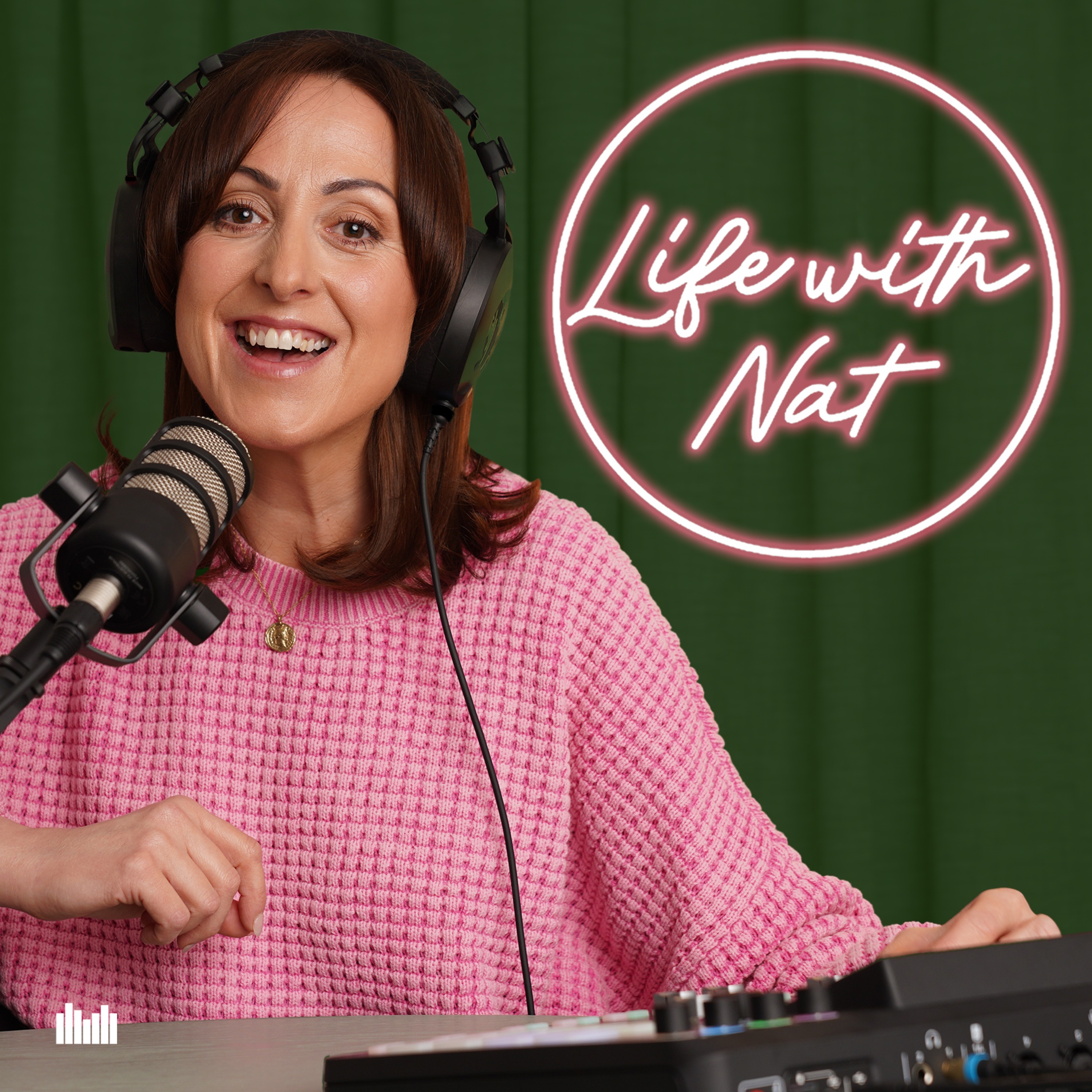
In this episode of Life with Nat, Natalie Cassidy speaks with Dr June O'Sullivan OBE, Chief Executive of the London Early Years Foundation. They discuss Dr O'Sullivan's journey from Irish immigrant and single parent to building the UK's largest social enterprise nursery group, alongside topics including screen time, children's independence, nursery design, and the importance of early years investment.
Topics early years education, child development, screen time children, nursery provision, childhood independence, parenting pressures, London Early Years Foundation
Mentioned in this episode Dr June O'Sullivan, Rudolph Walker, Sadiq Khan, Tony Blair
Chapters
- 0:02:07 Introducing Dr June O'Sullivan
- 0:03:36 June's Irish roots and becoming a single parent
- 0:06:35 A humiliating nursery experience sparks a mission
- 0:08:17 Ten years in social work and growing LEYF
- 0:13:36 Screen time and its impact on young children
- 0:22:47 Nursery rhymes, outdoor play and childhood freedom
- 0:31:24 Quality nurseries and investing in under-fives
- 0:39:11 June's life outside work
Partner with Natalie Cassidy’s Life With Nat
Natalie Cassidy’s Life With Nat is produced by Audio Always. We work with brands on sponsorship, advertising and partnerships across our network of podcasts, reaching engaged listeners and viewers.
Advertising categories Parenting, Early Childhood Education, Daycare And Pre-School, Parenting Babies And Toddlers, Parenting Children Aged4-11
Show notes
Nat’s joined by Dr June O’Sullivan, a tour de force speaker on what’s important for raise our young children. Combining her wealth of lived experience, academic dedication, and tangible skills of putting it into action building the London Early Years Foundation – she’s still out pushing for social change and continued improvement.
Hear more from Dr June O’Sullivan on her podcast: Talking Early Years – https://podcasts.apple.com/gb/podcast/talking-early-years-with-june-osullivan/id1563037436
Get in touch with Nat, buy tickets for upcoming live shows and link to Patreon, all the family’s Instagrams, and more: lifewithnatpod.komi.io
Hosted on Acast. See acast.com/privacy for more information.
Full transcript
Natalie Cassidy 0:02:07 Hello and welcome to this very, very special episode of Life with Nat. I hope everyone's having a great time and a great summer. This guest is someone who really has changed the world in her own way. We're gonna be talking to Dr. June O'Sullivan, OBE. As background, June is Chief Executive of the London Early Years Foundation, pioneering social enterprise running 43 nurseries across 13 London boroughs and supporting more than 4,000 children, many of whom are from disadvantaged backgrounds.
Natalie Cassidy 0:02:41 She's an author, a speaker, a straight-talking media commentator, and she's known for challenging the status quo on childcare, child poverty, and family support. June's mission is deeply personal. As a young Irish single parent, she experienced poor and humiliating treatment when settling her son into nursery. That experience shaped her determination to create childcare that respects every family. Since 2006, she has grown LEYF from 8 nurseries into the UK's largest social enterprise nursery group, employing over 1,000 people and widening access through fairer fees.
Natalie Cassidy 0:03:20 For June, early years is not simply childcare, it's about belonging, opportunity, and changing children's lives. So let's welcome wonderful Dr. June.
Natalie Cassidy 0:03:36 Dr. June O'Sullivan OBE, it is a pleasure to meet you and have you on my pod.
Dr June O'Sullivan 0:03:41 Thank you so much.
Natalie Cassidy 0:03:43 Honestly, it's amazing. And I've done a bit of reading up and—
Dr June O'Sullivan 0:03:47 Oh my God.
Natalie Cassidy 0:03:48 I don't know where to start really, June. I'd love to— You know, you, you've achieved so much and you've done so much for early years education and childhood that I think what really struck me first was you in Ireland with your son and how it sparked your passion for it all, really.
Dr June O'Sullivan 0:04:08 I am indeed an Irish immigrant, and I came here in the way that many Irish people came, where, you know, to work for the NHS, to become nurses. I think us Irish nurses got a We had a good reputation. And so I came, actually, you know, I came to be a psychiatric nurse, which is a bit like not the usual way of doing things.
Dr June O'Sullivan 0:04:28 But when I was young, I used to work for the Simon Community. So I used to, we used to have a pram. I'm from Cork, you know, it's a small city. Yeah. And we had a pram and we'd go around in the evening collecting food and then we'd go back to a place called John Street and we cooked the food for these old guys.
Dr June O'Sullivan 0:04:44 At the time there were mostly guys and they were mostly older guys. And they mostly had mental health issues. And it like, it sparked an interest in me and I thought I'd really like to know more about this.
Natalie Cassidy 0:04:53 How old were you when you were doing that, June?
Dr June O'Sullivan 0:04:55 I was probably about 16 and 17.
Dr June O'Sullivan 0:04:58 And sometimes I used to stay in the, in the night shelter. And I can tell you this for true now. I never used to tell people this, but you could hear the rats in the kitchen going into the bins, you know? And you could hear them in the stairs. And like, if this was to happen to me now, I would probably, have a nervous breakdown.
Dr June O'Sullivan 0:05:15 But then I was brave enough to stay all night in a place where the rats jumped in and out of the bins and came up and down the stairs. So I was about 17 then, you know, 17 and obviously very stupid. And then I came to England, trained as a nurse, and found myself unexpectedly pregnant with my son. And I was, uh, 19.
Natalie Cassidy 0:05:35 How did that go down with family and stuff?
Dr June O'Sullivan 0:05:38 It didn't go down too great 'cause I didn't tell them till I was about to give birth. Then my mother, my poor father, who's passed us now, has left us now 3 years ago, who is the nice— was the nicest man on the earth, actually, was just bewildered by all of this. To me, I was like, well, it's a baby, you know, we'll manage. You know… Yeah.
Dr June O'Sullivan 0:05:55 Jesus was born in a manger. You know, we'll figure this out. We're in South London. You know, we can figure a way out of this. And so, I was a night nurse, and in those days, the night nurses were all either Caribbean or Irish.
Dr June O'Sullivan 0:06:09 And so, one of the nurses' mother was— used to come and sleep in my house, and she taught me all things about cassava, and cassava cake, and all sorts of interesting things. She taught me how to make the best Christmas cake in the world, which I still make now, which is so laced with alcohol, you can hardly stand up after a slice of it.
Natalie Cassidy 0:06:26 My wonderful friend, um, Rudolph Walker, who plays Patrick in EastEnders, he used to bring in his Caribbean Christmas cake.
Dr June O'Sullivan 0:06:35 Stop there, Cindy.
Natalie Cassidy 0:06:35 After a slice, you couldn't remember your lines.
Dr June O'Sullivan 0:06:38 I know! And that is so true. And, uh, when he was just coming up for 2, I sort of— I was desperate to go to work in the day 'cause I was knackered, basically. And I took him to a neighbour's house, around the corner. I was living in Streatham. And this woman, you know, sort of— I introduced myself. We were on the list forever. Anyway, we got in. And the second day, when I came to pick him up— you had 3 hours. When I came to pick him up, I could see him in the garden, like by the fence. And I was thinking, this isn't right.
Natalie Cassidy 0:07:08 Hmm.
Dr June O'Sullivan 0:07:09 And obviously, he had got a bit lost in this kind of wandery garden, which was— it's good that they had a garden, but getting lost wasn't such a good idea. So obviously, I'm a mother, you know? I pick my child up and, you know, what you do, wouldn't you?
Natalie Cassidy 0:07:21 You know, you pick your child up.
Dr June O'Sullivan 0:07:23 Of course. Absolutely. My lovely little 2-year-old with his like blonde curls and his little scared face. And I walked up to the door.
Dr June O'Sullivan 0:07:31 Now, I knew nothing then. If I knew now what I knew then, I would've taken her legs off, I tell you. But anyway, I went up to the door and she started screaming at me. I think probably she had got a fright 'cause they couldn't find him. And she started screaming at me, being an Irish single parent and how she couldn't— she could have given this place to a doctor.
Dr June O'Sullivan 0:07:49 And honestly, Even though I was knackered and I had no other childcare, I walked away and I thought, you are never going back to that place. No. But I am going to create something one day where no one is not welcome, where every child is, is valued. It doesn't really matter what your background is. Just 'cause you're born poor or you're born into a situation which is a bit tricky at the time doesn't mean you should suffer for it.
Dr June O'Sullivan 0:08:10 And that's what I did eventually, but it took a long time to get from there to there. But we're there now.
Natalie Cassidy 0:08:17 So in between those years, um, when your son was 2 and then sort of growing up, were you still nursing? Did you still do the night work?
Dr June O'Sullivan 0:08:24 No, I stopped the night work and I got a job in social work. Um, and he went to a childminder till he went to school. And I was a social worker for 10 years because, like, I'm one of those old-fashioned girls, you know, where you want to, like, learn your craft, to really learn your craft, you know, before you jump from one job to the next job. So I spent 10 years there. In the meantime, I met my very nice man called Steve, who I'm still married to now, 40 years later. He sort of gave me grounding and a roof over my head. That was helpful.
Natalie Cassidy 0:08:57 Yeah, yeah.
Dr June O'Sullivan 0:08:58 That was a good tactic. And then we went on and had a couple of more children, as you do. And so I stayed, I worked for, once with social services for 10 years, looking after particularly childminders.
Dr June O'Sullivan 0:09:11 I loved the childminders. When I started, there was about 4. When I left, there was about 96. And I remember once, they were all from Battersea. Battersea was like my second home.
Dr June O'Sullivan 0:09:20 I remember saying, have you ever been out of Battersea? And it's like, no, June, Battersea's like where the boundaries are, you know? And I said to them, well, let's go to Chinatown for an evening meal. Let's go to Chinatown. So we all went to Chinatown, and honestly, I was saying to them, you just don't need a passport to come to Chinatown.
Dr June O'Sullivan 0:09:37 We can do this. We can get on the bus and we can do this. And they were so excited. We had such a good time.
Natalie Cassidy 0:09:43 Fantastic.
Dr June O'Sullivan 0:09:44 20, 30 years ago. I then took him to France. Oh, so we went on one of those, you know, do you remember those day trips to France where you went to, um, Boulogne and you could get, uh, reductions?
Natalie Cassidy 0:09:56 With the coach?
Dr June O'Sullivan 0:09:56 Yes, on the ferry and the coach. Yeah, you could get those reductions because if you bought certain newspapers, you could cut out the vouchers and you get it cheaper.
Natalie Cassidy 0:10:04 Right, right.
Dr June O'Sullivan 0:10:05 So off we went, and, uh, and that was a big deal for some because they had to actually get a passport for the first time. Anyway, we went and I said, like, this is your day out now, you know, uh, this is your day out, girls. We're going to have a good time.
Dr June O'Sullivan 0:10:17 We're going to eat French food. We're going to pretend we're really, you know, sophisticated. We're going to have— well, I tell you, they spent all of their time having discovered, uh, Carrefour on saying, June, have you seen how cheap the nappies are? Have you seen how we can buy all of this? We came back with bags of washing powder and nappies and all.
Dr June O'Sullivan 0:10:37 And I said to them, where are like the French wines? And they were like, no, no, no, you should see what we could get. So it was hilarious. But anyway, went on from there.
Natalie Cassidy 0:10:46 That's incredible. And so really your whole life since you were a young teenager, you've been a carer, haven't you?
Dr June O'Sullivan 0:10:54 Oh yeah, totally.
Natalie Cassidy 0:10:55 You wanted to care for people.
Dr June O'Sullivan 0:10:56 Totally. Yeah. Yeah.
Natalie Cassidy 0:10:58 Um, I, and I've just done my care series. I know, I love that.
Dr June O'Sullivan 0:11:02 So I saw you on the telly actually, um, and I thought, oh, I love the fact that she's she's recognising that what we call when we're being like fancy, the, uh, the, the philosophy of care. And I, I did a PhD there not so long ago, and, uh, I did a lot in that about the philosophy of care, about how it's so undervalued, so unappreciated, and it's actually the glue that holds us all together.
Natalie Cassidy 0:11:25 Well, everybody's gonna need care at some point, doesn't matter when, you know. So it's a crazy thing not to appreciate and talk about and all of those sorts of things.
Dr June O'Sullivan 0:11:34 Exactly. Exactly.
Natalie Cassidy 0:13:28 I've heard that you are sometimes quite outspoken regarding things.
Dr June O'Sullivan 0:13:36 Who told you that? Never. Not me. I'm quiet. Uh, well, sometimes, uh, sometimes, Nat, you just have to call it out, don't you?
Natalie Cassidy 0:13:50 You do? So what are you calling out at the moment? What, what gets your goat?
Dr June O'Sullivan 0:13:55 You see, the thing is, I like children. I actually genuinely like them, and I hate to see them being like abandoned. And for me, like, children are what we're doing everything for.
Dr June O'Sullivan 0:14:06 They're like— and but they're also like the litmus test of when things go wrong. You know, the first time you see like more and more sugar in the food, you start noticing children more tooth decay, you start noticing obesity. And, uh, people were saying, no, no, no, there's no obesity. And I'm thinking, yeah, I think there probably is. 2-year-olds who can't cross their feet, cross their legs when they sit down.
Dr June O'Sullivan 0:14:25 No, no, no, I think there is. Um, and a lot of people thinking, not realising they put sugar in just about everything. Yeah. And that got me going. So I set up an early year chef academy to train all the chefs, because chefs get trained in like GCSE broader stuff, but not in like food nutrition for small children.
Dr June O'Sullivan 0:14:43 Right. So they didn't know about like portion size, or, you know, like 2-year-olds, they're very funny about their food because their taste buds are exploding basically in their mouths. And so anything that tastes like normal to us is like 50 times more powerful in their mouths. And they get a bad rep, 2-year-olds. They're always, you know, always talking about 2-year-olds, terrible twos and stuff.
Dr June O'Sullivan 0:15:04 But actually, 2-year-olds are brilliant.
Natalie Cassidy 0:15:06 And, um, they are brilliant. I think it's a fantastic age.
Dr June O'Sullivan 0:15:09 They are brilliant, aren't they? Yeah, I mean, love their independence and their I do it. Mine do it.
Natalie Cassidy 0:15:15 They're gonna do it. They're gonna do it whether you want them to or not.
Dr June O'Sullivan 0:15:18 Yeah.
Natalie Cassidy 0:15:18 And their determination. My great nephew is, well, he'll be 2 in October. Oh. But he's just an amazing little boy to be around, you know?
Dr June O'Sullivan 0:15:26 A little Libran.
Natalie Cassidy 0:15:27 Just watching their, yes. Just watching his enthusiasm and that, that just, you know, just always exploring and always sort of pushing the boundaries. And like you say, people say, oh, they're naughty. They're not. They're not. They're learning. They're always learning.
Dr June O'Sullivan 0:15:45 They're really figuring it out. They really are. And I love it when they say, my do it. And you say, okay, you do it then.
Dr June O'Sullivan 0:15:52 I'll help you. Do you want any help? No, no, no. My do it. My do it.
Dr June O'Sullivan 0:15:56 And so you stand back and you let them, you let them figure it out, and then you stand back and help them. And I, I know when you're a parent, like, and you're in Sainsbury's and you like have 40 minutes to collect the other children. Yes. And to get the dinner, my do it doesn't really help you particularly. And I know there's been times when I was when my children were young, and where I abandoned the shopping and just like, okay, I— we're just going home now.
Dr June O'Sullivan 0:16:21 I can't do this. I can't do this anymore.
Natalie Cassidy 0:16:23 It takes a lot of patience, I think. It doesn't. And it takes a lot of time.
Dr June O'Sullivan 0:16:27 Yeah. And something we don't have much of, really.
Natalie Cassidy 0:16:30 We don't have much of. And I really wanted to know your take on— I always wonder, someone like yourself, what do you think about this kind of giving children a phone or an iPad at that age?
Dr June O'Sullivan 0:16:44 I think it's really not a great idea.
Natalie Cassidy 0:16:46 No.
Dr June O'Sullivan 0:16:46 So, uh, all the science backs me up on this, uh, but we know the reality is that actually by 3, something like half the children go to bed with an iPad as their storytelling, you know, as their storytelling, uh, opportunity. So they're not having a story read to them, and that's not really great for their brain development and stuff. Now, I also know that parents are under a great deal of pressure, and like, I remember I would put Rosie and Jim on, or Thomas the Tank. I could tell you everything about Thomas the Tank.
Dr June O'Sullivan 0:17:16 I knew everything, um, while I was trying to cook the dinner. So, you know, you, you kind of have to balance this out. But I think the screen time now is much more dangerous than the video thing in the past, uh, because it definitely kind of impacts on their, on their concentration, on their brains, on their language. Like, for example, I remember about 4 years ago, one of the area managers saying to me, We have loads of American children. And I remember thinking, have we?
Dr June O'Sullivan 0:17:41 Of course we haven't. They've all been on YouTube. And so they're on YouTube so often, they had American accents.
Natalie Cassidy 0:17:46 I've, I've, I've noticed that out and about. I've noticed some Americanisms, or, yeah, as you say, an accent come out. And I think you've got to be watching a lot of American stuff, haven't you, to do that?
Dr June O'Sullivan 0:17:58 Well, all those short reels, they're really bad for them. Those YouTube short reels, they're, they're much more dangerous than sticking the video into the video player machine and saying, can you just watch What happens to Fireman Sam? Tell me in a minute what happens to Fireman Sam while I just make the dinner.
Natalie Cassidy 0:18:13 Yeah.
Dr June O'Sullivan 0:18:14 And, and the follow-through is, um, what happens is the difference. Because I see the children on the trains and parents just pass them the phone and there's no interaction. Whereas I think if, if you have— if they were like, and now what's happening? And what did he tell you? And, you know, you're having this conversation, you can mitigate some of the risk.
Dr June O'Sullivan 0:18:32 But it's not— they put their earphones on them, they give them this thing, and then they flip into it, flip onto it, and flip onto it. And there's nothing to suggest it's helpful in any way. And sometimes parents think, oh well, they're learning their colours, or they're learning their, their alphabet, or they're learning their numbers. They're really not. They're really, really not.
Dr June O'Sullivan 0:18:51 Uh, they're not absorbing this in any way that's sort of meaningful.
Natalie Cassidy 0:18:55 So, um, I mean, I think— My daughter, she's, um, she'll be 10, 10 in a couple of weeks' time. And she is exhausting. She is fantastic, but she is a doer and she loves attention. And she still wants imaginative play now.
Natalie Cassidy 0:19:12 She still wants me to be— Wow. We played hotels yesterday, June. Wow. So she put labels on all of the doors. I came in, I had to have a bag.
Natalie Cassidy 0:19:21 She was receptionist. And for an hour, we, we did some role play. We played hotels. But sometimes you do, just as a grown human being woman, I have to say, Joan, Please go and watch a bit of telly or play a little game because I can't do this all day. I have got stuff to do, as much as I love it.
Dr June O'Sullivan 0:19:39 Yeah. You know?
Natalie Cassidy 0:19:40 But I'm so happy that I do believe that I've done that. I've made her love imaginative play.
Dr June O'Sullivan 0:19:46 Yeah, you probably have.
Natalie Cassidy 0:19:48 You know, the talking, and like you say, getting on a tube and doing rock, paper, scissors. We, you know, we don't take iPads out and stuff. And I know for some people, I do understand, You know, life is different and it's hard, and they may need some time because they're working from home, or, you know, there's so many different scenarios, aren't there? But I just think sticking on a bit of television, exactly like you, is better than the, the, those sort of short-form videos.
Dr June O'Sullivan 0:20:14 And just talking about it afterwards. I think it's just the talking about it is the thing, 'cause then it becomes a, a point of conversation. And I think, yeah, you know, I don't know that we're— they're doing that. But also, I mean, you know, it's all— parents are having, you know, it's, it's a difficult, time now because we live in a 2-parent economy where both parents have to work just to pay the rent.
Natalie Cassidy 0:20:34 Yeah.
Dr June O'Sullivan 0:20:34 Um, but also we as adults are a little bit addicted to our phones as well.
Dr June O'Sullivan 0:20:38 Like, so to be frank, yeah, we have to put signs up saying put your phone in your bag when you come to collect your child, uh, you know, no phones and stuff, because they will come in and they will have the phone out and they will say hello, like glance at them, and then answer the phone or send a text or look at something. And I think if you've not, if you're not seeing your child for 8 hours or 10 hours, you kind of have to give 'em that special moment of re-engaging, reconnecting, re-belonging, you know? And that's really important. And I think we have to own that too, that the algorithms that have made us so addicted to the phones, which are the ones that are also working with the children, are not good for us.
Natalie Cassidy 0:21:18 Sorry, I'm so sorry, June, I'm so sorry. Hold that thought. What's the matter? What have you done? Put some tissue on it, sweetheart. Yeah, and then just pop down to Daddy. Sorry, summer holidays.
Dr June O'Sullivan 0:21:29 Oh yeah, I love that.
Natalie Cassidy 0:21:32 Sorry.
Dr June O'Sullivan 0:21:32 Put some tissue on it, there's a good answer. Or if you're Irish, have a cup of tea. Yeah, grand.
Natalie Cassidy 0:21:37 Wrap some paper around it, fish and chip paper, my dad would have said.
Dr June O'Sullivan 0:21:41 Yeah, that's a bit of brown paper. Well, there's a science to that, you know. Like, there is, um, there is, uh, fibre in the brown paper that actually helps you to soak up a cut.
Dr June O'Sullivan 0:21:52 So there's, there's like nursery rhymes. Can I, can I talk about nursery rhymes for a second? Yes. Because that's one of my bugbears. Like, nobody knows nursery rhymes anymore at all.
Dr June O'Sullivan 0:22:00 And that's really scary because nursery rhymes are really important in helping children to learn to speak and to listen and to sing and to, you know, uh, become confident actually readers and therefore become confident writers. And this, the nursery rhyme tells a story. And the, uh, you know, Jack and Jill fell down, you know, went down the hill, you know, and to get to fetch a pail of water. Jack fell down, you know, and bumped his head, and Jill came tumbling after. Yeah, was it then?
Dr June O'Sullivan 0:22:28 Then up Jack got and home did trot as fast as he could caper. He went to bed and wrapped his head— wrapped his head in vinegar and brown paper. See, an antiseptic and an absorbent of stopping the bleeding.
Natalie Cassidy 0:22:41 Yes, yes, yes. There are little morals in those things. Oh, lots of them.
Dr June O'Sullivan 0:22:47 And children need that. Yeah, they, they need to understand in a safe way, um, how to deal with difficulty. And to some degree, another one of my bugbears is when we as adults try and wrap children in cotton wool and try and make all decisions for them and try and in a way limit those opportunities for them to play and to play out things and to play so they figure things out and they work things out. So, like, we're scared to let 'em out and play. I went out to play. Did you go out to play?
Natalie Cassidy 0:23:17 I did go out to play. Only in certain— not where I lived, actually. It was quite busy. I was in Islington, in the middle of London. I didn't really go out until I was about 14, but I had very strict parents.
Dr June O'Sullivan 0:23:28 Yeah.
Natalie Cassidy 0:23:29 I used to go and stay in Hertfordshire with my brother, who's much older than me, and I played out there. We played out, me and my nieces and, uh, Playing out was great, wasn't it?
Dr June O'Sullivan 0:23:39 Yeah. Well, we've taken that away from them. That's another answer to your bugbear. You said to me, what am I worried about at the moment? I'm worried about that.
Natalie Cassidy 0:23:46 I have to counteract that because honestly, I would not allow Joni to the park at 10 on her own.
Dr June O'Sullivan 0:23:52 You see, what have we done, Natalie, that we've created an environment where the children don't own their own space anymore? You know, we've put cars everywhere, we've put fear everywhere, we've like not opened up their local neighbourhood to them in the way that they're entitled to. We're like, we've done them a disservice, you know?
Natalie Cassidy 0:24:09 You're absolutely right. But for me, what I see as a parent is the caring, the nurturing, the feeding, and just keeping them alive. But my job is to eliminate risk from their lives. Yeah. So for me, Joni walking across the road and going to the park, which isn't far away at all, by the way, going to a park at that age on her own is a risk. And I just can't take that risk.
Dr June O'Sullivan 0:24:34 No. And I think that's what happens. It becomes a circle, a virtual cycle of fear, isn't it? Because—
Natalie Cassidy 0:24:40 Yeah.
Dr June O'Sullivan 0:24:40 When we went out to play, there was fewer cars.
Natalie Cassidy 0:24:43 Yep.
Dr June O'Sullivan 0:24:43 There was always a group of us. So, you know, there was a, you know, all the children from the street would be all out playing, you know?
Natalie Cassidy 0:24:50 Yes.
Dr June O'Sullivan 0:24:51 The neighbours had an eye on you as well. So if you got into any trouble, it went to your mother before you even got home. So by the time you walked in the door, you got a clip around the ear. Yeah. You know, like she knew before you even breath— you know, before you even said anything. That was a different kind of environment. And all I'm saying is, as adults, we have cut that off for children. And so it's really hard.
Natalie Cassidy 0:25:13 And I think, again, it's the community side of it as well.
Dr June O'Sullivan 0:25:15 Yeah.
Natalie Cassidy 0:25:15 You know, you have got a lovely little community, but again, like you said, keeping an eye out the window, no one's at home, everyone's at work.
Dr June O'Sullivan 0:25:22 Yeah.
Natalie Cassidy 0:25:22 You know, if you wanna have a wee in someone's house, you'd just run in, wouldn't you? And someone would let you in. Yeah. You know? And you knew everybody.
Dr June O'Sullivan 0:25:28 Yeah, yeah.
Natalie Cassidy 0:25:29 So it is very different now. You don't know every neighbour. You're not sure what people are up to. No, exactly. And it is an element of fear and distrust. And I don't know whether that, again, is to do with technology and us knowing too much about everything. I don't know. Maybe there was a certain level of naivety back in the day which did us good.
Dr June O'Sullivan 0:25:46 I think you're right. I think you're absolutely right. That said, but also, there's 2 things that have changed. And one is we have restructured childhood as much more about children being indoors and children being in a much more nuclear environment. family. And the second thing is, we have created this term, to parent. Like when I was growing up, we reared our children.
Natalie Cassidy 0:26:10 Mm.
Dr June O'Sullivan 0:26:11 And then suddenly, I don't know where the to parent came, because with to parenting came a verb of something that you had to do. And I think it's created a load of kind of issues for people, because what is to parent? Because it's not like a verb. And if it is, like, what is it mean?
Dr June O'Sullivan 0:26:30 And, you know, then now you have to search for perfection. And then you have social media and those— Oh, this is it. Awful WhatsApp groups where they're all comparing each other all the time, you know. Absolutely. Oh my Tallulah, is that— she's going to the toilet at 3 months.
Dr June O'Sullivan 0:26:43 No, she's not, because she hasn't got sphincter control at 3 months. What she has is you running around after her trying to catch her. And then someone else whose child is 2 and a half is going, oh my God, my child must be special. Like, why doesn't he go into the bathroom? Oh, until you have this complete guilt because one person's comparing the other and stuff like that.
Dr June O'Sullivan 0:27:01 And then everyone else is jumping in with it. Oh yeah, and mine came home with, you know, a dirty cardigan from nursery. And oh, mine's got— yeah, and so on it goes. And in the end, it's kind of crazy.
Natalie Cassidy 0:27:11 It goes on and on and on. I mean, I remember, you know, people say to me now, family members, whoever, oh, you know, they've said at school that her handwriting isn't great. I said, she's 4. I said, in Sweden, they don't pick up a pen till they're 7.
Dr June O'Sullivan 0:27:23 Yeah, just don't worry about it. I often say to parents, who does she need to write a check?
Dr June O'Sullivan 0:27:31 Yeah. You know, like, why, why does she need to be able to write her name perfectly at 4? I mean, it's great if she does, but if it doesn't matter, it's like, she's— it's not needed. But of course now they're pushing them into school so young, so young. In fact, I was in Finland a couple of weeks ago at a conference, and they, like you say, they're 6 when they start there.
Dr June O'Sullivan 0:27:49 they'd said to me, June, is it true that you're, you know, children as young as 2 are going to school now? And I said, it is true, girls, it is true. It is shocking and it is true. And I just think, ah, you know, this is why I said they're pushing them too early all the time.
Natalie Cassidy 0:28:03 They are, June.
Natalie Cassidy 0:28:03 But that goes back to what we're saying about how life has changed. I love being at home. I honestly, I would be at home, I'd be a very happy 1950s housewife. Genuinely, I would. I love my cleaning, my cooking.
Natalie Cassidy 0:28:17 I'd be really happy to have my children and be at home. But life's not like that. No, no. You have to go out. So what are you doing with these kids?
Natalie Cassidy 0:28:24 People are relying on their parents. I think it's wonderful how grandparents help their children, you know, and have their children. But also, they've done all of that. It's lovely to have a child for a day. Yeah.
Natalie Cassidy 0:28:37 But really, should you be, as a grandparent, having your kid 5 days a week?
Dr June O'Sullivan 0:28:41 No, no, you'd be knackered.
Natalie Cassidy 0:28:43 I can understand the situations. You're exhausted, surely.
Natalie Cassidy 0:31:05 Action items, owners, It's really hard for people, but I, I agree, there needs to be an educational setting for the 2 and 3-year-olds, something, because people need to go to work.
Dr June O'Sullivan 0:31:24 Yeah, except that it doesn't have to be school. It can be a really lovely nursery which is play-based, where they're in an environment that's like home.
Dr June O'Sullivan 0:31:30 Like, any of our nurseries are like home. And they're there all day. And I have proper trained chefs, and we have play, and we have gardens, and we have activities, and we have what we call a pedagogy, which is the way we teach children and how we lead them to learn. They don't need to be in a school environment, you know, trying to fit in. No, absolutely not.
Dr June O'Sullivan 0:31:46 And I think as a country, we have to— we should own that. Like, we should own that. Parents shouldn't feel guilty if their child comes to nursery, but the nurseries should feel guilty if it's not good enough. You know, it has to be great experience for those children. The economic situation that we now live in shouldn't— the children shouldn't suffer as a consequence of that.
Dr June O'Sullivan 0:32:04 They should get the best. Because when you give them the best, honestly, when you see them thrive and you see their brains develop and you see them learn, and you're— the parents also find a community in a really good nursery, you know, in the sense that, like, so many of the parents I know and chat to, they would say they would never have made friends, and now they have a whole connection, you know, they have a whole group of people they hang out with.
Natalie Cassidy 0:32:26 And well, absolutely, some of my best friends are um, Joni and Eliza going to nurseries, or, you know, it's wonderful.
Dr June O'Sullivan 0:32:32 Exactly. Yeah.
Dr June O'Sullivan 0:32:34 So that— I, I find it very depressing, some of that, and I get very outspoken about them, that, that kind of trying to penny pinch around this area of learning. And somehow or other, under-5s doesn't matter so much because it's all about your SATs and your passing exams. But actually, 80% of your brain is developed by the time you're 2. 80%. So like, they're with when their brains are fizzing like volcanoes.
Dr June O'Sullivan 0:32:59 And then 90% of your brain is done by the time you're 5. So why wouldn't you spend, you know, instead of— Time on that. Exactly. And the money on that and the support on that. Like, why wouldn't you?
Dr June O'Sullivan 0:33:10 Why wouldn't you if you like children?
Natalie Cassidy 0:33:12 It's forward thinking, isn't it? Forward thinking. Because if you do the best at that age, then hopefully their school life will be better and they will feel more comfortable.
Dr June O'Sullivan 0:33:21 And all the science and the research, you know, shows that. And we do a lot on sustainability. I'm really into sustainability. sustainability and this whole thing about how do you prepare the planet and the environment for our children so that— because they are citizens of the world once they're born. I mean, they have a right. So we did this really great piece of work recently. We gave the children cameras and we took, uh, 4 children from 4 different parts of London. So Lewisham, Soho, Newham, and Southwark, Dulwich, down that end. East Dulwich.
Natalie Cassidy 0:33:53 Yeah, yeah.
Dr June O'Sullivan 0:33:54 And they opened out their cameras and we said to them— they're all 3 and 4, all articulate, nice 3 and 4-year-olds. You know, and I'm very, very funny. And they— I said to them, take any photographs you want of anything, you know, that you don't like. And they defined what they didn't like. They decided what they didn't like.
Natalie Cassidy 0:34:11 Right.
Dr June O'Sullivan 0:34:12 And so they took all these photographs, um, and they came back, and then we showed them all the photographs they took. We put them on a screen, and then they decided, and then they chose the ones that they wanted to keep. And then we asked them why they didn't like them. So you can imagine what they came up with. in their own particular way, in their own language, with their own description.
Dr June O'Sullivan 0:34:31 The first one was like, this is agusting, agusting. And I was like, what is agusting? And it's like, why, why, why, why, why is there litter everywhere? Like, why is there mess? Then bird guano.
Dr June O'Sullivan 0:34:43 Why is there bird guano everywhere? Why is there dog poo? Why are people writing? Why are they writing on the walls and not on paper? Why is there writing on the bins?
Dr June O'Sullivan 0:34:52 So they didn't like graffiti. I know people see it as an art form, but it wasn't— they weren't finding much Banksy around where they were finding it. They were just finding, um, not very good graffiti. Then there was really interesting ones. Like, there was one group of children in Stockwell.
Dr June O'Sullivan 0:35:06 We took them around Stockwell. And like, it's really interesting how children own their space. Like, this is their London.
Natalie Cassidy 0:35:12 Yes.
Dr June O'Sullivan 0:35:13 They say, my daddy likes the cafe down there, and that's the bus my mommy gets to work.
Dr June O'Sullivan 0:35:18 And then they notice things like there's lots of flats, as you know, being built in London at the moment with not enough green space. green space in my view. But anyway, um, and then one of them said, I don't like all these buildings, they're ugly and they're dark. When I looked at what he was trying to say with his photographs, it was the shadow from these blocks was quite deep. And so when you came down and you're only 2 foot tall, all you see is this kind of darkness.
Dr June O'Sullivan 0:35:42 Yeah. So, so we're going to write to Sadiq Khan, we're going to do a whole heap on planning and the planning departments and everything else and When you're deciding about these things, when you're thinking about it, think about the children as well, because they are also citizens of this city, and they need— they have a right to have their voices heard in regards to this. So, that's why I think, yeah, we underestimate children by not actually giving them a voice, whereas I really think that we should.
Natalie Cassidy 0:36:08 I think it's absolutely incredible. You've really made me think and open my mind to that age group, because I think you're right. I think we see them as babies, toddlers, terrible twos, da-da-da, but they're very, very smart. special citizens of the world. I love them so much. Your children, if you don't mind me asking, I bet they're very proud of Mum. What do they do?
Dr June O'Sullivan 0:36:30 Oh, I don't know. The eldest one is, uh, trained as a, um, sound engineer in Islington. Funny enough, he does a bit of that on the side, but he's a compliance officer. The middle one lives in New York with his wife. She's in finance there at the moment, and he is in marketing. Um, and the youngest one is a permaculture gardener.
Natalie Cassidy 0:36:51 Wow, you must be very, very proud.
Dr June O'Sullivan 0:36:55 Well, I'm delighted with them because they found their own spaces, and they've also influenced me, particularly the youngest one. She, um, she introduced— she was like the military police in the house on sustainability when she was— from about the time she was about 9. So we were recycling with like passion at that point, and she— I remember her writing to Tony Blair I think it might have been Tony Blair, was one of the prime ministers we've had, and saying, in my grandmother's country, they have, you have to pay for plastic bags.
Dr June O'Sullivan 0:37:22 Why can't we do that now? And of course it's taken about 15 years, 20 years before we've done that. And she was writing to them then. She was also big into girls' football when girls' football wasn't a thing. But one small thing she did is I remember when she was going to nursery, she wasn't great at saying goodbye.
Dr June O'Sullivan 0:37:38 She found it difficult.
Natalie Cassidy 0:37:39 Yeah.
Dr June O'Sullivan 0:37:39 The window was quite high, so I introduced— I suggested to them they put steps. So they did. I mean, fairies of them, they did. They put steps to the window so she could climb up the steps and look out and then say goodbye. And then you could— she could see the parting, and then she was fine.
Natalie Cassidy 0:37:52 And seeing you walk away and know that your mummy's going somewhere. Yeah, it's very good.
Dr June O'Sullivan 0:37:57 And then, so I introduced that.
Dr June O'Sullivan 0:37:58 So I recently did a book there called Nursery by Design, and that's those kind of things I've put into the book for people setting up nurseries. and stuff to sort of think about how children see their world in their nursery and the things that kind of help them. Mm-hmm. Like, you know, putting steps up so they can look out, putting images of their local area up when they come into the hall. So, you know, if you live, if you live in a place where there's a particular, um, icon or there's a particular market or there's a particular set of things that you kind of recognise when you're out shopping with your family, that there's also a kind of a poster of that in the in the nursery, or, you know, or the children have made drawings of it and they're all framed going up the stairs, or whatever it is.
Dr June O'Sullivan 0:38:38 You know, things like that are really significant for children 'cause they build that connection between home and nursery. And that familiarity. And they give them a sense of belonging.
Natalie Cassidy 0:38:46 Yeah, and that familiarity and that warmth. And it's that, that brings safety, doesn't it? Yeah, absolutely.
Dr June O'Sullivan 0:38:53 Yeah, absolutely. Yeah, yeah, yeah. It's quite, it's sometimes it's very simple things, you know, Like, it's not highfalutin things that make the difference. It's like articulating, articulating simple things in a highfalutin way to get them listened to by policymakers. But in reality, they're pretty simple stuff, you know.
Natalie Cassidy 0:39:11 June, what do you do? Because you're such a doer, and you've done your book, you've got all the nurseries, you're obviously extremely busy. When do you stop? Do you ever rest? Do you do anything for yourself?
Dr June O'Sullivan 0:39:23 Um, I— well, like, I like writing, so it's not a trouble to me, do you know what I mean? I mean, not emails, like, not them, but writing stories and books and stuff, and I get a great kick out of that. Um, I love my choir, so I'm part of a choir called Real Voices there in South London, and we were singing at Clapham Common bandstand there on Sunday— Saturday, whatever day, no, Sunday. Uh, and I love that.
Dr June O'Sullivan 0:39:49 I, I like that. I have a group of friends, um, a couple of things. I've got a group of friends local to me, um, and they, uh, we go quizzing sometimes. We're absolutely useless, but we have a laugh. Uh, but, um, they're, they're, uh, they're kind of better at some things.
Dr June O'Sullivan 0:40:06 I'm kind of good on policy and politics, that's about it. They all know the songs, and you know, they play the songs and you—
Natalie Cassidy 0:40:11 Yes, yeah, yeah.
Dr June O'Sullivan 0:40:12 You know it in your head, you can't think of it, even though you might have sung it in choir about 3 months before. Um, and then when I was doing my, uh, PhD, which I started in COVID and then I finished it in, you know, some years, and last year in 2025, I met a bunch of women, great kind of different, different women who were all doing their PhD because they're all interested in children. And one of them, God bless her, called Jude, she organised a weekend away. So we went away for a weekend writing and we've been doing that ever since, 3 times a year.
Natalie Cassidy 0:40:44 Wow.
Dr June O'Sullivan 0:40:44 And one of them called Alison is like a a really good chef, and she's really into the whole Ottolenghi food thing. So what she can't do with an aubergine, nobody can, I can tell you.
Dr June O'Sullivan 0:40:55 And so it's great. We go down there, we go all the way to Somerset, and you get picked up, you buy the wine and all of that stuff, you go in, you're immediately talking about policy and new research and new theory, and it doesn't feel like a kind of learning, learning thing. It feels like, like a natural conversation, and you fit in a bit of gossip and you fill in a bit of this, you have a glass of wine, you'd have, you know, we get fish and chips, we all get along. There's, as I say, there's 8 of us, and then 3 of us have done our PhDs and passed. Now we're all the so-called doctors.
Dr June O'Sullivan 0:41:28 Uh, 2 of them are nearly there, and in fact, when we go the next time, we'll be celebrating them. And then the other 3 will, will, with— they'll do it, they'll all do it, everyone will do it. It'll be a house of doctors. Oh, that's wonderful.
Natalie Cassidy 0:41:40 So women Women supporting women. Yeah, yeah, yeah. Breaks away with women. You just can't beat it.
Dr June O'Sullivan 0:41:47 You can't beat it. You really can't. Like, yeah, it's a whole different vibe, you know. Much as we love our husbands or our partners or whatever, it's just— it's a different vibe when you're with the women. Like, you're much more relaxed and you're much more able to be yourself in some ways, even though it's a strange thing to say.
Natalie Cassidy 0:42:05 But yeah, I know what you're saying though. But we meet— we had a do on I won't go into it, but yeah, family do, but it was all women on Sunday. And it is, it's just a different day.
Dr June O'Sullivan 0:42:14 It is.
Natalie Cassidy 0:42:15 It's just that feeling of, yeah, and all being together. Yeah, that's so true. I can't thank you enough for this chat today.
Dr June O'Sullivan 0:42:25 Oh, it's been a pleasure, actually.
Natalie Cassidy 0:42:26 I'm gonna put all of your links, everything, um, thank you, thank you, on the pod. People will be able to see where your nurseries are, to see where your books are. They can go on and they'll find all your details. But truly, I feel completely honoured to have spent this time with you, and I think you're an extraordinary woman.
Dr June O'Sullivan 0:42:42 Oh, well, you're very kind.
Natalie Cassidy 0:42:44 I hope we have a lunch one day.
Dr June O'Sullivan 0:42:46 Oh, I'd love to, love to. But I don't— I think we'd probably need 4 hours.
Natalie Cassidy 0:42:50 Oh yeah, no, it'd have to be a super long one, of course, with my latest thing, which is rhubarb wine.
Dr June O'Sullivan 0:42:56 Have you tried rhubarb wine?
Natalie Cassidy 0:42:57 Oh, I don't need any more wine to try. No, go on.
Dr June O'Sullivan 0:43:00 Where do I get that Oh well, I found it in the Woodman in Dulwich, but my God, I'm searching for it now because I discovered that— well, everyone discovered Whispering Angel.
Natalie Cassidy 0:43:09 Yes.
Dr June O'Sullivan 0:43:09 And, uh, I was away with one of my really close friends, she's from Scotland, and we were having that in a, um, oh, in a, um, spa bath at 11 o'clock at night in Malaysia, talking about pedagogy with people from India and Canada and everything else. And we all had a cocktail and mine was Whispering Angel.
Natalie Cassidy 0:43:30 Fantastic. Absolutely brilliant. Oh no, I'll check it out. I'm gonna go on now and have a look for the rhubarb wine. I'll let you know what I think.
Dr June O'Sullivan 0:43:36 Thank you. Thank you very much. Thank you. It's been a pleasure. Thank you. It's been a pleasure.
Natalie Cassidy 0:43:41 Take care. Bye now.
Dr June O'Sullivan 0:43:42 Bye-bye.
Natalie Cassidy 0:43:46 Well, what an absolute legend.
Natalie Cassidy 0:43:49 Lovely June. What a great woman of, you know, knows everything about the— everything there is to know about little children and champions them in the way she does. But when I asked her about her own life as well, what I love is— I don't know, successful women seem to find time for everything. You know, that's why that lady, that doctor, has got an OBE. I don't know how they find the time.
Natalie Cassidy 0:44:16 They must get up really early. They must get up really early, go to bed really late, and never tired. I don't really get it. But you find these incredible women, and she's certainly one of them. And I really hope you enjoyed that little insight into Dr. June O'Sullivan's life.
Natalie Cassidy 0:44:33 I certainly did. I'm off to find rhubarb wine. I hope the rest of your week is super duper. 07788 20 19 19. Let me know your thoughts on the ep, and I'll speak to you very soon.
Natalie Cassidy 0:44:44 Thanks as always. See ya! See ya!
This transcript was generated automatically and may contain errors.