
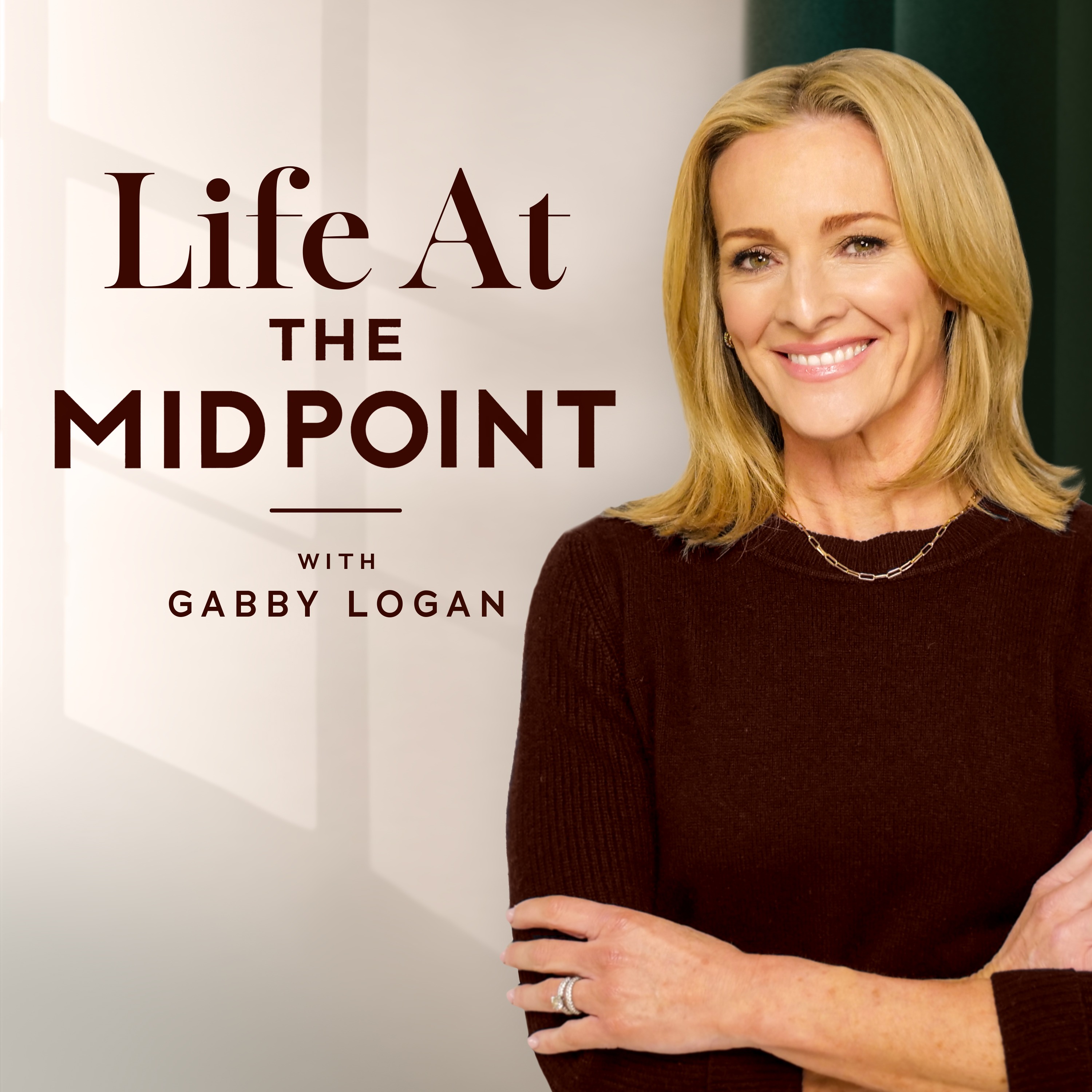
Gabby Logan talks to Victoria Pendleton on Life At The Midpoint about her cycling career, the fears and pressures she navigated as a female athlete, and the personal losses that shaped her new book, The Fear Opportunity. Victoria discusses overcoming self-doubt, her experience as a jockey, and how reframing fear as opportunity has guided her life.
Topics overcoming fear, elite sport psychology, life after sport, grief and loss, female athletes, mental health, fear and opportunity
Mentioned in this episode Victoria Pendleton, Jess Ennis-Hill, Steve Peters, Emma Finucane, Nick Skelton, Kelly Holmes
Chapters
- 0:01:38 Life after cycling
- 0:05:09 Being a female athlete in a male environment
- 0:08:51 Family, father and people-pleasing
- 0:13:10 Becoming a jockey
- 0:23:32 Twin brother James
- 0:27:53 Fear, social media and The Fear Opportunity
- 0:36:36 Mental health and therapy
- 0:41:39 Change at British Cycling
Partner with Life At The Midpoint
Life At The Midpoint is produced by Audio Always. We work with brands on sponsorship, advertising and partnerships across our network of podcasts, reaching engaged listeners and viewers.
Advertising categories Horse Racing, Cycling, Participant Sports, Sports, Equine Sports
Show notes
Gabby’ s guest today is one of Britain’s greatest ever Olympians. Victoria Pendleton is a nine-times world champion cyclist who won gold at two Olympic Games — and then, just to keep things interesting, retrained as a jockey, attempted Everest and walked a high wire over the Olympic Stadium.
Victoria has never been someone who stands still. She has a new book out called The Fear Opportunity, and at the centre is a powerful idea — that the things that scare us most are actually the greatest opportunities we have to grow. But this book is also something much more personal than a self help guide, and Victoria talks with real openness today about the experiences that shaped it.
She is a brilliant Midpoint guest because her whole life has been about pushing through fear to discover what you are truly capable of — and she has learned some hard lessons along the way that she shares with extraordinary honesty. This is an inspiring, moving and honest conversation. Victoria’s book The Fear Opportunity is out now and is published by Bluebird.
Hosted on Acast. See acast.com/privacy for more information.
Full transcript
Gabby Logan 0:01:11 Hello and welcome to The Midpoint. My guest today was a poster girl for the 2012 London Olympics, a serial winner and supreme sportswoman. We all fell in love with her. In an incredible career littered with cycling world titles and Olympic gold medals, she appeared to have it all, to have conquered the sporting world. When the time came up to hang up the cleats, Victoria Pendleton seemed to discover that the highs and routine of professional sport were quite difficult to emulate in everyday life.
Gabby Logan 0:01:38 She threw herself into a series of reality challenges— Strictly Come Dancing and SAS: Who Dares Wins— and also learned to be a jockey with very little equine experience. And doing those kinds of shows and having those kind of experiences showed a vulnerability which we'd previously not seen in her glittering sporting life, and she's since talked about her mental health challenges. Her marriage to Scott Gardner, a sports scientist she'd worked with at British Cycling, ended in 2018, and in 2023, her twin brother James died from a brain tumour. And then last October, her father Max died from Parkinson's disease. Unsurprisingly, she's had to learn a lot about herself and how to keep on moving forwards when big life events happen.
Gabby Logan 0:02:22 Her new book is called The Fear Opportunity, and I'm sure all of those life experiences have fed into this book. And she hopes the book will help us all turn fear and anxiety into a catalyst for growth and reposition fear as something we shouldn't try and inoculate ourselves from. Let's go chat to Victoria. Victoria Pendleton, welcome to The Midpoint.
Victoria Pendleton 0:02:43 Thank you for having me.
Gabby Logan 0:02:44 Do you feel like you're at the midpoint of life?
Victoria Pendleton 0:02:47 I think I'm past the midpoint, to be honest.
Gabby Logan 0:02:49 Because you've lived such a full and successful life.
Victoria Pendleton 0:02:52 I think I, I've achieved more than I ever thought that I would. That's the genuine truth. Um, and although saying I'm satisfied with what I've achieved, it might sound a little bit like premature, I genuinely am very satisfied with everything I've managed to accomplish so far.
Gabby Logan 0:03:09 But I think that's a journey to get to that point. It is.
Victoria Pendleton 0:03:11 Yeah, it is. Yeah.
Gabby Logan 0:03:12 you didn't just kind of go after gold number 1, okay, that's good, I'll move on now. I describe in your introduction today that you looked from the outside when the, when the glittering kind of career that we knew you for came to an end, it looked like you were still searching for things to get the, the structure which I think you get in professional sport and the almost institutional nature of everybody looking after kind of your agenda. It looked like those shows that you were picking And those challenges were to kind of—
Victoria Pendleton 0:03:42 Guilty, guilty as charged. Yes, you're right.
Victoria Pendleton 0:03:45 No, I do feel that's— I mean, that's very accurate. I do feel like I am someone who thrives in an environment that is encouraging me to improve. I love being coached. I like being pushed, um, you know, to see what I'm capable of. But the idea of like, oh, can I just try that?
Victoria Pendleton 0:04:02 Can I give that a go? Can I, can I try that for the first— I want, I want to be a novice. I want to try. I want to learn. And for me, it wasn't so much about competing and like, I am the greatest.
Victoria Pendleton 0:04:11 It was like, I'm better than I was last year, than I was the year before. Can I be even better? You know, that questioning about—
Gabby Logan 0:04:18 It was a personal—
Victoria Pendleton 0:04:19 A personal thing. Yeah, it wasn't about anyone else, which is crazy. I actually— I mean, I've realised, you know, I am an introvert that's learned to be— to exist in an extrovert world.
Gabby Logan 0:04:29 But you feel happiest when you're allowed to be your introvert self.
Victoria Pendleton 0:04:32 Yeah, well, the thing is My physicality is the thing, the only thing really, that gave me a sense of— I don't know, I don't know— Purpose. Confidence and purpose, yeah. Because it was something that I could rely on. Like, my physicality is something I thought, you know, I, I am good at physical tasks and physical challenges, and I can push myself hard. And I draw on that as, as something— well, anchored to it almost in many ways, because it's something that I feel like I can do.
Gabby Logan 0:05:02 Yeah, so the shows that— and the challenges that attracted you, and I'm sure there were millions of different offers coming in, they tended to be physical.
Victoria Pendleton 0:05:09 Yeah, except the choreography element of certain shows.
Gabby Logan 0:05:14 Yeah, but it's a physical—
Victoria Pendleton 0:05:14 That's a different thing.
Gabby Logan 0:05:15 It is a physical show though. Yeah. But I think for somebody who's competed at the level you have, nowhere near physical enough. I mean, people say, oh, you did Strictly, I bet that's really hard. It's not actually that. It's not gonna test your heart and lungs that much, is it? It's testing—
Victoria Pendleton 0:05:30 It's my brain.
Gabby Logan 0:05:30 It's testing something else, isn't it?
Victoria Pendleton 0:05:32 the memory and the choreography in my brain was like, no.
Gabby Logan 0:05:35 Because you were used to going round.
Victoria Pendleton 0:05:37 Just left, one direction actually. That's doable.
Gabby Logan 0:05:40 I also described you as a golden girl, a poster girl. How did that sit with you in 2012, that you were one of a couple of faces, probably you and Jess?
Victoria Pendleton 0:05:50 I didn't really recognise myself. I saw Jess as the, as the poster girl. I never really recognised myself as one. Um, And I— yeah, it was weird. I didn't really recognise that at the time. So when people referred to me as a Golden Girl, I was like, no, don't be silly, it wasn't me. I was there. I was sort of on the periphery of that.
Gabby Logan 0:06:09 But people always seemed intrigued by you, I feel like, because you had a kind of enigmatic face almost, and they, they couldn't quite read you. And so that you, you drew a lot of kind of suppositions almost. Do you recognise that kind of description?
Victoria Pendleton 0:06:26 Yeah, I think so. I think, um, I am a bit of a, a conundrum, I think, in many ways.
Victoria Pendleton 0:06:32 And, and for somebody who has probably always struggled to fit in to the environment, uh, like, I went into my sport not knowing another woman who had ever done that before within my generation and lifetime, um, being surrounded with a group of very successful men trying to work out how to emulate but I can't copy because I'm not, I'm not one of them. It was, it was difficult, it was challenging, and I think it was challenging for everyone else around me to know how to manage it as well. Because as much as I was being told to be like this, be like the men, do it like this, I was like, I can't do it that way, I need to do it my own way. I had no confidence in it.
Gabby Logan 0:07:12 And therefore coaches around you—
Victoria Pendleton 0:07:15 Yeah, probably toughening me up.
Gabby Logan 0:07:16 Finding that difficult to They're trying to work out how to get the best out of you.
Victoria Pendleton 0:07:20 100%. I mean, a lot of them to this day claim that being hard on me was how they were intending to get the best out of me, but I was a very diligent, conscientious, serious— like, serious beyond my years as well— individual. I've never been any other way. So it's like, you don't need to push me. I'm already— believe me, I'm pushing myself pretty hard as it is.
Gabby Logan 0:07:43 Too serious?
Victoria Pendleton 0:07:44 Too serious. Yeah, at times I think so.
Gabby Logan 0:07:46 Yeah. Yeah. And who around you, when you look back, did anybody try and say, just chill out a bit?
Victoria Pendleton 0:07:54 No. Do you know what the weird thing is?
Victoria Pendleton 0:07:56 My dad's very serious and he's always been the underdog, and I think I've always felt very much the same. And, and the difficulty lies in that, the nuance, that I don't feel people take me seriously And that's where it's a struggle because it's like they look at me and they would look at me and, you know, she's put some makeup on and she's done her hair, which at the time was just like, ooh, why have you done that? And I was like, because I am a woman and that's okay if I want to do that, by the way. And it doesn't affect my performance, actually. It probably helps.
Victoria Pendleton 0:08:27 You know, it's not going to slow me down. If anything, this smooth, straightened hair will be faster, more aerodynamic. But anyway, so it was difficult because like I want to be taken seriously. But then, um, you know, being a very serious personality, where's the point where you kind of can take a step back in and, and be a bit kinder to yourself? It's tough.
Gabby Logan 0:08:47 Yeah, it did, did seem that you were hard on yourself.
Victoria Pendleton 0:08:51 Always.
Gabby Logan 0:08:51 Yeah. And you talk about your dad, and he gave you, he gave you a love of cycling.
Victoria Pendleton 0:08:56 Yeah.
Gabby Logan 0:08:56 But it was a complicated relationship in the sense that your need to please, which seems a theme as well in those years—
Victoria Pendleton 0:09:04 Oh yeah.
Gabby Logan 0:09:05 Started there.
Victoria Pendleton 0:09:06 I was only talking about this a moment ago. It was like, I'm a recovering people pleaser. That's a great way to put it. Introduced to that term for the first time.
Gabby Logan 0:09:15 And would you say you're cured, or is it—
Victoria Pendleton 0:09:18 No.
Gabby Logan 0:09:18 Is it a lifetime's work?
Victoria Pendleton 0:09:20 That is definitely lifetime's work. I'm better at it now. I think being a little bit older and having a bit more perspective and a little bit more life experience, I can think I can have a, a better view on, on that. But, um, It's, it's a difficult thing when I've— I moved seamlessly from one relationship to the next, whether that was with my dad or with coaches or things, desperate to please and to make other people happy in order to feel a sense of self-worth or, um, to feel, uh, I don't know. Validated. Validated is— yeah, validated. Like, I I deserve to be there.
Gabby Logan 0:10:00 And a lot of these coaches were men.
Victoria Pendleton 0:10:03 All of them. Yeah, all of them.
Gabby Logan 0:10:05 Yeah, your dad obviously is a male. Was there a strong kind of link, do you think, there in terms of male relationships that, you know, you look back now and realise you've learned a lot?
Victoria Pendleton 0:10:17 Oh, 100%. It's, um—
Gabby Logan 0:10:20 Did this— or did the same thing happen with women? No.
Victoria Pendleton 0:10:26 I never really worked with any women in my coaching environment, which is a sad thing. And things thankfully have changed a little bit, but there still isn't enough women in leadership roles or in coaching roles in sport in general, across the board. And we know that. And I had different needs and requirements, and rather than being supported, at times I was kind of forced into a shape and, and a way of behaving that wasn't me, which felt uncomfortable, which then made me vulnerable. And I think the vulnerability in myself led me to want to please people as a means to kind of get the support back and get them on side.
Victoria Pendleton 0:10:59 I want them on my side. I want someone furiously on my side, in my corner.
Gabby Logan 0:11:03 Was that your mum? Would she have been the person?
Victoria Pendleton 0:11:05 Well, actually, interestingly, it's something that I've thought about a lot since my brother passed away.
Victoria Pendleton 0:11:11 I obviously lost my father last year as well. They were the 2 men in my life who really avidly would support me to the ends of the earth with whatever ridiculous challenge I wanted to take on. They would believe in me. They were, you know, vocal, avid supporters of me, and I'm very privileged to have had them in my life and to give them— to have given me that, I guess, inner voice that said, prove them wrong, you can do it, when the whole world seemed to feel like it was conspiring against you. You shouldn't be doing that, it's not for you, you're not quite right for this.
Gabby Logan 0:11:43 And they were there for you the whole way through?
Victoria Pendleton 0:11:45 Yeah.
Gabby Logan 0:11:45 And where did your mum come into the The kind of balance of the family then? How did—
Victoria Pendleton 0:11:50 My mum is the most loving, nurturing, sweetest woman who I aspire to be more like, to be honest. She is forgiving and kind and generous, and I would like to— I would like to be more like her, if anyone else. I mean, she's my greatest role model, to be honest, um, and I adore her.
Gabby Logan 0:12:08 How did she express her support for you then, when you were—
Victoria Pendleton 0:12:12 We love you no matter what.
Gabby Logan 0:12:13 Right.
Victoria Pendleton 0:12:14 It's my mum's motto.
Gabby Logan 0:12:15 Unconditional love.
Victoria Pendleton 0:12:16 Unconditional. We love you no matter what.
Gabby Logan 0:12:17 Did you believe her though?
Victoria Pendleton 0:12:18 No, no, I probably didn't believe her. It was nice to hear, but it was hard to truly believe and absorb.
Gabby Logan 0:12:26 And when you had the first of those Olympic gold medals, or even your first World Championship title, when that medal was around your neck, did it all feel worth it?
Victoria Pendleton 0:12:36 Um,
Gabby Logan 0:12:37 did that validation, did that feeling, I've pleased all these people now, look—
Victoria Pendleton 0:12:41 I think it was more like I I don't feel so much of a fraud anymore. Like, maybe I do deserve to be here. I've always been someone who lacks confidence in myself, um, so one was never enough, two was never enough, um, and I don't know if I'd won every world title I'd ever competed in whether it would have been enough. I don't think it would have been.
Gabby Logan 0:13:00 Has anything that you've done since, any of the physical challenges you've taken on since, given you a sense that you are enough?
Victoria Pendleton 0:13:10 Interestingly, and people have asked me about what's my greatest ever sporting achievement, and I would honestly say finishing 5th in the Foxhunters' Chase at Cheltenham is probably my biggest achievement. And the difference between that and cycling— the cycling was very predict— well, expected. My performances were like— people would like predict to the 10th of a second. You could measure everything. Everything.
Victoria Pendleton 0:13:33 So measured. Every mistake and flaw would be my— would be human error, to a point where you're experiencing a partnership with a beautiful animal who is much bigger and stronger than you. And you have to accept that you haven't got control. You've relinquished control in many ways, and you're working together, and you're trying to read and be intuitive about the moment. And I, I, I would say received much more from that experience than any cycling experience.
Victoria Pendleton 0:14:05 And I think also the fact that the odds were stacked right against me— people didn't expect me to be able to do that. So there was a lack of expectation, there was almost a lack of pressure to do it, so I could kind of enjoy the experience a lot more. And it was a complete surprise because I didn't even know where I was going to make it to the end of that race. Um, and yeah, it was a fantastic experience.
Gabby Logan 0:14:27 How did you find the, the horse world, and in particular I mean, you know, being a jump jockey is, is the ultimate, isn't it? So how, how did you find that world compared to the cycling world?
Victoria Pendleton 0:14:38 Well, there were a few vocal, uh, there was a few vocal opinions, shall we say, uh, of very experienced jockeys who, who believed I shouldn't be doing it in the press, which was kind of— yeah, it was, it was quite hard. But on the whole, the community, once I had shown my commitment and my appreciation for the sport, were very welcoming. And actually Um, when I had my, uh, win at Wincanton a couple of weeks before Cheltenham Festival, when everyone was doubting whether I'd be ready, I came into the changing room and there were some very well-known jockeys there who were sort of cheering and, you know, said congratulations and well done. And they really accepted me at that moment, and it felt incredible.
Victoria Pendleton 0:15:19 Mm-hmm. Um, because I didn't expect them to, and I didn't necessarily need them to, but they did. And it was nice to feel part of something new. And the horse racing community in general were— I think they were sceptical, but I think after Cheltenham it was different. They kind of appreciated what I put in and how difficult the task was.
Gabby Logan 0:15:39 You'd gone through something huge there. Yeah. Was there ever any sense that that might be your next career?
Victoria Pendleton 0:15:45 Ah, if I'd have been a few years younger coming to the sport, maybe. But actually, it's a lifetime of building relationships, that sport. Knowing the trainers, knowing the horses, being able to read the most difficult— because I obviously was gifted the opportunity to ride some very, very well-behaved, well-trained, and beautiful personalities. The horses were kind, um, and looked after me. So don't be under any illusion, I could jump on anything and make it work.
Gabby Logan 0:16:10 Did you ever think, I found this a bit soon?
Victoria Pendleton 0:16:12 Oh, I would have loved to. In my next life, I would love to do something like that.
Gabby Logan 0:16:16 And horses are still a big part of your life.
Victoria Pendleton 0:16:17 Yes, and there's still time. There's still time to go into equestrian sport. Um, and what I love about equestrian sport is that there's Um, it's— first of all, it's very, very little reward for lots and lots of very difficult, hard days. Um, and, you know, people in equestrian sport expect very little because you can't guarantee anything. It's a gamble from start to finish, whether that's the breeding, the training, anything. You don't know. The horse can't tell you.
Gabby Logan 0:16:47 Or that morning, whatever the horse is feeling. Yeah, exactly.
Victoria Pendleton 0:16:50 And I think when there's success, it's really celebrated because it's so special and unique. And also people can— I mean, I always think about Nick Skelton at the Olympics winning his first gold medal. At 56. Yeah, there's still time for people to take up equestrian sports.
Gabby Logan 0:17:05 Well, it was also men and women competing on the same stage.
Victoria Pendleton 0:17:07 Exactly, love that.
Gabby Logan 0:17:08 And it does feel— because my daughter show jumps, so it always feels to me whenever I go to shows as well, exactly what you say there, the appreciation that, that day, that horse, you know, could either be waking up thinking it's the greatest thing since sliced bread and gives you everything, or wakes up with a little niggle or a tummy grumble.
Victoria Pendleton 0:17:26 Wrong side of the stable.
Gabby Logan 0:17:27 Yeah. And, and nothing you've done with that horse before seems to have played into anything that's going on that day. And everybody knows that. Yeah. There's no sense of shame if that happens.
Victoria Pendleton 0:17:36 I love that. That's exactly— that, that describes it perfectly. I love— I absolutely love that element of it.
Gabby Logan 0:17:41 Yeah, there's a, there's a real camaraderie in that respect. That's not to say they're not competitive people, and they're really competitive, and, you know, the stakes are very high often, and To have the nerve to, you know, like the Olympic team show jumping final, you know, the nerve that's needed for the final jumper who knows that gold is on the line, you know, it's an amazing, amazing sport to kind of watch and be around.
Victoria Pendleton 0:18:03 I headed to Paris to go and watch a bit of the show jumping.
Gabby Logan 0:18:06 Yeah, at the Palace of Versailles, isn't it? It's beautiful. Lois and Kenny went and I was very jealous. I was stuck in the athletics stadium. Not stuck, I loved it, but I was in the athletics stadium and they were in this And it was a gorgeous, gorgeous venue. So hot. Beautiful. Yeah, they're different. They are very different, aren't they, the horsey people, I imagine, to the cycling people that you, you were used to kind of being with. You must have seen loads of different sporting setups though in your life and thought, I wonder if I— because I think you could have probably turned your hand to quite a few different things.
Victoria Pendleton 0:18:33 Yeah, I think, I mean, there is nothing I probably wouldn't try. Given half the chance, I'd give it a go. I really would. I mean, I would love to have been a track and field athlete. Oh, that would be amazing.
Gabby Logan 0:18:45 Because?
Victoria Pendleton 0:18:45 I think there's the purity of it. Like, just being an incredible runner.
Gabby Logan 0:18:53 Yeah.
Victoria Pendleton 0:18:54 Just wow. Even— and also just some of the— even when you're watching things like the high jump and you, you go and measure that height out with a tape measure and just be like,
Gabby Logan 0:19:02 how?
Victoria Pendleton 0:19:03 It's so remarkable.
Gabby Logan 0:19:05 I always thought that about Jess because she's kind of a world-class high jumper for somebody who's so tiny in height compared to even a lot of the other heptathletes. How do you get over that? And even the decathletes, they're huge, they're throwing discus and they're pole vaulting, and then they're flinging themselves over heights that aren't that far away from the, the kind of pure high jumpers. Yeah.
Victoria Pendleton 0:19:26 No, I love it.
Gabby Logan 0:19:27 Yeah, it is a— it's a great sport. It's a great sport. And so we get to a stage where you, you've trying all these different things out and you're kind of like, you know, finding yourself, I imagine. When did the idea come that a lot of your life might have been kind of achieved through finding fear, facing it, and, and moving on through it?
Victoria Pendleton 0:19:48 I think it more than anything comes down to it was my survival mechanism. Like, if I hadn't have been able to manage my fear or find a way to work through it, I would never have got anywhere. Because even like learning to race bicycles, I didn't necessarily go, Dad, I really want to start doing this.
Victoria Pendleton 0:20:06 It was like inevitable. you can get a racing licence now, and now you are racing. And it was scary, and I used to feel really intimidated because, you know, we started racing at 9. The age range goes up to 16 before you move on to the adults category. There wasn't really— so I'd have to race with a lot bigger kids for many, many years.
Gabby Logan 0:20:25 9 to 16 were all racing together?
Victoria Pendleton 0:20:27 Sometimes they'd put on special races for my brother and I because we were so little and there were no one else sometimes, which is kind of weird. And then at 16, you're racing with fully grown men, right? That's it. So kind of having to sort of get your head round—
Gabby Logan 0:20:43 Were you scared?
Victoria Pendleton 0:20:44 Yes. Yeah, often, often. And
Gabby Logan 0:20:48 how did you conquer that then without—
Victoria Pendleton 0:20:50 I'm not even entirely sure. I think what I did, it was pure survival got me through it at the end of— at the beginning. And I used to worry a lot about everything. And actually, I realise now that I probably learnt to manage a lot of worry and concern very quietly and internally and tried not to display it for a long time.
Gabby Logan 0:21:13 Because that would give your rivals something to chew on?
Victoria Pendleton 0:21:16 Well, no, because I was trying to convince myself I was okay, quite frankly. I think more than anything, it's like, I can do this, I can do this, I can do this. Um, but I used to be— get so nervous about the smallest, most insignificant race because I was putting myself on the line Um, in front of people. And I, you know, I'm someone who'd rather just be ignored at the back of the classroom. Like, don't look at me.
Victoria Pendleton 0:21:37 I don't want to be on stage. Um, so it was, it was just to start with just survival mechanism.
Victoria Pendleton 0:21:47 And, um, I honestly, I don't even know as a kid how I did it because I used to just, oh my gosh, going to races, just worrying.
Gabby Logan 0:21:55 And was your brother— because he, you, you were—
Victoria Pendleton 0:21:57 He's so— my brother, my brother is one of the reasons I think I probably got through it was because he's just a bit more— He was more like relaxed about the whole thing. It doesn't matter, whatever it'll be, will be.
Gabby Logan 0:22:06 Was he relaxed about you getting very good?
Victoria Pendleton 0:22:08 Yeah, my brother was— we were like yin and yang. I'm like highly strung, like, oh my God, and he's like, oh, do some revision tomorrow, maybe, maybe not, maybe I'll play football, I don't know. So he was really someone— I think my brother was always someone who knew what he wanted to do, was happy with that, didn't make excuses, wasn't a massive people pleaser. Like, in many ways, he got the— a much more balanced and better kind of approach and characteristic, I think.
Gabby Logan 0:22:37 Did he ever say to you— because as twins, I mean, you know, you, you were each other's constant in the world— so did he ever say to you, Victoria, just, you know, chill out?
Victoria Pendleton 0:22:47 Oh yeah, I mean, he'd be like, you can give up if you want to, you know, don't worry about it, you'll find something else to do. Like, that's how he felt.
Gabby Logan 0:22:54 And you would say to him, you've got to take this bit more seriously?
Victoria Pendleton 0:22:57 No, I think I never told him to take it seriously. I just wish I could be a bit more like him, I think, in many ways, to have the confidence to be like, no, actually, this is what I choose and this is what I do not choose. So, I mean, he decided to give up cycling age 16 because he was like, I don't want to start training that hard, I don't want to race with the men.
Gabby Logan 0:23:14 And he was just as pleased for you when you—
Victoria Pendleton 0:23:17 Yes.
Gabby Logan 0:23:17 Which is amazing. There's no bitterness in this.
Victoria Pendleton 0:23:19 Never, never, ever, ever, ever has my brother been bitter. He can't understand how I did it or why I did it in many ways. He's just like, it's too stressful, why did you put yourself through that? Um, but obviously my biggest supporter, he's
Gabby Logan 0:23:32 Can you talk about him as if he's still—
Victoria Pendleton 0:23:35 I know I can't talk about him in past tense yet either.
Gabby Logan 0:23:38 Yeah,
Victoria Pendleton 0:23:38 yeah.
Gabby Logan 0:23:39 And is he with you? Do you feel—
Victoria Pendleton 0:23:40 Ah, I think so. I don't think I— it's really strange because he's— because he's such a big part of my life experience up till 42. I don't think I can— I don't know if I can actually talk about him in past tense yet. It's which is— I don't know whether— will I be in time?
Victoria Pendleton 0:24:00 But I still feel like he's here in many ways, and I still out loud will say like, I miss you and I wish you could experience this, and things like that.
Victoria Pendleton 0:24:10 Um, yeah, all the time, all the time. I think being a twin, I think it's really— it's difficult because he was also one of my best friends in the whole wide world because we've been through exactly the same thing. We had the same lived experience in many ways. Yeah, it's difficult. Oh, what I'd do for one more day with him.
Gabby Logan 0:24:29 Dealing with loss and a loss like that, I think it puts a lot of things in life in perspective.
Victoria Pendleton 0:24:38 100%.
Gabby Logan 0:24:39 And I think a lot of people fear death and they fear losing somebody that close. It's an exceptionally hard thing to have to go through. I imagine for you now, especially in light of what you've written in this, this book, you know you're coming through the other side and you can live a life where you can smile.
Victoria Pendleton 0:25:00 That's it.
Gabby Logan 0:25:01 And you can love.
Victoria Pendleton 0:25:01 I mean,
Victoria Pendleton 0:25:40 I appreciate every single day I got to spend with my brother and everything that he provided with me and to provided to me. And in terms of the book, like, it very much came out of a conversation of describing my need to challenge myself and the fearlessness that having a twin provided me with to allow me to challenge myself, like, to have someone by my side. Because when I was nervous going to these races as a 9, 10-year-old, Alex was there too. So there was always someone to my left, right, that I could look at. Hmm.
Victoria Pendleton 0:26:10 And he would, you know, be be like, it's fine, don't worry about it. So I had that reassuring kind of constant, and, and I'm very, very lucky from that, lucky for that. And also the fact that having a twin brother kind of made me see, see myself— like, I didn't want to see the difference between being male and female either, because I didn't feel like I can— Alex and I are the same. We can do anything he can do, I can do. Like, I in terms of sport and ambition, I couldn't necessarily see any significant reasons why I shouldn't be able to do anything else.
Victoria Pendleton 0:26:46 Hmm. Um, so he gave me so much, and that's what encouraged me to explore the topic of fear in the book. Like, he allowed me— he gave me a sense of courage in many ways. And also the fact that in losing him, and reflecting on a lot of this and how he— how his life had impacted mine, I wanted to do something really positive and really kind of express my lived experience in a positive way and in a way that perhaps would help and support other people. Knowing that life is so short and precious, more than ever now.
Victoria Pendleton 0:27:26 Mm. And the fact that in this limited time we have on this earth, And we don't know what's around the corner, that we don't want to hinder ourselves from experiencing maybe the next great thing.
Gabby Logan 0:27:39 Inoculating ourselves.
Victoria Pendleton 0:27:41 Yes.
Gabby Logan 0:27:41 An extreme of emotions.
Victoria Pendleton 0:27:43 That's it. Yeah. So I'm, I'm trying to view the world as opportunity, and I'm grateful for it, for, for Alex, for allowing me to, to sort of be that way.
Gabby Logan 0:27:53 Do you think as well people, social media, plays into kind of delivering fear to people kind of in the palm of their hand?
Victoria Pendleton 0:28:02 We're living in terrifying times right now, and I wish I could provide an antidote for that because genuinely the, the news we're receiving, um, through, you know, not any— all channels is terrifying.
Victoria Pendleton 0:28:16 Now, I can't fix that. I wish I could. I wish I could. But in terms of our own personal human fear that, you know, we've perhaps implicated, whether that's through learned experience, through, um, through, you know, culturally, socially, all these elements— whether we can eliminate some of those smaller fears, reframe them in many ways, in order to, to allow ourselves to access as much opportunity and positivity as we can. Now, yeah, it's tricky because I wrote this book about fear, and then it's probably been the most fearful time that I've experienced in my life.
Victoria Pendleton 0:28:51 Right now. There's a lot. There's a lot going on. So hopefully I can provide a little bit of hope.
Gabby Logan 0:28:57 And of course, through the book, you help people manage, you know, kind of a way of learning to counter their fears. And you describe doing something, tiny things.
Victoria Pendleton 0:29:09 Tiny little things that push you.
Gabby Logan 0:29:10 That challenge and push people. Because a lot of people listening might be thinking, well, it's okay for you. You've, you know, you've been a jump jockey, you've ridden around a velodrome. These are all really scary things, you know. you can do scary stuff. You went on SAS Who Dares Wins, you know, and you attempted an ascent on Everest. These are all like the kind of at the, at the edges, you know, at the extremes. Yeah. And but for a lot of people, even the idea of running a 5K would fill them with fear. So, so if somebody is kind of almost immobilised themselves from thinking that anything, you know, is possible, where do they start?
Victoria Pendleton 0:29:43 Well, it's, it's interesting because I always think that fear is very, it's very personal, it's very individual. I mean, I might want to climb a mountain or something crazy like that. Whereas the idea for me, something fearful would be like in a room of 14-year-olds trying to teach them something.
Victoria Pendleton 0:29:58 That would terrify me. I would like— I wouldn't know where to start. Reading out loud is also something that I really struggle with, um, which I've had to push through doing the audiobook, to be honest. Mm-hmm. That was a struggle.
Victoria Pendleton 0:30:09 So everybody's fears are very relative and personal to their experiences, but they can be kind of approached and treated in very similar ways in terms of breaking it down, like forcing yourself to be a little bit uncomfortable. The whole idea of like fear or stress inoculation. And trying to, um, just basically, it's just a perspective change. Because I— one of the things I talk about in the book a lot about in the difference between like fear and excitement in terms of the way we feel, the somatic feelings that we have are very, very similar. And the movement of the dial between how we feel when we're excited about something and how we feel when we're afraid of something is very, very close.
Victoria Pendleton 0:30:45 Mm-hmm. And it's only a change of mindset that could easily tip the dial the other way. Mm-hmm. Which I think's really fascinating. So it's about understanding why you're— why you have a fear, and maybe trying to sort of untangle that a little bit and be a little bit more curious towards it, or set yourself small tasks and commit to sort of overcoming it bit by bit, and not seeing it as an absolute barrier that restricts what you are, what's available to you.
Gabby Logan 0:31:13 And then recognising the great feelings that come when you do attack your fears propels you forwards to the next time, doesn't
Victoria Pendleton 0:31:23 it? It is, and it's very transferable. I think it's very transferable skills. You might think, well, in building confidence in one area of your life or connection in one area of your life can definitely transfer to somewhere else in your life.
Victoria Pendleton 0:31:35 Such as? So, a difficult conversation, like taking up a new sport with a new team of people, for example. I don't know, something you've always wanted to try. You join a local club and you push yourself. And then having a difficult conversation with a work colleague or asking for a promotion, like the building of confidence in one area is very likely to make them think, well, I can do that.
Victoria Pendleton 0:31:53 Well, why can't I do this conversation that's tough? If I can go through this training session or I can start this, you know, put myself on stage in front of people and do this, why can't I do that? So it's a kind of like building up a resilience or a tolerance towards being uncomfortable and believing that you'll get through the other side. And in every tiny success, then you kind of recognise it and use it and hold it and, and apply it to the next situation.
Gabby Logan 0:32:17 Do you think, with your knowledge now of your own career and writing the book and discussing it now, do you think that it's a common theme with sports people that actually they don't even realise it as kids, but they are able to kind of overcome those fears innately, and there's something inside them that, that just gets on? Is it possible to be a really successful sports person and not—
Victoria Pendleton 0:32:42 I think you have to be pretty brave. Yeah, I think to be a sports person at any level, um, You have to be brave. You have to be willing to put yourself out there. You have to be willing to put yourself on the start line, uh, or sign yourself up or be on the start list.
Victoria Pendleton 0:32:56 You have to, you have to do it. Um, and there's no escaping a feeling of nervousness when you're trying to do your best. Hmm. Um, I think when there's a crowd, of course, of course, if you, if you can't recognise that there's people there who want to see what you're capable of, Um, it's— there's always going to be a sense of fear, I think. And it's a roll of the dice.
Victoria Pendleton 0:33:20 Like, we can all, we can all easily step up and do things we know we can do, but you don't know if there's going to be somebody better than you on the day who's going to beat you. You don't know.
Gabby Logan 0:33:29 Or how are you going to cope with, with a change? Exactly.
Victoria Pendleton 0:33:32 How are you going to adapt to it? Whether you're going to have the agility to work with what comes your way. You don't know how you could be distracted in a moment. unfocus, lose focus for a split second. You can't necessarily control that. You have to accept you're human. So it's tricky, it's tricky. But I think you have to be brave to be a sports person. You have to have courage.
Gabby Logan 0:33:53 Yeah, and, and maybe that also feeds into where a lot of sports people struggle at the end. And I talked about you throwing yourself into various challenges, and not all sports people get that chance, you know.
Gabby Logan 0:34:04 And they— and there are a lot of— I mean, I know particularly in rugby, there's a lot of help with ex, you know, rugby players who struggle to kind of get into real life. It's a bit like the military, isn't it? That kind of experience of almost decompressing and working out where you're going to get that sense of purpose that overcoming challenges brings you. So I guess it's, um, if the ones who are the kind of the lucky ones, if you like, are those who are very, very famous and could do loads and loads of different things. Yeah.
Gabby Logan 0:34:31 There's just a lot of— you must have seen it with some of your former teammates. where they—
Victoria Pendleton 0:34:35 Yes, it is interesting because I am by far like not, and not, and nowhere near the most successful cyclist on the team, or female cyclist in fact on the team. Um, I am far, far from, far away from that. But I've also said yes to a lot of wild things which many may say no, may have said no.
Victoria Pendleton 0:34:58 So I feel like I'm very open to opportunity. Like when it, when the idea of becoming a jump jockey came my way, I had no background in horse riding. I'd never ridden a horse before. Everybody I spoke to who knew anything about horses was like, don't do it. This is a terrible idea.
Victoria Pendleton 0:35:14 But I personally thought, you know what, I've always wanted to ride a horse. This could be a great way to learn. So I'm going to give it a go for 2 weeks and then decide whether I'm going to take on this challenge. And I went into it very open-minded, despite everyone being like, terrible, terrible idea. The experts.
Victoria Pendleton 0:35:32 And in my mind, it's because I was like, right, so I'm still physically fit, I'm probably the right build, I know I can deal with speed, it's about the same speed on a horse as it is on a velodrome, I've got good lateral balance, quite good under pressure, I love animals. I was like, I love learning. I didn't think so many reasons why I should do it, so I did it. And I think there's a lot of people who, who may have thought, no,
Gabby Logan 0:35:59 they might have done the list of why not,
Victoria Pendleton 0:36:00 and then thought, well, that's too dangerous, I can't do that, I'm not, I'm not made out, cut out for this, this isn't my sport, I've already had my success somewhere else. So I think I've also been quite open to new opportunities in general, um, and probably some of the things that I've accepted over the years, even from the point of interviews and photo shoots, maybe a little bit naive at times. but always very kind of willing to give it a go.
Gabby Logan 0:36:28 And do you think— you've talked about your mental health challenges— do you think those experiences help you?
Victoria Pendleton 0:36:36 Oh,
Gabby Logan 0:36:37 and
Victoria Pendleton 0:36:38 yeah, I think I, I actually think that, um, some of the difficulties and some of the struggles I've had, and, and, you know, when I've experienced, you know, some of my darkest times, depression and whatnot. I think in many ways that's given me— in order to manage those, it's given me an opportunity to learn new skills and also know myself better, to recognise other people's suffering better, which is also, you know, helpful. But also has allowed me to deal with perhaps more difficult situations like grief in many ways, like managing my own emotions and being okay to sort of To do the hard stuff, to, to be— to build myself to be better and stronger and more understanding and kinder and all those things. When, you know, I've always been very hard on myself.
Gabby Logan 0:37:26 Has talking therapy been—
Victoria Pendleton 0:37:28 100%. People— the counsellors that I worked with when I was struggling were brilliant. I had 2 ladies that I spoke to. I didn't need to see them both, but I like— they had both slightly different outlooks and they both helped me so much. Um, I'm very appreciative of that, but that was probably the most important thing.
Gabby Logan 0:37:45 And did you think, when you look back, did, did your cycling and the pressure you put on yourself, did that exacerbate perhaps a latent propensity to have depression? Or—
Victoria Pendleton 0:37:58 Yeah, I think—
Gabby Logan 0:37:59 Was it the way around?
Victoria Pendleton 0:38:00 I think I've always— it's always been there in me. Like, I've always been someone who is— who, who struggles sometimes in terms of like my mood's generally quite low and I'm very pessimistic and I have a lot of negative self-talk and things that I need to address and needed to understand better in order to thrive. And Steve Peters helped me with a lot of that. Um, over the years on the podcast.
Gabby Logan 0:38:23 Yeah, he's such an amazing—
Victoria Pendleton 0:38:24 he really, he really helped me unpick and, and provided me with tools to help me in lots of different ways.
Gabby Logan 0:38:31 And was that the first time you'd really spoken to somebody, was Steve?
Victoria Pendleton 0:38:34 Yeah, well, Steve knew I was just treating myself so badly with some of the ways I would talk, how I would view things, the pressure I'd put on myself, the language I would use about myself. He really was like, you need to just stop beating yourself up. And we need to unpick some of this and work out where it's coming from, because it's not— you're holding yourself up and back rather than allowing yourself to be successful right here. And it wasn't until he gave me Um, a better understanding of, of, of managing my own, let's say, the facets of my own mental kind of—
Gabby Logan 0:39:08 Just the way you were made up?
Victoria Pendleton 0:39:11 Yeah, I guess so. Yeah, that's how I, how I approach things, the processes.
Gabby Logan 0:39:15 You've talked about your dad using cycling for his mental health as well.
Victoria Pendleton 0:39:19 Yeah.
Gabby Logan 0:39:19 So do you, do you think, do you recognize— Oh yeah. His self-talk? Maybe.
Victoria Pendleton 0:39:23 I may, like, definitely. My dad definitely struggled He was very hard on himself as well. I think I recognise that more now.
Gabby Logan 0:39:34 Of course, he was a man of a certain generation.
Victoria Pendleton 0:39:38 Yes, didn't talk about his feelings too much. No, no, no, no. He
Gabby Logan 0:39:42 didn't have a Steve Peters.
Victoria Pendleton 0:39:44 He definitely didn't have a Steve Peters. Steve Peters would have worked wonders with him, I'm sure. I'm very lucky. I feel very privileged to have had someone like Uncle Steve come into my life at such a pivotal moment. If I hadn't have met Uncle Steve, I don't think I would have, um, gone on to, to win a gold medal.
Gabby Logan 0:40:01 Really? He was that important? Yeah,
Victoria Pendleton 0:40:03 I was honestly, I was hindering myself with how hard, hard I was on myself in an environment where I felt everyone was hard on me as well, and it was just too much to carry. The load was just too much.
Gabby Logan 0:40:13 There's been kind of a lot of female success in the British cycling team, uh, beyond, beyond 2012 into 2016 and 2020. And it looks like a place now that has a more female kind of prism and perspective.
Victoria Pendleton 0:40:31 They have a female sprint squad. Oh my gosh.
Victoria Pendleton 0:40:34 When I— I mean, I've met some of the girls in training and been back to see how the team operates, like prior to Paris, actually. And it was brilliant to see such a dramatic change in the environment and that they were being encouraged to study alongside their sport and to sort of allow them to live like human experiences. Exactly. You're allowed to read books. Okay.
Victoria Pendleton 0:40:55 Um, and it was so good to see, and I felt like so pleased and so happy and also kind of also slightly envious. I was like, oh, how good would it be to be in this team right now, to be part of this system right now? But then again, I 100% wouldn't change a thing because someone had to go through it first and find the flaws, quite frankly. And if that was me, I'll take the role. And it's so good to see the women being successful.
Victoria Pendleton 0:41:20 And Emma Van Uken, I just, you know, and just so nice to see her having some of that success on the team and the women's sprint squad being seen as a stronger element of the team when we always felt, I always felt like the afterthought, you know, not really recognised. It's so good to see.
Gabby Logan 0:41:39 Yeah, you went through a lot, but it's more gratifying to know that that helped to kind of create cultural change.
Victoria Pendleton 0:41:47 I mean, there are a lot of women that went through the team whose names were forgotten or perhaps maybe clouded with quite negative, um, language, should I say. But it's so good now to see a strong female contingent who are really having the success they deserve. And I would love to see them all win so many World Championship titles and gold medals, loads and loads and loads and loads. I really do.
Gabby Logan 0:42:09 Yeah, you don't seem at all kind of territorial about—
Victoria Pendleton 0:42:13 No.
Gabby Logan 0:42:13 That kind of position that you held.
Victoria Pendleton 0:42:15 Oh, the thing is, I did what I could. And I, I gave it a pretty good shot. And actually, looking back, I didn't even believe I was good enough to ever be world champion, let alone Olympic champion, more than once. So I am satisfied and very grateful for, for that. And they weren't ready for me, and I recognise that now. I realise the team was not ready for me to do it in the way that I did it. That is, with my heart on my sleeve, as a woman in elite sport.
Gabby Logan 0:42:42 Um, if there was a young girl, you know, asking your advice, who's like 8 or 9 years old, wanting to go into cycling, Is it somewhere that you would encourage them?
Victoria Pendleton 0:42:51 Now I would, definitely.
Gabby Logan 0:42:53 Yeah. And that they would flourish and grow?
Victoria Pendleton 0:42:55 Yes, I think so. And I think there's so much more in, like, understanding that if someone is happy and settled and feeling confident in themselves, they're going to create great performances. You don't need to bully them or push them or push them into a mould in order to create success. I think it would happen if someone's made to feel valuable and, you know, respected.
Gabby Logan 0:43:16 When you— we've talked about Alex, and he's, you know, very much for you still kind of in, in the present. Did what you learned about grief help you at all with your dad passing? Was it a completely different experience?
Victoria Pendleton 0:43:30 It definitely helped me because I'd read a lot of books when Alex was diagnosed. Well, he's given his prognosis, um, I read to try and sort of get my head around it, um, and that definitely prepared me moving forward.
Victoria Pendleton 0:43:42 Um, but in a very different situation. My dad was in a place of absolute suffering. So it was merciful, you know, in many ways that he is now at peace because he was such a physical— you know, cycling was a big part of his existence and he would go cycling every day. And when he couldn't do that anymore, he didn't have the ability to do that, I knew that his heart would be breaking. If he was aware of it, it would have been breaking.
Gabby Logan 0:44:06 But he actually had Parkinson's and dementia.
Victoria Pendleton 0:44:08 Yeah.
Gabby Logan 0:44:08 So he wasn't aware that he wasn't cycling.
Victoria Pendleton 0:44:11 But, you know, when— if he could look at it, look at himself, and he was immobile, and I was just like, oh, this would break his heart. This would absolutely break his heart. Um, and yeah, it— yeah, it was, it was, it was difficult to see, but I'm glad that I got to, to be there right at the very end as well, like, be there with him.
Gabby Logan 0:44:28 And did, did he— did you get to a stage in your relationship where he— and I've read the things you've said about how, you know, you just couldn't have done it without him.
Victoria Pendleton 0:44:37 No.
Gabby Logan 0:44:37 Did he know that?
Victoria Pendleton 0:44:38 Yeah, well, um, actually, at one occasion when I went to visit him last summer, he, um, he started telling me about his daughter who was— who had been really successful at cycling, and apparently I look quite like her, and he was immensely proud, and it was very touching, and it was very, um, I mean, because it was difficult because we'd lost that. He didn't necessarily recognise me all the time, but he, he still was in a place where he recognised how proud he was, and he wanted to tell people about me.
Gabby Logan 0:45:03 That's what he was doing.
Victoria Pendleton 0:45:05 So he's telling me— he was telling me about how proud he was of his daughter, and it was, yeah, it was very touching, um, and a really sort of special moment to experience in many ways.
Gabby Logan 0:45:14 Yeah. Oh, I'm so sorry for your loss. And I imagine, you know, that your success must have given him—
Victoria Pendleton 0:45:21 He always said how proud he was.
Gabby Logan 0:45:23 So much joy. I suppose the sport that he absolutely loved as well. And he seemed like a real community person, you know, he gave a lot back, didn't he, to the sport?
Victoria Pendleton 0:45:31 He got a lot of young riders their first bikes to get cycling, and he was always very encouraging. Like, if someone needed a bike, He would find, like, find one somewhere to get for them if they didn't— couldn't afford it, or arrange races and just give people words of encouragement. He, he couldn't do enough to help people kickstart their career.
Gabby Logan 0:45:51 Would you like a formal or a more kind of a regular role in terms of mentoring and encouraging young sports people?
Victoria Pendleton 0:45:59 I would definitely like to mentor. I wouldn't want to coach. I don't think that's for me. I think because I'm probably too soft, too kind. You don't want to do it?
Gabby Logan 0:46:10 Okay.
Victoria Pendleton 0:46:10 No. Okay, then today we stop. day off. Do they have cake? Yeah, exactly, let's have cake.
Victoria Pendleton 0:46:14 Um, I don't think I could do that, and I don't think I would— I, I— oh, maybe I would, who knows? Because it's, it's— when you, when you look in from the outside, I think it's an incredibly stressful arena. Like, looking down at the velodrome, I'm like, phew, when, you know, now I don't have to be down there anymore. Um, but I really enjoy speaking, helping, or mentoring young athletes. Or, you know, do you actually go on the bike?
Victoria Pendleton 0:46:42 So no, I don't. Well, not much. I'm a bit of a fair-weather cyclist, to be honest. I don't really want to wash my bike down afterwards. I'm more of a runner these days.
Victoria Pendleton 0:46:50 I like running. Yeah. And I can get—
Gabby Logan 0:46:52 have you done London?
Victoria Pendleton 0:46:53 No, I haven't. I haven't.
Gabby Logan 0:46:54 Is that on the agenda?
Victoria Pendleton 0:46:55 I'm more of a cross-country runner, I'd say.
Gabby Logan 0:46:58 But you can do your 26-mile training. Yeah.
Victoria Pendleton 0:47:01 Oh yeah.
Gabby Logan 0:47:01 And then get yourself onto the roads. You would love it.
Victoria Pendleton 0:47:04 Oh, I don't know. I don't know. I think I'd rather run that by myself alone somewhere. That's what I'd rather do. I think the whole thing of I know, I know, I know. I think I'd rather run by myself in the countryside listening to techno. That's what I'd like to do. Do you
Gabby Logan 0:47:17 know what it is about London though? It's so uplifting and it gives you such a kind of, you know, especially as you alluded to, in these particularly worrying and difficult times that we're living in, the London Marathon gives you hope in humanity because you just look around and realise—
Victoria Pendleton 0:47:33 Everyone's cheering everyone on.
Gabby Logan 0:47:34 There are such great people doing amazing things, you know, and they're not physically predisposed to run quick marathons, but they're putting their bodies on the line for, you know, the causes and the people that they're— yeah, it is a really uplifting day. It's a real kind of antidote to what's happening.
Victoria Pendleton 0:47:48 I'd love to be like a ferocious supporter from the sidelines. That's where, that's where I'm at.
Gabby Logan 0:47:54 You've got an honorary military role, haven't you?
Victoria Pendleton 0:47:58 Yes, I'm an honorary colonel in the Royal Marines.
Gabby Logan 0:48:00 Okay, what does that mean? Do you have a beret?
Victoria Pendleton 0:48:03 Um, yes, I haven't put it on my head yet out of respect.
Gabby Logan 0:48:05 Oh, okay. Yeah, well, what do you mean?
Victoria Pendleton 0:48:07 Well, no, because obviously you have to earn a Green Beret.
Gabby Logan 0:48:09 Right, yeah, so you've never put it on your head then? Because you're not telling us right here, right now you're going to the Marines, are you?
Victoria Pendleton 0:48:14 No, no, I'm too old and I'm too light, unfortunately. But I have done 3 out of the 4 commando tests so far, and I plan to do all 4 of them.
Gabby Logan 0:48:22 Wow, and then you might pop it on?
Victoria Pendleton 0:48:24 And then I might do, quietly, if I have to, from only for protocol, Um, so only because I have to, and that's part of the—
Gabby Logan 0:48:31 Did this come after SAS Who Dares?
Victoria Pendleton 0:48:33 It did, yes, yes. So they asked me to be— I think it was— I'm the first, I'm the first, but apparently— I'm hoping soon there'll be more— the first ever female to be asked to be an honorary colonel. So working out the uniform was a struggle.
Gabby Logan 0:48:46 And did that give you— that show give you a real appreciation of the military?
Victoria Pendleton 0:48:50 Yes, I love it. I actually think that I would have been well suited to being part of the military, like I thoroughly enjoy that. I have a lot of— now I've got— I know a lot of people who are either in the show or have had military careers, and I was like, yes, I definitely think that would have been something that would have suited me.
Gabby Logan 0:49:06 Well, in another era, pre-lottery, you might have.
Victoria Pendleton 0:49:09 I might have.
Gabby Logan 0:49:10 You look at Dame Kelly Holmes, you know, she, she kind of had to go into the military almost to keep her athletics going, didn't she? So a lot of sports people used to do that to compete.
Victoria Pendleton 0:49:18 So I'm totally— I totally understand that.
Gabby Logan 0:49:21 Yeah.
Victoria Pendleton 0:49:21 And the only difference is, like, now it could I'd still be working if I was in the military. I'd still have a job and a role.
Gabby Logan 0:49:27 Well, you kind of have a job, but it's just a bit different, isn't it? Yeah, yeah, that's right. Do you miss the structure?
Victoria Pendleton 0:49:32 Yeah, I do miss the structure. I'm quite disciplined anyway in the way I live and exist in my life. Um, I mean, I like to keep fit, and I like the training, and I like a new training challenge. And, um, and I'm lucky that, you know, I have a nice little gym at home, and, and I live in a beautiful environment where running cross-country is just beautiful.
Gabby Logan 0:49:53 Um, but the structure of being someone— because I think that institutionalised nature of sport, yeah, it can take a bit of time, can't it, to break free?
Victoria Pendleton 0:50:00 I mean, yeah, I mean, I do like to— I do like to be disciplined in the way I do things, but it's— and I don't think that will ever change. But I have managed to— I have relinquished a lot of control. I mean, riding horses helped me do that immensely because obviously you have to relinquish control. And because you're never really in control of 600 kg, um, you're just trying to have like a little bit of
Gabby Logan 0:50:25 connection.
Victoria Pendleton 0:50:25 Connection. And yeah,
Gabby Logan 0:50:27 animals, I think, are also vital, aren't they?
Victoria Pendleton 0:50:29 Yeah, humbling. Like, that's definitely— I feel like having— being introduced to, to racing and having horses in my life has definitely given me a tribe in which to associate and structure and kind of purpose in many ways, and I'm grateful for it.
Gabby Logan 0:50:43 Well, it's been wonderful to chat, and the book is, is definitely a must, I think, for everyone who wants to push themselves a little bit outside of that comfort zone. We talk about it a lot. I know, you know, on those kind of high-performance podcasts and all that kind of thing, you talk about not being in the comfy chair. But I think it's very easy when you get to midlife to feel, I'm comfortable, you know, this is, this is the way it is. But actually, it's, it's vital at that point to keep thinking even more about how to push yourself.
Victoria Pendleton 0:51:09 Well, I'm quite happy to be in a perpetual midlife crisis to the very end, quite frankly.
Gabby Logan 0:51:13 If it benefits all of us with the books, then keep going.
Victoria Pendleton 0:51:16 Yeah.
Gabby Logan 0:51:17 And we enjoy seeing you take on the challenges. Thank you so much and much success with the book.
Victoria Pendleton 0:51:23 Thank you very much.
This transcript was generated automatically and may contain errors.