
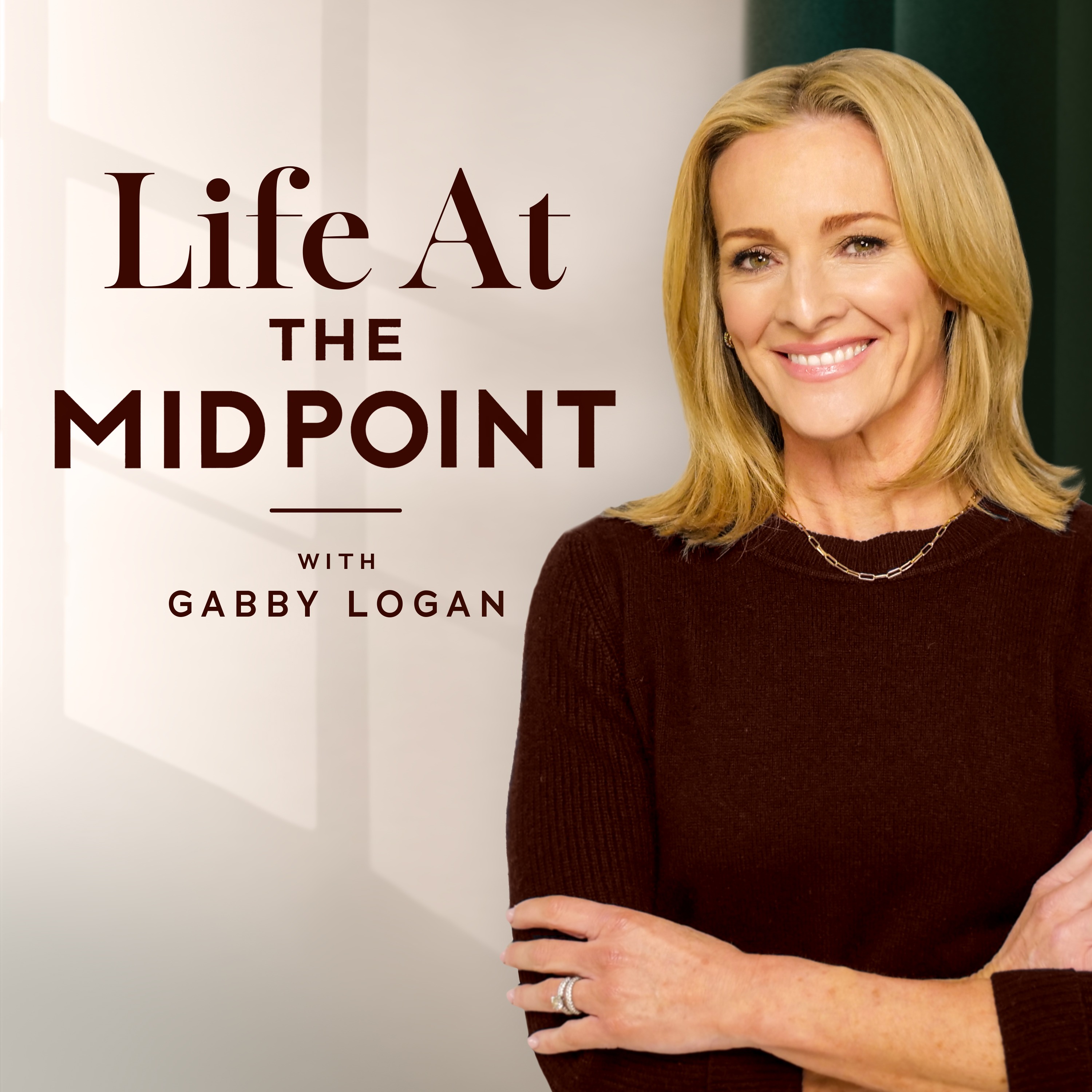
Gabby Logan talks to singer-songwriter David Gray on Life At The Midpoint. They discuss the lasting impact of his album White Ladder, his childhood in West Wales, the physical and emotional demands of touring, his experience of therapy, and his thoughts on AI and creativity. Gray also reflects on how midlife has deepened his appreciation for music, performance, and the people he loves.
Topics singer-songwriter career, live performance, mental health therapy, touring pressures, AI and music, White Ladder album, midlife wellbeing, audience connection
Mentioned in this episode David Gray, Kenny Logan, Ed Sheeran, James Blunt, Van Morrison, Tom Jones, Nina Simone, Bob Dylan, Aretha Franklin, Roy Keane, Diego Maradona, Ruud Gullit
Chapters
- 0:01:38 White Ladder and its lasting impact
- 0:05:18 Childhood illness and self-belief
- 0:07:23 Therapy and finding balance in midlife
- 0:13:43 The joys and demands of touring
- 0:17:35 First performance and the thrill of the stage
- 0:29:25 AI, live music, and the value of human creativity
- 0:44:18 Physical wellbeing: Pilates, cold water and voice care
- 1:02:22 What is better about life at the midpoint
Partner with Life At The Midpoint
Life At The Midpoint is produced by Audio Always. We work with brands on sponsorship, advertising and partnerships across our network of podcasts, reaching engaged listeners and viewers.
Advertising categories Concerts & Music Events, Music And Audio
Show notes
David Gray is one of those artists whose music has genuinely soundtracked people’s lives. Babylon, Please Forgive Me, This Year’s Love — songs that felt deeply personal to millions of people all over the world.
But what really sits at the heart of David’s story is something so pure and so human — a love of music so deep and so consuming that it has driven everything he has ever done. And then there’s the live experience — the extraordinary connection that happens between an artist and an audience when a song lands in a room full of people (even if touring is sometimes difficult). For David, that feeling is everything. He’s a perfect Midpoint guest because reaching this point in life and career doesn’t dim that fire — if anything it deepens it. The love of the craft, the thrill of performing, the relationship with an audience built over decades — at the midpoint, all of that means more, not less.
His story is really a love story — between an artist, his music, and the people who have shared it with him. This is a joyful, warm and deeply honest conversation about creativity, connection and what it means to dedicate your life to something you truly love.
David Gray’s new album Nightjar, a companion to his 2005 No.1 record Life in Slow Motion, is out now via Bella Figura. He’ll be touring across the UK and Ireland this summer as part of his Past & Present World Tour (21 dates).
More info: https://www.davidgray.com/
Hosted on Acast. See acast.com/privacy for more information.
Full transcript
Gabby Logan 0:01:11 Hello and welcome to The Midpoint. My guest today is synonymous with a very joyful period in my life, and maybe yours too. Without getting too nostalgic and sentimental, his incredibly successful White Ladder album was an enormous hit from the summer of 2001, which is just when I got married to Kenny. So songs like Sail Away and This Year's Love are beautifully evocative to me. David Grey gets this kind of reaction, I think, from quite a lot of people of our generation.
Gabby Logan 0:01:38 The album was recorded in his bedroom, and it certainly changed his life. It produced 5 hit singles, and as he says, laid the way for the likes of Sheeran, Blunt, and Bey— men baring their souls on a guitar. As a baby, David was diagnosed with a stomach disease that had almost killed him, and he underwent life-saving surgery, something he says made him fearless and left him with an unwavering self-belief. That, combined with what sounded like an idyllic childhood in West Wales, allowed his creative soul to be free. So I want to get into all of that and also how making music has changed for him with the advent of AI and what it means to be a midlife rocker.
Gabby Logan 0:02:17 David Grey, welcome to The Midpoint. You are synonymous with, I think, people of our generation I have such affection because I was— when I was thinking about this today, and I was writing your introduction, White Ladder kind of had this wonderful kind of launch. Well, it had 2 launches, didn't it? But 2001 is when it kind of hit the mainstream, if you like. And that was the summer I got married.
Gabby Logan 0:02:40 And so, the following year, all these singles are coming out. Yeah. And when I think back to it, it's just a period of this joy and hope and optimism, because in my personal life, that's what was going on. You know, I was in the first throes of a beautiful relationship, And everything was great. But you get that quite a lot, I think, don't you, from people, that they have a real emotional connection with that album?
David Gray 0:03:03 Yeah, I think through 2000, in the UK, 2000, 2001, 2002, White Ladder sort of ruled. It was one of the records that was just sort of ubiquitous. And it's sort of bound into people's lives. It's stitched into the fabric of their lives. So songs that they heard when they were on their honeymoon or when they got married, whatever. So I do get that a lot. Yeah, it's a wonderful thing. I think we all realised when it happened what an extraordinary gift we'd been given because, you know, we were a part of everyone's lives. We didn't own it anymore. It was nice to have it taken off our hands, to be honest.
Gabby Logan 0:03:34 Really?
David Gray 0:03:34 Well, yeah, because, you know—
Gabby Logan 0:03:36 Send it out into the world.
David Gray 0:03:37 Exactly. That's what you want to happen to your music. You want it to be taken by people emotionally and stitched into the way that they live and feel their existence. So I think before that, we kind of had our stuff and we were desperately trying to prove that it was worth listening to. So that was— there was a moment when it was kind of just taken off our shoulders, and it was pure magic.
Gabby Logan 0:03:57 Because one of the other things I read is you said, from you and from launching the album, spawned a generation of men and their guitars singing kind of from their souls. And then I was thinking, oh gosh, yeah, think back before that. And actually, men on their own with a guitar wasn't really a thing, was it?
David Gray 0:04:13 When I started out, you just couldn't get arrested in the music industry. Like trying to be the singer-songwriter, sort of, you know, which is exactly what I was. So it was a— I ploughed a lonely furrow through the early '90s, certainly. So it was— and then of course, it's all changed. So yes, there was this— I think it wasn't so much just that I maybe offered some inspiration with my music to other people who felt a similar way. It was also that the industry, of course, cottoned on to the fact that there was money in it. And suddenly the doors just opened for other David Greys or types of David Grey, if you like.
Gabby Logan 0:04:48 Because it's all boy bands, really.
David Gray 0:04:50 I don't know, I just blocked it out.
Gabby Logan 0:04:52 Yeah, it was harsh. It was harsh. I used to work in commercial radio and there are so many songs that give me a bit of PTSD from that period that I think back that I had to play in commercial radio. But you also, something happened to you as a child, which interestingly I think connects directly to you having the confidence to think that actually, this is gonna happen. I'm gonna release this album and I'm gonna change maybe the direction of travel. You had a serious illness as a child.
David Gray 0:05:18 Oh, I see. Yeah. Well, I wasn't even a child. I was aiming to become a child.
David Gray 0:05:22 I was a newborn infant. Yeah. I've mentioned this. This is a recent thing that I've sort of thrown onto the table, I suppose. I do think it had a profound effect on me.
David Gray 0:05:32 I was born with a condition called pyloric stenosis, which is where the muscle at the top of your stomach sort of seizes and won't let in. So it started off, I couldn't really take food down. And then after a couple of weeks, I couldn't even take water. And obviously, that was the crucial point when they had to get me into hospital. But I'd been misdiagnosed for the first couple of weeks.
David Gray 0:05:55 And I think, like, you know, young mothers are generally patronised by doctors a little bit with their problems. So, the sort of hysteria of motherhood or whatever. So, my mum was sort of sent away several times. Then, of course, it proved to be this thing. My dad had sort of funny stories of holding me at the back door as I projectile vomited down the garden.
David Gray 0:06:14 He was really impressed by how far I could— So even this, that's a sort of competitive side. They have a competition. My son can throw it further than yours. So that's sort of— they say that the very beginning of your life is a sort of perhaps the most profound period of your life in terms of shaping the way that you think and feel about the world. So if I think that I was starving for the first few weeks, then I had this operation, so I've got a huge scar because I was only tiny.
David Gray 0:06:41 And then I was in a sort of isolated situation where I couldn't be held for the next bit. So yes, exactly, you know, the bottom lip's coming out, Gabby. Um, it's— it was sort of kind of harrowing, uh, first experience. So I think I'm still yelling now. I'm still— I'm still howling, uh, looking for emotional comfort and trying to make the world into a safe place.
David Gray 0:07:02 So I think that's a key sort of trying to change things, making a world within a world. That's very much why creativity, I think, Maybe I had that in my genes anyway, but why it's— it just won't lose its grip on me. I, I need more. I, I make and then I have to make again.
Gabby Logan 0:07:19 Have you made that connection yourself, or have you had some kind of therapy?
David Gray 0:07:23 Yeah, therapy. Yeah, uh, therapy, uh, I found hugely beneficial. I— and if we can go on to that, this is a midlife podcast, I guess. When I was getting into the middle of my life, Uh, I had problems of sort of taking on too much responsibility. I'm a bit mad.
David Gray 0:07:42 Um, you know, I'm not easy to live with in so many ways. But I guess at that point I had everything. So this would probably be late 2000s. Mm-hmm. And all the success had come.
David Gray 0:07:53 So I could see the responsibility of being a musician. Um, I could see the responsibility towards my music, my audience, my manager, my record company. Uh, to my children, my wife, but I sort of left myself out of the whole equation. I wasn't making space for me outside of that. And I think that over time I became deeply unhappy.
David Gray 0:08:15 Um, I couldn't really work it out, so I asked a friend of mine who's a doctor who also does a bit of therapy if he could recommend someone. So I've started to see someone. It was a strange process because this was psychodynamic therapy where It's not like they point out what the rules are. And I like to have kind of goals, you know, like, okay, where are we going? You know, it's like, you just talk.
David Gray 0:08:34 And it's, uh, but even so, perhaps I didn't really hit it off with the other person entirely. But through that, following that process and persevering with it, it does hold a mirror up and you start to look at aspects of your life and consider them. Mm-hmm. Um, that was the beginning of me sort of unpicking some of the knots that were inside and starting to make small amounts of space in my life for doing things that I love that are just for me or just space for me. That had a profound effect on relationships within my family.
David Gray 0:09:06 But just the way that I am, and those are sort of founding principles now of each year that goes by, I have to build a bit of space in here and there to do some of the things that I need to do. And it just does me the world of good. So my equilibrium now is profoundly improved from what it was back then. But you have to remember also within the broader context of what had happened, this amazing opportunity came. So success came knocking.
David Gray 0:09:32 It was my 4th album. It didn't happen overnight. We toured 3 years on that album. And then there was another album which went to number 1, then another, and we just kept going. Then the ass fell out of the music industry, not to put too fine a point on it.
David Gray 0:09:46 So record sales were a thing of the past. The only way to make money was to tour. And, um, I had a big fan base in America, I had fan base all over the world. I was just basically touring and touring and touring and touring. And, you know, that will destroy anybody.
David Gray 0:10:00 So it— that's sort of pulled at the fabric of my life. And when I look at it all now, anyway, I'm glad to have come through it all, uh, relatively unscathed. There's a few dents in the DG flight case, but I think I've basically made it through the touring process pretty well. So yeah, I mean, I'm good at rolling my sleeves up and getting on with things. I'm a determined, no-nonsense kind of person.
David Gray 0:10:24 I don't need to be backed up all the time. Come on, Dave, you can do it. It's like I've got strong sort of Roy Keane-like sort of inner motivation, if you like. But that can be destructive too. That can work against you.
David Gray 0:10:35 And it certainly did. So I think that the problem was I wasn't giving myself a break. And even to think like that seems so radical and so open-ended. I was a bit scared to do so.
Gabby Logan 0:10:44 Take yourself out of the machine.
David Gray 0:10:46 It was exactly, yeah. And I was. I was a part of a machine. I mean, the music industry, they call it that. That's what it is. It was an industrial scale of performing and recording.
Gabby Logan 0:10:55 Was there a fear that if you did hop out of the machine for a while, it wouldn't let you back in?
David Gray 0:10:59 Well, that's one of the sort of myths that has a ring of truth to it, of course, because your star rises and it cools incredibly fast. So I've always sort of had some faith in that what I'm trying to do is more sort of long-term. But yeah, what you're saying is true. And that can be used. You can be manipulated by people who are working with you to make you feel that insecurity very deeply. It doesn't take much. So certainly that was a part of it, yeah.
Gabby Logan 0:11:29 So many people around you depend on you, don't they, for their livings? And obviously there's a pressure there, isn't there?
David Gray 0:11:35 Yeah, even the band who sort of, I'd like to think, have fondness for me.
David Gray 0:11:42 We've all seen Spinal Tap, I hope we have. So let's see, I'll qualify that statement.
David Gray 0:11:50 Yes, as you said, they're reliant on the thing happening. So they get paid when they're touring or when this is happening, and they're watching. And so there's an implication that, well, so yeah, as I say, I could see my responsibility to the band, to the management, to this, to that. But I found it harder to see the responsibility to myself. But now I've won that ground.
David Gray 0:12:12 It's one of the things that's chiefly restored my sense of happiness and balance in my life because I won't give it back up again. I know that it's important. I think another thing is that if you've got a young family, which I did have at the time I'm talking about, I missed so much of their young lives.
David Gray 0:12:38 To have taken— if I did 130 dates on an album campaign, that's a lot. That's tip of the iceberg. That, that you've got the promo campaign, you've got to get there, go around. There's a day off for every— let's say every 2 or 3 show days, there's a day off. You've got travel days.
David Gray 0:12:54 You can double that figure. So that's basically you're away for most of a year, 3 quarters of a year to do that, maybe more. Um, so having taken all that time, they go, hey, I need some time for me, you know, that's what I'm feeling right now. I, I found that sort of juxtaposing that sort of idea was a bit controversial. So how could I even— how could I have the nerve to ask for that?
David Gray 0:13:17 So I had to sort of scale back the touring ambition a little bit in order to make space for other things.
Gabby Logan 0:13:23 When you were on stage and you were doing the thing that you love, was that the kind of payback or the moment where it was all worth it, all that other stuff? Did you still love being on stage and the audience's reaction to you?
David Gray 0:13:35 Yeah, of course. I mean, That moment is key to everything.
David Gray 0:13:43 It's the love of the audience. But hopefully, you go kind of beyond that. You're all in the same melting pot when a gig really happens. Everyone's living the same moment together, band and audience, and something extraordinary can happen. It's not like that every night.
David Gray 0:13:59 Sometimes you're working. Sometimes it's boring. At the same time, you know, I remember writing in my diary, don't forget how boring touring can get. And by that, I didn't mean the gigs, although they can become incredibly repetitive. So it's just, it's a sensory deprivation chamber.
David Gray 0:14:20 So to enable the sort of vivid couple of hours that happen on stage, you need to be there, as I say, like 3 quarters of a year for that couple of hours at the end of the day. You've got to make sure that really happens. Mm-hmm. You're in hotel rooms, buses. I mean, I'm not saying this— No, no.
David Gray 0:14:39 With any sense of complaint. This is just a fact. You're in sort of dark spaces. You're on buses, you're in airports. We all know how much fun they are.
David Gray 0:14:50 And you're being driven down roads, you're in a new hotel room if you're lucky and you've got a day off or whatever. You're constantly in these. So you're not in nature, all the things that I would find uplifting and sort of a bit of energy back. You're kind of in these, and you're locked in with all these other people as well. So, all these programmes, these reality TV programmes that are based on this sort of hothousing, this sort of anxiety and sort of tension, it, you know— You're the energy.
David Gray 0:15:18 It's a form of entertainment. That is very much a part of it. That wear and tear is quite profound. So, that's how managing all the people involved and their ups and downs. But as the key guy, the main guy on the mic whose name's on the ticket, I have to make sure that it all glues together.
David Gray 0:15:35 together. And that maintenance is a massive part of touring. So I think that there's a lot of wear and tear with that, holding that together.
Gabby Logan 0:15:44 If the industry hadn't changed, and that's, you know, a big word, and it's obviously hindsight's a wonderful thing, would you have preferred being in studios more and not touring? Is that where your real happy place is, when you're hearing something come together that you've imagined? Did White Ladder come together in your bedroom?
David Gray 0:15:59 In the spare bedroom, yeah. So it's a home recording.
Gabby Logan 0:16:04 Is that the most joyful part?
David Gray 0:16:06 No, writing is thrilling, but obviously more solitary.
David Gray 0:16:13 Recording is incredibly exciting because you're venturing and it's incredibly stimulating. You're hopefully trying not to repeat yourself. You're kind of feeling blind for something that might be there. That's what the writing process is like. I love those processes.
David Gray 0:16:33 I used to love painting as well when I was at art school, and I still do when I do it. Yeah. I love that process. But then ultimately, the thing about music is it goes out into the world, and then it has to meet the audience, and you have to wear that music in front of them and see what happens. Now, if I do a tour and I'm not playing any new music and there's nothing new to it, there's no new facets to what I'm doing, That's where I think he gets boring for me.
David Gray 0:17:00 It's just jukebox kind of stuff. There's a moment for that. There's the right occasion when that's entirely the right fit for what the— if you're playing a massive show, you've only got 45 minutes, don't mess about with a sort of 25-minute new song about making blackberry jam while being stoned or something. It's best to sort of function, figure the set out so that it's going to hit the right notes and maybe build a little bit of space in there for for something that people haven't heard before. But, um, yeah, so, but when you get out on that stage, as I say, what happens up there?
David Gray 0:17:35 Well, that's the thing I really need. And I think even before I was a musician, I had— there was a moment in my young life when, uh, first of all, I, I was born in Manchester, parents both from Manchester, and Dad wanted out of the family business. He was the youngest. And we went down, they wanted to get a long way away. And it was lots of different places in the offering.
Gabby Logan 0:17:58 What was the family business?
David Gray 0:18:00 It was a bakery and sort of grocery business in Manchester that his dad had set up. So he wanted to go somewhere far away, Cornwall, somewhere, I don't know, somewhere that you can't really get to from Manchester so they could sort of start again. So they didn't know what they were doing, but we moved down to West Wales to a tiny little fishing village called Solva. And for the kind of person that I was, which is nature obsessed and loved playing out, it was the perfect thing at the perfect time.
David Gray 0:18:27 And I remember just getting into the garden. We lived in this tiny little fishing cottage. And there was the Gribbin, the hill behind, with all the trees and bluebell wood. And I said, whoa, like Action Man can really get out into this. You know, so I had like this— suddenly my garden was just like miles of stuff.
David Gray 0:18:45 The beach, the shoreline, the river.
Gabby Logan 0:18:47 You were talking about the audience.
David Gray 0:18:49 A key moment of going on stage for the very first time I'd been cast, badly cast in my opinion, in previous school plays as, you know, Shepherd 3 or whatever in the nativity. They didn't see my potential. But I got to Solvay Primary School.
David Gray 0:19:04 And anyway, first of all, I was in this kind of— in Manchester, I was bright, so my parents had me in the school. And all the peer groups sort of said, oh, you should put him in Altrincham Prep, Altrincham Prep, get him into Manchester Grammar. So I was being streamlined to go to Manchester Grammar, which is where I would've ended up. how different my life would've been. So they took me down to West Wales, and I was in just a village primary school.
David Gray 0:19:28 It was like a child's Christmas in Wales. It was sort of idyllic. Dylan Thomas, beautiful people, no sort of obvious materialism. Or I remember it used to be like, how many pens have you got in your sort of pencil case? Kind of, you know, I've got 30 coloured felt tips in mine.
David Gray 0:19:46 I've got 50. It was like so competitive, Manchester. It was this kind of nouveau riche environment. It was awful, actually. That's sort of what I came from, down to this idyllic— where there was no— I had to learn Welsh.
David Gray 0:19:57 I had to do— anyway, I, I was—
Gabby Logan 0:19:59 How's your Welsh now?
David Gray 0:20:00 Um, it's absolutely disappeared. But I batter men in. I, you know, I've got— I can do the accent.
Gabby Logan 0:20:05 Yeah, lovely Welsh.
David Gray 0:20:06 Um, like, um, but yeah, I can speak a little bit.
Gabby Logan 0:20:09 But so it was an uncompetitive primary school?
David Gray 0:20:12 Totally. Uh, so it just took all that away, and it was this magical world, actually.
David Gray 0:20:17 And, um, anyway, there was the school play, and I was younger, but I was very— I had very good memories. I could remember things. Anyway, the wizard— it was the Wizard and the Witch, the main play— uh, the wizard became ill on show day, and they, they sort of cast through the school, who's going to replace the wizard? Who's going to replace the wizard? And even though I was only 9, I got this starring role in The School Play, but I had one day to learn the lines.
David Gray 0:20:44 But they didn't have time to teach me the dance routines or the musical parts. So those— so I had to improvise. So I learned the lines, and playing opposite Diane Phillips, who was the witch, and I was a smash, basically. I must have been so cute. So when it came to the musical bits, I just made up my own wizard dances, and I was dancing around the place.
David Gray 0:21:05 And the crowd went wild. And even though the stage was only about 4 inches high, uh, and we just had a few lights on and it was dark and the rest— there was probably only about 60 parents out there. I just remember the feeling of being up there, and I, I just loved the freedom of being on the stage. And I got it straight away. I thought the stage gives you a power to be something that everyone else wants to see you be.
David Gray 0:21:30 It's a safe space where you can enact and show feelings and make people laugh. And it's— sorry, excuse me. It's— anyway, just the penny just dropped. Mm-hmm. And that's why I pursued music and a life on the stage, even though I was quite kind of shy and solitary in my habits in some ways.
David Gray 0:21:52 I saw that what I got when I was on stage was I got to be somebody else. I got to do something else out in front of the public. So I've— that's why I chose music over painting, for example, drawing and painting, which is quite a sort of isolated, solitary activity. I chose that—
Gabby Logan 0:22:10 The audience was important.
David Gray 0:22:12 So that's why that performing part, which is— I'm bringing it all back in a giant circle to the question you asked me about half an hour ago about what— is that the most important part? Would I rather do more writing? I think at the moment, you know, as I said, it's the pinnacle to take everything out on stage and live You're gonna hit a bum note, something's gonna go wrong. There's gonna be feedback.
Gabby Logan 0:22:32 I guess also, I'm just thinking about writers. You might write the seminal work of the 21st century, but you can't see the person reading your work. So they might be absolutely loving this book, but you don't know it because you're in your house and they're in theirs. Whereas you get to see your audience absolutely appreciate and love your work.
David Gray 0:22:50 But I just love the earthiness, the randomness of the gig, because you never know what you're gonna get. You can think I'm playing Glasgow, it's a Friday night, this is going to go, this is going to go.
David Gray 0:23:02 And they're like a bunch of nuns sitting down there. And then you're like Birmingham on a Monday night, buckle in guys, this could be hard. You know what I mean? We've got to try and get some action out. And they're like mad for it.
David Gray 0:23:14 It's like a Black Sabbath sort of gig. So you can't predict? You never quite can. You think you can, but you can't. So there's a sort of randomness to it.
David Gray 0:23:22 But also even just within the gig, the little twists and turns, the things that go wrong, the unexpected things that can unlock a performance or unlock you, because it's very hard not to fall into repetitive paths of just doing and saying the same kind of things.
Gabby Logan 0:23:35 Have you had the perfect gig, do you think?
David Gray 0:23:37 Oh, yeah, I've had loads of them.
Gabby Logan 0:23:39 So where would you— where did you feel most alive? Was there a moment early in your career where you thought, this is exactly what it's supposed to be?
David Gray 0:23:46 There was a key moment when I first performed in Ireland. at a pub called Whelan's with a famous venue at the back. And these 2 young lads from Ireland had got fixated on my first album, A Century Ends, which I was trying very hard to sort of get off the ground in the UK and the US. And they were playing it, like one of them was a video sort of VJ kind of thing on a cool Irish TV programme. And he drummed up some interest around my first song, Birds Without Wings, and Shine, which is the follow-up.
David Gray 0:24:22 And they wanted to get me over to play. And I went over there not knowing what to expect. And I remember getting to the venue on show night and the place was absolutely rammed. And because I've lived this sort of nightmare before, I thought there's probably another gig on and my gig's in a smaller room just through the back. But they were actually there to see me.
David Gray 0:24:42 couldn't get over it. And then there was this poet came out, this, uh, Pat Inglesby, and he gave me this big introduction, you know. Um, so, and then there was a massive roar, and then I had to like walk on stage. I was like, whoa, this is amazing. It's a bigger roar than I've ever had coming off a stage, going onto a stage.
David Gray 0:24:59 So that was the beginning of 1994, and I just played until I had no guitar strings left. I used to break a lot of guitar strings. And no songs left. I just gave absolutely everything I had in the tank, and I had no voice or anything. Whoa.
David Gray 0:25:11 And that was the beginning of my relationship with Ireland. Uh, it was something salt of the earth, kind of. But the way that music and poetry and lyricism still lives in the culture— they have poets come to Parliament, their equivalent of Parliament, to speak. Heaney speaking at Parliament would be seen as the greatest thing you could possibly have. Can you imagine that in our country?
David Gray 0:25:32 No. So something still lives out in the Wild West. And, and I, I began to tap into that, and that fueled my entire career, really. So that was an absolutely key moment in my life. But even just— I've been touring all through last year.
David Gray 0:25:47 I'm about to go out again in a couple of months' time. We had a show at the Royal Albert Hall, and, uh, we sold it in the round. So you can, you can sell the choir stalls behind. And I don't know what happened that night, but— It just— we had— we decided to blow some money on having some live horn players with us. So we had a 7-piece horn section.
David Gray 0:26:11 Uh, it just— it was just like magic. Um,
Gabby Logan 0:26:15 and you came off thinking—
David Gray 0:26:16 It makes me emotional to think about it. It was— it was extraordinary. We just didn't put a foot wrong. Well, even if someone hit a bum note, it wouldn't matter. They were just on side from moment one. And it just— some gigs kind of go like this, they kind of rise and rise, and then they kind of plateau. It just kept going, just from song to song to song to song through the setlist until the end, the whole place was on its feet. And it was—
Gabby Logan 0:26:39 Were all your important people there?
David Gray 0:26:41 No, they weren't, because it was a very difficult week for my family. We lost a family member that just, in fact, 2 days before the show. So my wife didn't come. And my daughters came to kind of support me. So it was actually an awful week.
Gabby Logan 0:26:57 Yeah.
David Gray 0:26:57 But I had all these enormous shows to do in Dublin and London. So, but strangely and conversely, I had to snap myself out of that and do the gig. And that's what you have to do. So it was perhaps, maybe that was a part of it too. Maybe the fact I had to be more vulnerable even than I knew. On stage, people do pick up on things. So, But anyway, that was an incredible evening, and they continue to occur. And I feel an accumulation of the love that I've given to my songwriting and my performing over the years coming back at me. It's not that it stands still.
Gabby Logan 0:27:35 No.
David Gray 0:27:36 I feel it's ever— it's richer as I go, as the whole thing becomes more finite, perhaps. I think there's a point with success where it's very hard to value what you're being given.
David Gray 0:27:47 You're playing bigger and bigger shows, there's more and more people coming, they're all sold out, your record's in the charts, everyone loves you. You know, there's a bouquet of flowers coming through from the record company because this or that happened or whatever. You know, there's a bottle of champagne waiting for you here. It's very hard to keep feeling how special it is. Mm-hmm.
David Gray 0:28:05 Whereas these days, having been on a bit more of a journey, as people like to say, try and avoid such terms, but I just used it. Having come through 30-odd years of playing music, It feels much more special. How long will I be able to sing and commit the kind of energy and time that you need to really put a tour together, to really do something?
Gabby Logan 0:28:27 Do you have an idea about that?
David Gray 0:28:30 I'll sing like Sinatra. I'll sing until I can sing no more. I'll never stop. I'll never stop. But I think in terms of how much touring, you know, I look at people like Van Morrison and Tom Jones. I don't know how they keep going at the rate that they keep going. Um, it's a phenomenal commitment. And, uh, but like them, I'm in it for life. It's this, this nectar that I'm describing. Uh, I will always be the hummingbird visiting the flower.
Gabby Logan 0:28:57 I think also with what's happening with AI, and, and I don't know really truly how much is happening with AI in the creative world because everything I read kind of tells me that they're not necessarily doing a great job replicating what humans can do. So maybe we don't need to be worried at all. But it's so heartening to hear that there is a thriving community and people want to see live music. They want to feel alive, don't they, in that environment?
David Gray 0:29:25 Well, I think because, I mean, just to touch upon AI, AI is a huge threat to the creative industries. It's a threat to everything.
David Gray 0:29:35 And as I like to say to my wife or children when they're using it, you know, they say that every time you search something, it uses like a pint of water and however much electricity. It's not free. They're giving it like the first Ocado deliveries. It's free for a while, and then it won't be free, I guarantee. So it's definitely— in the studio at the moment when I'm writing, I'm— you can work with a click track, and it keeps you in time.
David Gray 0:30:04 Some tracks, Babylon, Please Forgive Me, Sail Away, they don't suffer any ill effects by being gridded in this kind of way. But these days when I'm recording at the moment, I think partly because of the spectre of AI, I want to do— I want to record a kind of music in such a human way that it is not replicable. It's impossible to— Mm-hmm. Including bad notes, you know, anything, anything that they just couldn't generate. So that humanness that you hear in Nina Simone or, you know, Bob Dylan or Van Morrison, you know, Aretha Franklin, real people playing in real time.
David Gray 0:30:42 That's vital. I think another thing that's changed is that, you know, if you think back to the '80s and '90s, branding was how you sort of showed your wealth, your importance. But now we've entered an era where, because everything's available and overexposed, the sort of fully commercially saturated reality that we've been living in for so long, stewing in— Mm-hmm. It's experience now that you hold over other people. So actually, that gig ticket or that sporting event where you were there on the halfway line, look at my seats, that's all it's about.
David Gray 0:31:16 So those moments have become more important, I think partly because of technology and what it's done to everything. It disturbs me greatly how new technology is just allowed to run roughshod, ride roughshod over everything because it's supposedly a good thing. Will it bring us closer to nature? Will it make a more sustainable Earth? I very much doubt it.
David Gray 0:31:36 And yet, you know, that's what we actually need.
Gabby Logan 0:31:39 Are you— I know that there have been calls obviously for legislation to try and help musicians and artists to protect their works, which so far I think has achieved what it—
David Gray 0:31:50 I think behind— all I would imagine is that the sort of— within the mechanics of the music industry, AI will be an incredible tool to create things, um, without the worry of artists having to do it for you. So I imagine they're just sharpening their legal kit ready for the challenge that will come. I think my music's probably been studied, eaten, and spat out by the machine already without me even knowing about it.
David Gray 0:32:16 I would imagine so anyway. I mean, but you know, back in the day when I was successful, there were a couple of adverts that, that UK adverts that used sort of the template of my songs as a basis and just changed it enough that you can—
Gabby Logan 0:32:31 You couldn't sue them.
David Gray 0:32:32 Exactly. And that's always been a kind of time-honored thing.
David Gray 0:32:37 Anyway, AI doesn't have a soul, and what we need is more soul, not less. So Mars doesn't have much of an atmosphere. I'm not personally that excited about humans getting to live there. There's no birdsong. There are no rivers, at least not anymore.
David Gray 0:32:52 So these are the kind of priorities, as far as I can tell, on a sort of global scale. But you could be fooled into thinking otherwise when looking at the sort of general picture. And what I can't believe is the lobbying that goes on for AI. It's just, it's part of every conversation now. Why?
David Gray 0:33:07 Because it's been pushed forward as if, hey, like all the great uses of it.
Gabby Logan 0:33:11 It's how quickly it has grown to that scale as well.
David Gray 0:33:16 Massive.
Gabby Logan 0:33:17 It felt like it was something that I could put off thinking about for a long No way. And then it came so quickly, almost in months, it's become such a huge part of people's lives.
David Gray 0:33:27 So I think it makes the act of singing more important in its fullest sense, not just what I do, but the song of life, if you like, that human thing that we do when we dig a bit deeper than conversation and we sort of resonate with what matters, that becomes really important. And I think the gig becomes important too. So these sort of things that are happening in real time in a kind of messy way.
Gabby Logan 0:33:51 A very strange kind of gear change here, but just, you said something before we started recording about songs at halftime in rugby matches. I did. And when you said they're the song of life, I immediately thought of a closed roof at the Principality Stadium and the crowd singing the anthem.
David Gray 0:34:07 Best anthem of all time, which I used to have to sing every morning.
Gabby Logan 0:34:09 The most beautiful thing.
David Gray 0:34:10 It's an incredible anthem. That's a fantastic anthem.
Gabby Logan 0:34:13 And that, when they sing, when 70,000 people are singing, it is just, you can't help but feel we're gonna be okay. It's all right, we're still, you know, we're still all breathing and beating and we're gonna be okay.
David Gray 0:34:23 And you called me old-fashioned, which I definitely am. But shouldn't that be the one spine-tingling noise that you hear apart from the cheers and the jeers that you get at a live event? That singing of that anthem should be the loudest thing that anyone hears, not the music in the PA system. It's the same at football matches. It's constant as if we could— like we're living in a lift, a giant lift with sound being pumped in the whole time.
David Gray 0:34:51 We're not going to have fun unless— Unless it's happening. If they turn the music up, we can't talk to each other. each other. Yeah, that really upsets me. Um, you, you guys trying to have an intelligent conversation while sort of Ibiza's happening in the background of flashing lights, sort of, you know, um, it's— I, I feel it's disrespectful to not just—
Gabby Logan 0:35:09 I think it's a lack of faith by those people that run those venues that actually, if you hear that crowd singing the anthem at the beginning, do you not now realise that they can do something special without you imparting your idea of fun onto them?
David Gray 0:35:22 Lead them in another song.
Gabby Logan 0:35:23 Yeah, The choir.
David Gray 0:35:26 The singing at sports is absolutely incredible. You know, a crowd, when they really get going.
Gabby Logan 0:35:31 You'll Never Walk Alone sung at Anfield.
David Gray 0:35:32 Amazing. Well, I don't like to think about that. I'm from Manchester, but I'll pretend you didn't say that.
Gabby Logan 0:35:38 Bladen Races at St. James's Park. Wherever you go, there is a song in a football ground or a rugby ground that is—
David Gray 0:35:49 We best not touch on some of those.
Gabby Logan 0:35:50 It's synonymous with those. those venues. But, um, so, so I was, I was leading to was your disdain for it, but you've articulated that well, that we should just be, uh, kind of our own cheerleaders in that environment. We don't need to have that PA thing.
David Gray 0:36:04 Have faith in the spectacle of the whole thing. It's a rich thing. It's an incredible moment. I, I think everybody, you know, respects— I'm— I was brought up having to play rugby when I moved to Wales.
David Gray 0:36:15 I was too small and sort of puny to be any good at it, and I didn't understand the rules, But one thing I've always been able to see is just the different culture that surrounds it. The lovely relationship between fans and the way that the VAR is handled. For example, just on open mic in front of the crowd, this is what I'm seeing, what do you think? Yes. And then I might not be popular if you're in the Stade de France and you give the decision the other way.
David Gray 0:36:44 But it's wonderfully open. And this clash of countries, so passionate. It doesn't need all the sort of contemporary embellishment. It really is a wonderful thing in and of itself. And those anthems being sung in the way that they are, when else do you get to hear that?
David Gray 0:37:02 You don't. You don't hear it like that at the football match.
Gabby Logan 0:37:05 No.
David Gray 0:37:05 You know, or Wimbledon. It's a unique thing. So I just feel that they're tampering with something trying to make it more exciting. When then it shouldn't, it should just stand alone.
Gabby Logan 0:37:16 And the other thing I wanna go back to, you said, I think about 25 minutes ago, was about having some therapy at that point in your life or then starting those conversations. 'Cause 2 things, one, you said something which I think is really important that I think wanna stress. 'Cause you said you might not meet the right person at the beginning.
Gabby Logan 0:37:30 And I often think when people start on a therapy journey, that is so important that you might not get the right person for you at the very beginning. And people say that time and time again and always persevere. There'll be somebody else that's, you know, or a style of therapy that's good for you. 'Cause I'm sure a lot of people listening to this might have started and stopped or be thinking about it. But the other thing is, I wondered what your— your wife obviously has been the person who's been at home quite a lot while you've been away touring, not always with small children.
Gabby Logan 0:37:57 I'm sure it's not easy to come away. Was she very encouraging of you going on a journey for you because of how it might impact the relationship?
David Gray 0:38:07 Well, she has retrained as a therapist now. So that's what living with me does to you. She does CBT, so more sort of targeted.
David Gray 0:38:16 And absolutely loves it. And she's brilliant at it. But she definitely would have been encouraging. It's difficult to be the second most important thing in somebody's life, not just apparently to that person, but to all the people that surround them. So, the wife is sort of dismissed as a sort of piece of furniture.
David Gray 0:38:36 You look after the kids, he needs to do that. So, it's not a comfortable relationship to be part of the whole thing. We went through it for a long time, and she brought up my children while I was away a lot of the time. I mean, COVID was like the elephant in the room became hugely— how much I loved my children and how special they were, because we were all there in the house together, became like, oh my God, I'm crazy about these people. They're amazing.
David Gray 0:39:04 Like, I mean, it wasn't that I didn't love them before, but I think that was a real moment for me because I had nowhere— At home, I'm sure. It's not just that I was at home. I wasn't going anywhere for the next however long. It was like, I was like, right, okay. So I think she would've been encouraging.
David Gray 0:39:17 It's very difficult going into therapy. I mean, people are very proud and it's scary opening Pandora's box, you know, letting things out.
Gabby Logan 0:39:27 Because the very first question that elicited the answer was about you as a baby and how you've connected some of the reasons for your being almost going back to those very early experiences.
David Gray 0:39:37 Well, I think it's tempting to do so. It's just—
Gabby Logan 0:39:40 Well, you had an extraordinary early life experience, didn't you?
David Gray 0:39:43 Yeah. And I think it's definitely— I'm still wailing, if you like. I'm still trying, as I say, trying to make a world within a world. So the world doesn't feel very safe to me. And I've always had a very untrusting relationship with, let's just say, the critical media. And particularly, I think everybody is critical.
David Gray 0:40:38 For you personally, when you go out and you're— you have a public persona, it's very hard to take. But I've always— I've never liked it. Even when I was young, I didn't read all those music magazines. I didn't like the sort of takedowns. I, you know, that making people feel small.
Gabby Logan 0:40:57 Giving you stars. Um, I don't—
David Gray 0:41:00 I don't like that. I don't like music as a competitive sport. It's not that I'm averse to slagging people off occasionally myself.
David Gray 0:41:08 Of course I am. I'm only human. But I've always been so— I don't know, I'm sort of hypersensitive. So when I'm making things, I'm in my own world making. And of course, if you're making well, you're making something that has components, sediment almost, of your emotional life.
David Gray 0:41:28 and ghosts, spectres even, maybe, that you don't understand from your past and your parents' past that start to formulate into images, pictures, music. And it's something mysterious about it. You're making something that's kind of like a controlled exorcism almost of what you are again and again and again. And while you're in that bubble, it's very intense, very rewarding, but it's also safe. It's just there.
David Gray 0:41:56 And then of course, it has to be given to the world. And that's a scary moment every time it has to go out and be criticised and be held up and judged. And then you have to go out and play the songs for people. And do they care about them or not? Or do they just want to hear the oldies?
David Gray 0:42:10 That's one of the things about the tour I've just done that's been such a huge— given me such huge pleasure is the fact that I managed to— I had a record I felt that could withstand going shoulder to shoulder, these new songs with the old songs. So rather than do a few new songs at the beginning and then do all the old, I kind of put them in. But we've had a fantastic reaction and to see the new songs go down.
Gabby Logan 0:42:35 Does the audience look different? Are they—
David Gray 0:42:37 Older.
Gabby Logan 0:42:37 So are they the originals then? Or are some—
David Gray 0:42:42 They're the new originals. I've used Spinal Tap recently. Interlopers. There's too many Spinal Tap. The new originals. They're There's one thing about this tour, I've seen a lot more young people coming through. So there's the kids whose parents were into White Ladder and that era of my music, who've been brought up listening to it, and are now sort of into it themselves in the weird sort of generational sort of munching that seems to have gone on. Culture's kind of folded in.
Gabby Logan 0:43:11 Vintage, isn't it?
David Gray 0:43:12 Folded in on itself. Culture's kind of— it's like, if you think about how music used to be, '50s into the '60s into the '70s, and then punk, '80s, everything was pushing the past back, using elements, making something new. But that kind of ended some time ago. There are innovators, but basically everything's up for grabs. You can kind of listen to music from any era now, from whatever. So people share music, families share music. So you see that, you see big family gatherings where grandparents, parents, grandkids, even great-grandkids, you see like 4 generations sometimes. So that's how it's sort of changing.
Gabby Logan 0:43:48 Yeah. And it's good for you. I mean, like bringing in—
David Gray 0:43:52 If there's no new audience, it's gonna get— the gigs are gonna get smaller. That's a fact.
Gabby Logan 0:43:56 You're still there though. For now. Hopefully they're still there. The midlifers are still there. So you've looked after your mental health through that journey. What about your physical wellbeing as you're in midlife? Because you've gotta have a lot of energy to get on stage and do that. Do you actually do anything specific? Are you Sting-like in your yogic practice? Are you like Mick Jagger running around Richmond Park?
David Gray 0:44:18 Terrifying image of me in my underpants with a 6-pack, sort of me intruding on our Tuscan terrace with the olives wafting gently in the breeze. No, my life is nothing like that, thankfully. No, it's— Pilates? I do Pilates because I've had a a lot of back problems and issues like that and annoying injuries. I haven't had any really massive problems, but I've had—
Gabby Logan 0:44:46 So are you mat, reformer, tower? What's your—
David Gray 0:44:49 Yeah, yeah, reformer. The whole thing. The whole thing, yeah. So, and I try and do my stretches and things, some of them every morning, and then I do a sort of couple of sessions a week.
David Gray 0:44:59 So, and that does, it is seeming to help. So I used to sort of do football in the park with a kind of fitness, element to it. It makes me very sad that my football career ended when I was basically probably about 20, really, 20, 21. When I was young, I played all sports all the time. Mm-hmm.
David Gray 0:45:20 I was just playing sport all the time. Tennis, cricket, football. I was made to play rugby. I wasn't so keen on that. But just anything, ping pong, snooker, pool.
David Gray 0:45:30 I was in the pool team, this team, the pub cricket team, the You're a
Gabby Logan 0:45:34 busy kid.
David Gray 0:45:34 I was constantly doing stuff.
Gabby Logan 0:45:36 With the arts side of you as well. Totally, yeah.
David Gray 0:45:38 I was all go. And then, you know, as I started to go off for college, I would play for Solihull AFC when I came back at weekends and stuff. It's when the new coach started to put me on the subs bench. I said, I'd rather play in the seconds. I'd rather play in the seconds than wait on subs bench in the first. But that— so I guess anyway, I was active. I don't like running. I'm not a very good swimmer. I go swimming from April till October.
Gabby Logan 0:46:06 Outdoors, obviously.
David Gray 0:46:07 Yeah. So when I'm up in Norfolk at my house up there, I'll go in the sea come rain or shine, unless it's really windy or something and stormy. I'll probably go for a swim on the high tide.
Gabby Logan 0:46:18 So a bit of cold water, you're not opposed to?
David Gray 0:46:19 Cold water swim.
David Gray 0:46:21 That's very good for mental and physical wellbeing, I feel. But it's not like a fitness thing. Mm-hmm. It's just a reboot. I think a molecular reboot of your entire system.
David Gray 0:46:32 So, you know, so that's something I do. As I say, a bit of Pilates. And the football training became problematic 'cause I just kept getting little injuries. And my back, I went a couple of times and I thought, who am I trying to fool? I need a different approach.
David Gray 0:46:48 And my trainer was a bit upset. I sort of said, Look, I've got another injury. I think I'm going to pack this in and try something different. But it was probably a good move. So I think, as I say, sitting in these kind of darkened rooms like studios and dressing rooms and being hunched over a piano, over my guitar, it's very hard to have good posture when you're working like that.
David Gray 0:47:11 Because really, I'm just in my own world and I'm not thinking about the physical wear and tear. But I think because of my life, and obviously I wobble my head for a living as well, as is well known, I think that's starting to have an effect. So I might just be stuck on one side for the last part of my career. Hello! Choose a side, Dave, it's not coming back.
David Gray 0:47:33 So, um, so I think there's been— I've had some massive neck problems. I played in a dad's football game. It's the last game of football I ever played, about the age of 39. And, uh, this, uh, it was great fun. We had a few back and forth matches with this Irish dad's team.
David Gray 0:47:51 And, uh, this huge center-half playing for them was rushing in, and his eyes were lighting up. He thought he was about to slam the ball into the roof of the net. But with my nippy little toes, I took the ball away, like the right-back that I am. And he absolutely flattened me. And I didn't have a chance to put my arms back, and I landed on my head.
David Gray 0:48:12 Oh, God. And didn't really realise the damage that had been done until the next day. We got to the showers and I stopped being able to move properly. Not for the first time after a game of football. And I was sort of frozen.
David Gray 0:48:23 I was having real problems getting out of the shower, putting my clothes on. And then I went to the hospital and they said, yes, you've ruptured, you know, this part of your neck, these connective bits here.
Gabby Logan 0:48:32 Oh my God.
David Gray 0:48:33 So, uh, I had a very intense period. I had to stop. I had migraines for a couple of months. And I had to do all this physio to kind of come back. And I think still, I think I damaged Maybe my neck was damaged at the time, like the—
Gabby Logan 0:48:46 Did the dad know what you'd done?
David Gray 0:48:48 Well, we didn't really know at the time. I think he is aware of it because it came to light that I couldn't work for a couple of months.
Gabby Logan 0:48:56 It turns out it was Tony Adams, wasn't it?
David Gray 0:48:59 I have played with Tony. What a moment that was.
Gabby Logan 0:49:01 You didn't do Soccer Aid, did you?
David Gray 0:49:03 I did, the very first one.
Gabby Logan 0:49:04 You did? Oh my God. I suddenly thought, yes, yes.
David Gray 0:49:08 Gabby, what year was that?
Gabby Logan 0:49:09 What year was the very first one?
David Gray 0:49:10 I realised my entire career, I played at Old Trafford.
Gabby Logan 0:49:13 I think I presented that for ITV.
David Gray 0:49:15 I played at Old Trafford with Maradona.
Gabby Logan 0:49:17 Robbie Williams was the—
David Gray 0:49:18 Robbie Williams. Yes, Robbie Williams. When I got that call, I played right back for 90 minutes. I gave away a penalty. I played the full match up against Ruud Gullit, Gianfranco Zola.
David Gray 0:49:29 I tackled Gordon Ramsay. He had to go off. He was injured. On came David Ginola. First tackle, he was injured.
David Gray 0:49:36 He had to go off. And that was a clean tackle. So you were cheating. I admit I fouled Ramsay just outside the box. So, you know, there's no need to send the fan mail in.
David Gray 0:49:43 We don't do that anymore. Just go on my Instagram and give me a thumbs up. And yeah, then I was up against Zola and Hullett and Maradona. It was a trio of players that were slightly better than I was. So, I mean, that's why—
Gabby Logan 0:49:56 Did you get to chat to Maradona? Did you have
David Gray 0:49:58 a— There was a very funny moment at the end of the game, which is a sort of gorillas in the mist, I call this memory. I was in the dressing room and I was so sort of elated and everything. And I said, where is everyone?
David Gray 0:50:10 Well, they're all getting their shirts signed next door. I said, right. I was like, towel down. I was like, better get in there. So I was like, okay, Schmeichel, you know, blah, blah.
David Gray 0:50:18 I went around, I said, where's Gianfranco and, um, and, uh, Maradona? And they just pointed because they'd had to sign for so long. They'd only just got into the showers. And I was like, fuck it, I'm going in. Oh, sorry, mute.
David Gray 0:50:31 Damn it, I'm going into the showers. So, uh, there was just mist And I sort of entered in, and they were like there in the sort of showers coming out. You wouldn't mind, uh, signing me shirt, would you? And they sort of sighed. And then I got— but I've got the signatures.
David Gray 0:50:46 They are— I completed the full set.
Gabby Logan 0:50:48 Bollock naked in the showers, and you're handing them a Sharpie pen.
David Gray 0:50:52 Totally. But it was that kind of moment. What are you gonna do, saunter out of the dressing room without— I mean, that was the glittering prize.
Gabby Logan 0:50:59 Did you get those shirts signed?
David Gray 0:51:00 I did, yeah, yeah. And I've got it framed. Have you? So that part of my life, the sporting part, I let slide because I was a musician. I basically focused on something else. And I'm slightly regretful of that, I suppose, because there's something— to be in your body in that way is a very fulfilling, balancing thing. It's a wonderful thing. I'm a highly competitive person. My wife and I are both very competitive. There's a game of swing ball that a friend of ours videoed Where we'd had about 3 bottles of rosé and no one had ever seen anything like it. It went on for about 15 minutes with many accusations of cheating.
Gabby Logan 0:51:42 It's like a war zone.
David Gray 0:51:45 So that's what it was. It was unbelievable. There should have been a national anthem either before it or after it, or some kind of anthem anyway. So that competitive spirit— I
Gabby Logan 0:51:55 was going to ask you about motivation actually and how you keep Motivated in terms of getting up on stage and doing the things that you do. But is that competitive spirit, do you think, the thing that drives you forwards? Wanting to be better the next time?
David Gray 0:52:07 I guess it's part of it. I guess it's part of it. I think it just feels more important, more and more important to do something that isn't the horror show that we see as the world and its politics and ultra-violence playing out all around us. They're sort of so derealizing. Reality has become so destabilised. I think just to do something that stands on its own two feet and is a good thing that can all people from all types, ages, whatever, nationalities, everyone can participate in, that sort of thing becomes more important, I suppose.
Gabby Logan 0:52:40 To take away something else from your kind of midlife learnings, let's say. Obviously, you've worked on your mind, you've worked on your body to an extent with your Pilates. Are you— have you changed anything about what you put inside your body?
David Gray 0:52:53 I try and sort of modify my eating. It's not enough to do exercise. Are
Gabby Logan 0:52:58 you a faster?
David Gray 0:52:59 No, but I try and sort of cut the carbs down or eliminate them for periods, and that is effective, but it's also incredibly boring.
Gabby Logan 0:53:08 Well, a lot of artists also complain about the post-show kind of calories, which you—
David Gray 0:53:12 It's not just what you eat. And obviously, you come off stage and your energy cycle, your cycle is so completely different. It's like, You're feeling good at sort of 11:30 at night. So then you're starving hungry as well. So the adrenaline starts to wear off.
David Gray 0:53:26 So all those sort of negative things in terms of looking after yourself. But I think it's much more than that. I've come to realise, and this is my excuse anyway, and I'm sticking to it, is that there's a kind of— every gig is a kind of slightly harrowing experience when you sort of look at it in the cold light of day. You're kind of putting yourself out there. So there's a fight or flight response that's ready.
David Gray 0:53:48 And I think that when you're constantly out, as the sort of creaturely part of yourself, the animal part, when you're out of your comfort zone, the smells, the familiar things, your home environment, you're constantly being out of context the whole time. Dressing room, hotel, tour bus, da-da-da. I just think that you're— the way that you crave food and stuff, it's— you never know where your next meal's coming from. That's what the animal part is sort of telling you. That's what I think—
Gabby Logan 0:54:15 It's all together, are they?
David Gray 0:54:16 I think this was— eat it now while it's there. You metabolise differently when you're in this out-of-context, floating in this world, adrenalized world, where you're constantly heading towards the next show. Even on a day off, I'll be thinking, right, tomorrow night I'm doing that. When was the set gonna be? You're kind of always in a state of readiness. And even now, with the shows I've got coming up, they're a couple of months away, I can feel it already. Mm. I'm— I kind of— I'm grinding into
Gabby Logan 0:54:44 Where can people hear you? Where can they see you?
David Gray 0:54:46 I'm all over the UK. So, uh, we're, we're playing a sort of UK and Ireland tour. Last year went so well, the Past and Present tour, that we—
Gabby Logan 0:54:55 What size venues are you doing?
David Gray 0:54:57 Big, big, uh, outdoor venues. And then we're sort of— those are weekend shows, so we're kind of plugging gaps, playing some smaller theatres around the country as we pass between different places. So like Scarborough, and I think, is it called Peacemakers Hall in Halifax? Oh yeah. Place.
David Gray 0:55:12 So places like that. So 5,000, 6,000, 7,000, 8,000 capacity. Dreamland in Margate, Cardiff Castle. So I'm going back to Wales. So Sovereign St. David's Collective will be there.
David Gray 0:55:24 I'll be giving them the shout from the stage as I always do. So that— those kind of venues. So it'd be big gigs and some festivals. We're doing Latitude and the Isle of Wight. So yeah, it's, it's going to be, yeah, sizable shows.
David Gray 0:55:38 And,
Gabby Logan 0:55:38 um, is there any kind of, uh, pre- pre-tour ritual that you—
David Gray 0:55:42 Pre-tour?
Gabby Logan 0:55:42 Like when you— before you're going away, you—
David Gray 0:55:44 I think the only thing that matters is, and I'll say this on a sort of well— the thing that obsesses me is the health of my voice. And voice is basically a beam of energy. It's a muscle that creates it. And, um, you— you— the fitness of that muscle and its endurance capacity, that's what's key. And that's the most fragile part The whole thing.
Gabby Logan 0:56:09 So what do you do to protect it?
David Gray 0:56:11 I just have to make sure I prep. So it will start with— I'll start by half an hour, an hour a day singing nonstop. Then I'll build that up, maybe do that twice a day. And then I'll get into rehearsal so that when I get to rehearsals, I'm not leathering my voice. You just— when you're singing with a band, it's obviously much more— you give much more to it.
David Gray 0:56:31 And then obviously you add the audience more again. So you just got to make sure that— it's very tiring too, so that as you lose energy, you've got the energy for that bit of singing. So you've got to look after yourself. So in the early years, I would have— we'd have been having a bit of a wild time of it, and I'm sure the odd gig suffered as a consequence. That's no longer acceptable to me, you know.
Gabby Logan 0:56:52 So have you cut out alcohol?
David Gray 0:56:54 No, I don't cut it out, but,
Gabby Logan 0:56:56 uh,
David Gray 0:56:57 I don't— I do, yeah, of course. I drink I drink vastly reduced quantities compared to what I used to drink in my 20s and 30s. I was a bit of a drunkard, I suppose, as a kid. I think that's the thing about growing up in a rural community. I got served a pint in my school uniform during my O-levels. So that was the reality of my growing up.
Gabby Logan 0:57:22 Did you manage to do that easily?
David Gray 0:57:26 What, reduce? Yeah, because I don't think I've got that addictive thing. I'm very lucky in that
Gabby Logan 0:57:31 way. Right. So you knew that the quid pro quo was your voice was going to be better for it.
David Gray 0:57:33 You've just got to look after yourself.
David Gray 0:57:34 I used to smoke. I just gave that up probably in my early 30s. Again, all this stuff you think, well, this isn't really a good idea. But it's the singing piece that I was always after. If that is suffering, if the gig suffers, then what was the point of all this?
David Gray 0:57:48 All the recording, the songs, and all that's led to this? And then this, I failed, I've let everybody down out there. It wasn't as good as it should be. And if it's not as good as it should be, I hate it. So then I've got a lot of notes to hit.
David Gray 0:57:59 It's not like my songs just go da-da-da-da-da. They kind of go right up and they move around and there's a lot of volume needed. So I've got to preserve that. That's the part that really needs careful management and the thing that obsesses me day in, day out on a tour. And it means that there've been times in the past where, for example, we've been touring all year and then we've broken for a month.
David Gray 0:58:19 I didn't do any prep in the month off. And then we've come back and had some massive shows. And there was one very famously— 2 shows come to mind. One was in an amphitheatre called Red Rocks in Denver, Colorado, which is a mile high. It's very, very dry and arid.
David Gray 0:58:34 And I lost my voice. I had all this promo all day. I was doing radio performances and interviews all day. And I got to the thing, and I actually lost my voice, completely lost my voice. I was like— This year's last.
David Gray 0:58:46 I was like, well, how do you get out of this? It was the stuff of nightmares. And, um, how
Gabby Logan 0:58:52 did you get out of it?
David Gray 0:58:53 Well, the weird thing was that I shared it with the audience.
David Gray 0:58:56 I said, you know what? They were like, Rory, come on, Dave, come on! Yeah, okay, come on, Mountain Energy, man! Get some Mountain Energy! And, uh, and then I sort of a little bit came back, and then I kind of managed to get through the rest of the gig, and they were cheering me on.
David Gray 0:59:10 So that was amazing. But even worse than that was, it was a gig where I couldn't get my voice back, and that was in We were headlining a festival in Belgium, in Bruges. And it's basically the same scenario. I hadn't sort of prepped. And we'd had a massive party before I left for Belgium, a big family thing.
David Gray 0:59:31 And I got absolutely hammered and then went over to Belgium. We went out then to the gig and I just gave it so much in the first sort of 45 minutes. It just started to go. I'm like, oh my God, my voice is going. And the moment you've thought that, you're over.
David Gray 0:59:43 I just, I completely lost it. And I could, there was nothing I could do. And I was there in front of all these people. Yeah. So that is—
Gabby Logan 0:59:50 They were quite chastening experiences.
David Gray 0:59:52 That nightmare scenario. So, and I realised I was completely to blame as well. And so yeah, that maintenance, that looking after, even though—
Gabby Logan 1:00:02 So you don't go quiet for a few hours or anything beforehand?
David Gray 1:00:06 Well, yeah, I do. Yeah. I mean, I've got my own dressing room. So, as you might expect. And I'm really not very sociable during the— some days I might chat a bit, particularly at the beginning of the tour.
David Gray 1:00:21 Okay. The beginnings of tours are great because no one knows what's happening and everyone's terrified. And those are the ideal ground conditions for something good happening, when nobody thinks they can control what the outcome is, and they all have to venture heart first, not head first. That's in life, in fact, that's true. So those moments are very special.
David Gray 1:00:42 So there's a lot of, you know, chat and comforting banter that needs to go on. But as the tour goes along, everyone learns their lines, they become more confident in what they're doing, they become more opinionated and kind of more in control. And then they think there's a good gig and a bad gig. And there's a kind of qualitative assertion that their brain starts telling them about, well, I didn't enjoy this tonight so much, blah, blah, blah. But anyway, but then I, I, during those, I generally take myself off and it's just quiet.
David Gray 1:01:07 I'll write the set list. It's always different every night, so I write the set list each night. Um, and yeah, just quiet. I, I don't really read or anything. I just find I get too tired on a tour.
Gabby Logan 1:01:17 Of course, listen to the Midpoint Podcast as well, don't you?
David Gray 1:01:19 It's always on. So I, I, I just, I generally, in fact, I don't listen to much music.
Gabby Logan 1:01:27 Did you say you listen to music?
David Gray 1:01:28 Well, not a great deal. Not, not in these scenarios. Before a gig, I I might listen a bit, but that would be unusual. It'd be mainly, I'd just be focusing and pacing, a lot of pacing.
Gabby Logan 1:01:39 Can I finish with a question which I, you might kind of say, well, I've said lots of positive things, and you have said lots of positive things. But when I was thinking back to your, the kind of rise of White Ladder and how life felt so different in the early 2000s, and we've had such speed of technological change and so much going on in the world currently.
Gabby Logan 1:01:59 It's easy to think that everything's worse than it ever was, you know, and we have had some gloomy kind of ventures in this conversation down avenues of, you know, AI and things like that. What is better in the world now for you than it was at the start of the launch, really, of your huge career, do you think? Both professionally or something that you feel actually life is better in this way?
David Gray 1:02:22 Well, personally, you know, What's better is that I value the things that are important to me more than I did when I was younger. I've, through painful lessons, I've learned what matters to me. So that, in terms of the pleasure I get from my children and my work and my relationships and just— I've never been like a depressive person. It's not that I haven't had some down moments and difficult moments, But I've always felt this kind of—
Gabby Logan 1:02:57 Is there a wisdom there?
David Gray 1:02:59 Well, no, just a molecular charge. I feel the world just gives me energy, the natural world. These things restore me. So those things I've come to— my attenuation has improved in terms of seeing what's important and deepening my relationship with the things that matter to me. And being less distracted by others. So that's on a personal level.
Gabby Logan 1:03:23 That's a great thing to
David Gray 1:03:25 have. On a global scale, it's harder to find positive things. I think there are many positive things. I think the way that— well, within my lifetime, women have been fighting a constant battle to be taken more seriously, allowed into the workplace, better paid, better respected. It's an ongoing battle.
David Gray 1:03:50 I'm not saying it's over. Those sort of changes have happened through my lifetime and they've been very different. There's the beginnings of a dawning consciousness regarding the environment and climate. I don't think people quite know what to do with the sort of abstract mathematics of carbon use and everything else. But so those things I'm seeing beginning to emerge, we're starting to appreciate that nature loss and the sort of self-degrading of our environment and the world as a whole.
David Gray 1:04:21 It can't go on much longer. We need to do something about it. I think people are looking around for someone to show them what that is. But I see the beginnings of a change perhaps there. So I'm clinging to those slender hopes that they're going to blossom into something more profound.
David Gray 1:04:37 And I'll certainly be right there trying to make them bloom into something more. But the world is in a kind of gloomy state because we're still in a very much in a state of denial. And it's about the way that politics has become so reactionary again, just always looking for someone you can look down on, and that consolidates a sense of identity in a very negative way. We're this, not that. So those populist ideas, or populism, it doesn't even cover it.
David Gray 1:05:06 But yeah, it's hard to cast around given the sort of environmental picture and the political picture and look Resounding positive, but people feel more strongly able to empower themselves, at least theoretically, than they ever did before.
Gabby Logan 1:05:21 Well, I'm glad that you're still providing such joy to so many people and that you will continue to do that this summer on your tours and with all your new music. So thank you so much, David. It's been absolutely fascinating. And I'm glad you had 2 cups of coffee before you came in.
David Gray 1:05:36 I certainly did. I knew it was gonna be fast. I knew the word per minute count was gonna be high. I might have beaten my record there.
Gabby Logan 1:05:44 Thank you so much.
David Gray 1:05:45 Thank you.
This transcript was generated automatically and may contain errors.