
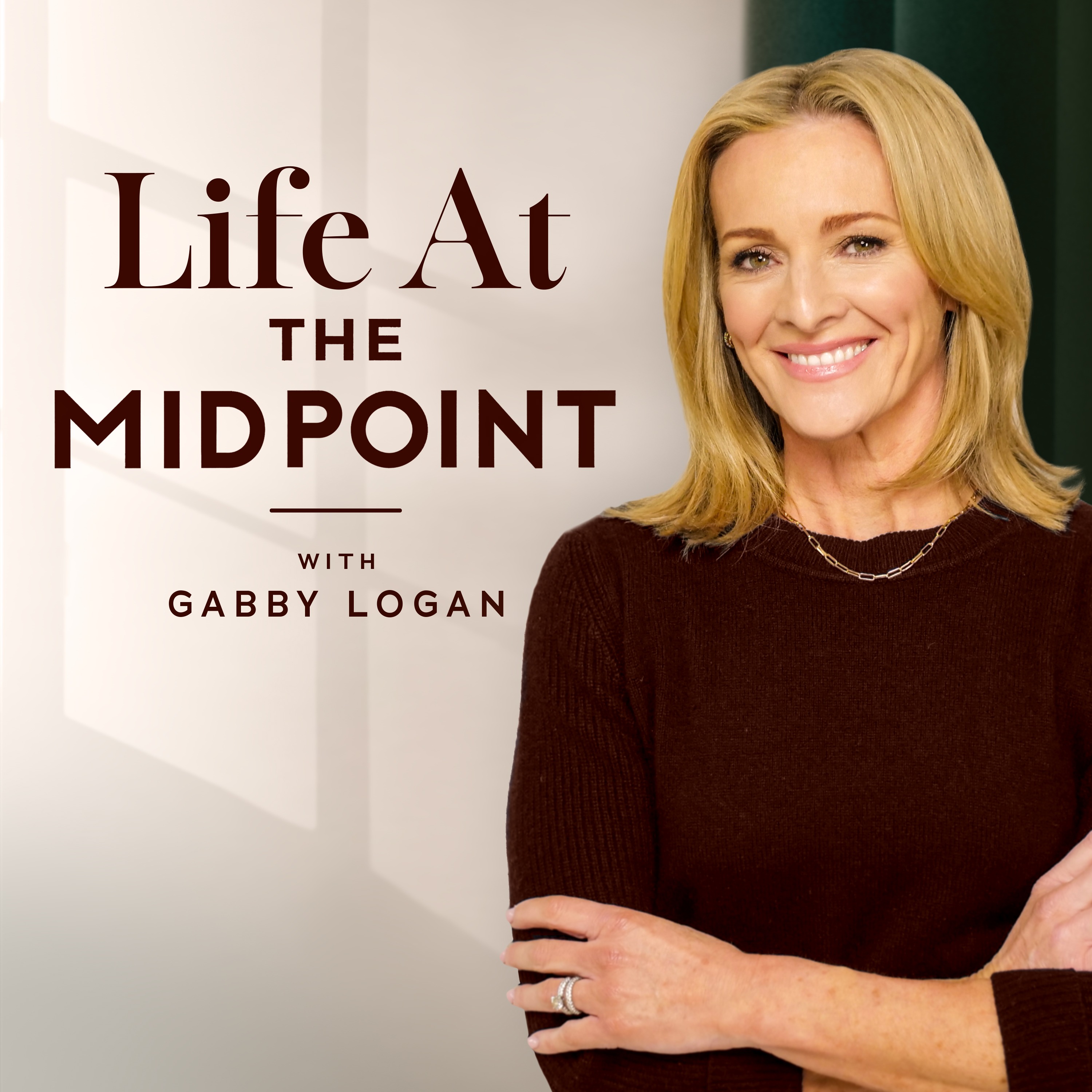
In this episode of Life At The Midpoint, Gabby Logan talks to chef, broadcaster and author Clodagh McKenna about her upbringing in Ireland, her path into food via Ballymaloe Cookery School, and her years living in Italy and running restaurants in Dublin. They discuss finding confidence and self-knowledge with age, life at Broadspear Farm, her approach to healthy eating, and the pressures facing independent food businesses.
Topics finding confidence with age, Irish food culture, Ballymaloe Cookery School, slow food movement, independent restaurants, farm life and entertaining, healthy eating habits, marriage and relationships
Mentioned in this episode Clodagh McKenna, Martha Stewart, Mary Berry, Melinda Gates, Bob Geldof
Chapters
- 0:02:09 Clodagh's most dramatic change
- 0:03:37 Finding love later in life
- 0:05:08 Growing up in Ireland: her mother's influence
- 0:13:47 Italy, Slow Food and early TV career
- 0:20:58 Life at Broadspear Farm
- 0:31:27 This Morning and settling in England
- 0:35:14 The struggle facing independent restaurants
- 0:41:41 Food, health and how Clodagh eats
Partner with Life At The Midpoint
Life At The Midpoint is produced by Audio Always. We work with brands on sponsorship, advertising and partnerships across our network of podcasts, reaching engaged listeners and viewers.
Advertising categories Cookbooks, Dining Out
Show notes
How do you know when it's time to change direction, and how do you find the confidence to start again? This week, Gabby is joined by chef, broadcaster and entrepreneur Clodagh McKenna for a conversation about family, food, relationships and the different paths life can take.
Clodagh looks back on growing up in Ireland and the influence of her mother, whose independence and determination inspired her from an early age. She talks about finding her way into the world of food, her time living in Italy and opening three restaurants in Dublin. After eight years running them, she realised she had lost some of the connection with food that had started it all, and made the decision to take a step back and move to London.
She also talks about finding love later in life and her marriage to Harry, sharing why she believes it's important to be happy and comfortable in yourself, whether you're in a relationship or not. And a look into her life at Broadspear Farm, her love of entertaining and why food has always been about so much more than what's on the plate. She brings some of this into her new book, Clodagh at Home, available to buy now.
If you have any questions, dilemmas or things you’d like to discuss, please get in touch email hello@midpointlife.com or you can find us on social media @midpointlife.
Life At The Midpoint is brought to you by Vitabiotics Menopace, providing expert nutritional care for during perimenopause, and during and after the menopause. Visit Menopace.com and Embrace the Change.
Hosted on Acast. See acast.com/privacy for more information.
Full transcript
Gabby Logan 0:01:06 Hello and welcome to Life at the Midpoint with me, Gabby Logan. My guest today is Clodagh McKenna. She's a chef, author, and broadcaster, but really food has been at the heart of almost everything she's ever done. Clodagh grew up in Cork and trained at Ballymaloe Cookery School after her mum secretly took out a loan to pay for her course. She'd actually had a very different idea for her future, opening a chain of coffee shops, But Ballymaloe changed the direction of her life.
Gabby Logan 0:01:31 From there, she worked with the slow food movement in Italy, opened restaurants, wrote cookbooks, and became a familiar face on television. And she's still doing it. She has a new series on ITV, Clodagh Cooking at Home. And these days she and her husband Harry live and work on a farm in the English countryside. But I really wanted to talk to Clodagh about her new book, Clodagh at Home, and what home, food, and cooking mean to her now.
Gabby Logan 0:01:54 After so many years cooking professionally, writing books, and working in television, Has the way she cooks and the way she wants to live changed? Let's get into it.
Gabby Logan 0:02:09 Clodagh, it is so lovely to have you on Life at the Midpoint. So the question I always ask my guests when they sit in the chair to start us off is, when in life did you experience the most dramatic change?
Clodagh McKenna 0:02:22 Oh, the most dramatic change. Probably not too long ago, I think. I'm now 51. It was probably, I would say in the last year, the most dramatic change of feeling completely comfortable in my own skin.
Gabby Logan 0:02:42 Did something happen to make you realise that?
Clodagh McKenna 0:02:46 Not really.
Clodagh McKenna 0:02:47 I don't know what it was. It's just, I don't know, feeling really comfortable with who I am, knowing, and maybe it's knowing who I am. Like really knowing who I am as a person. And that's a really lovely thing. I guess there's like the kind of the balance of like the yays and the nays of like, you know, getting older.
Clodagh McKenna 0:03:09 And I think that's definitely one of the biggest positives, isn't it? Of like getting older. Oh yeah. Where you know who you are and you become really comfortable with who you are. And with that, of course, comes incredible freedom.
Clodagh McKenna 0:03:22 So you give yourself incredible freedom to do what you want to do without, you know, without wondering what people would think of it or having your own opinions and giving yourself that great freedom.
Gabby Logan 0:03:37 You got married a little bit later in life. Do you think that coincides with that feeling as well that you had a, I don't know, maybe a security somehow that you felt that you were free because you were loved in a way that you wanted to be loved.
Clodagh McKenna 0:03:54 But yeah, that definitely. And definitely, like Harry, who's my husband, he is the most amazing person I've ever met in my life.
Clodagh McKenna 0:04:02 And I feel like, thank God I married him, 'cause he really is, he's so kind and he is like my biggest life supporter. And I feel incredibly blessed. But I do think that it's quite important to become, comfortable with who you are with or without a partner, you know. And I think that's really important that you become rock solid because you start the life on your own and you end on your own. You know, you have to be comfortable with who you are on your own.
Clodagh McKenna 0:04:32 I think that's, you know, quite important to feel that and everything else is extra, you know.
Clodagh McKenna 0:04:40 But yeah, we got married when I was in my 40s. Yeah, we met in my 40s and we got married in my 40s. And a lot of people say to me, why didn't you marry before then? And everything. And I think I grew up in a household in Ireland where I remember the day when the laws changed and my mother was allowed to work.
Clodagh McKenna 0:05:08 Because when I grew up, when I was first born, You know, growing up in Ireland, you— if you were married, you weren't allowed work. It was against the law as a female.
Gabby Logan 0:05:17 I had no idea that that was—
Clodagh McKenna 0:05:18 Did you not?
Gabby Logan 0:05:19 No. Yeah. Wow.
Clodagh McKenna 0:05:22 And you weren't allowed work. You had to, like, stay at home and manage the family and the house and everything. Be a good wife.
Clodagh McKenna 0:05:29 And the minute the law changed, my mom went straight out to work and she really instilled in us, like, constantly— there wasn't a week going by— always earn your own money, always be independent. And don't let anything stand in your way. And I grew up with that. So I never thought about marriage or family as being something that I needed to do or had to do. I was just, I want to write cookery books.
Clodagh McKenna 0:05:59 I want to live in Italy. I want to live in New York. I want to just go and really live, you know, my life.
Gabby Logan 0:06:06 Your mom gave you such freedom then, didn't she? Yes. In so many ways, because she was rebelling almost against what she'd grown up with. even though she was in a marriage, right? And she didn't want to leave it particularly. So it wasn't like she was kind of— but she must have given you a sense of, you know, you could do anything you wanted to do, which is a complete opposite to what she must have felt like when she was the age that she was giving you that advice.
Clodagh McKenna 0:06:30 Exactly that.
Clodagh McKenna 0:06:31 Like, I remember so clearly, I was about like 12. I have this real visual of her. And she had worked all day in the office. And then she went on to get her law degree at night. And when she got that, she went on to study Latin.
Clodagh McKenna 0:06:44 And I remember her coming into the bed beside me not wanting to wake up my dad and having the light on, the small lamp on beside my bed and coming in beside me in the bed and just reading her Latin books and like being cuddled up beside her and the smell of the book and the smell of beautiful smell of her and the paper going by and that soothing sound. Like they were the sounds of my childhood, you know? Yeah. And a woman furthering herself, educating herself. And that was freedom.
Clodagh McKenna 0:07:13 Like that was like what you strive for. I saw her. That's all I knew. That's what she strived for, like the ability and to be allowed to do that.
Gabby Logan 0:07:22 And so no wonder then that she was the one who, I think she borrowed some money, didn't she, to pay for your first cooking course?
Clodagh McKenna 0:07:30 My cookery course. She did, yeah.
Gabby Logan 0:07:32 So she was not just talking the talk, she was walking the walk.
Clodagh McKenna 0:07:35 She was walking the walk. So I got a scholarship, a presidential scholarship, which is an academic scholarship to university in America.
Clodagh McKenna 0:07:42 I guess to set the scene, I grew up in like a really tiny house in the countryside in Ireland. So going to America to university was just like, what? And like, I was given an envelope, the address and cash in there to get the yellow taxi. I had a couple of weeks of pocket money and then I had to get a job, you know, for the rest. I was only 18.
Clodagh McKenna 0:08:03 And when I came back, I said to my mom, like, I was like, there's no coffee shops in Ireland. Like, maybe I should set up and try and like get the Starbucks chain over here. She was like, what's Starbucks?
Gabby Logan 0:08:15 So where had you gone in the States? Which part of the States were you in?
Clodagh McKenna 0:08:18 New York.
Gabby Logan 0:08:18 So you'd seen coffee shops everywhere, I thought.
Clodagh McKenna 0:08:20 Yeah. I remember my first Starbucks. Starbucks coffee shop.
Clodagh McKenna 0:08:22 It was so glamorous and exciting. And I think I was on Broadway, you know, in lower downtown and having my, you know, my coffee before I went off to do my part-time job while going to college. And I was like, maybe I could get the franchise. Because going to university in America, you're drilled to be an entrepreneur, to start your own business. There's never any chat about where you're going to go work.
Clodagh McKenna 0:08:46 It's all about startups and everything. So that was in my mind. So I had my mom and then I had that. And I was like, But what I need to do is I really need to learn about food and the whole food side of things. I think I need to do a Ballymaloe cookery course.
Clodagh McKenna 0:09:00 I remember sitting on the stairs with her and she was like, well, how much is that? And I think at the time was— I can't remember— £3,000, £4,000, something like that. And we were like, how are we going to get the money? And Mom was like, I'll sort it, don't you worry, I'll sort it. And she goes, we just can't tell your father, just don't tell him.
Clodagh McKenna 0:09:17 So she went to the co-op and got her savings, you know, they doubled the savings, and she got all the money out. and paid for the course. And I mean, I don't know why I get emotional, but it's just amazing to do all that for me. And then we told my dad the day before I was going. He freaked.
Clodagh McKenna 0:09:37 He was like, she needs to get a proper job. And what is she going to do training as a chef? Because at the time, there was, you know, if you trained to cook, there were no other options. No. And we weren't going to tell him the store books idea at that point.
Clodagh McKenna 0:09:53 And yeah, off I went. And then the first week I came back and the first— I brought home these apple clove jelly that I had made, um, that first week on the cookery school. And I popped them all down the kitchen table and I ran upstairs and I came down and my dad was crying at the kitchen, you know, spooning the apple clove jelly into his mouth. And I got such a fright. I thought there was something wrong with my mom.
Clodagh McKenna 0:10:20 And he said to me that he just hadn't tasted that since Granny had made it. His mother had made it. And I'd seen my father cry twice before in my life. And then it just all changed for him. He completely got it.
Clodagh McKenna 0:10:32 I felt completely— I was like about 23 at that point. I felt so immersed and in love with food and how, how food could change a person, how it could take them from being a, you know, tense— quite— my father was, you know, very— very— what is the word? Upstanding? Yeah, exactly. Very correct.
Clodagh McKenna 0:10:54 And my mum is the opposite. My father was always terrified and everything had to be done right. You always had to do things right, you know? And, and that was like really important to him. And he all of a sudden then just got 100% behind me and gave me his car so I could drive up and down to the cookery school and drive home at weekends so he could do all my laundry and he'd iron all my laundry on Sunday nights and have it all packed, all my chef whites packed.
Clodagh McKenna 0:11:23 And then that was the beginning of my career in food. And I just, I thrived in it. I just thrived and went on and trained as a chef then in Ballymaloe House for 3 years and then went on to start up farmers markets and work with the farmers.
Gabby Logan 0:11:37 So it was almost an accident that that came to pass.
Clodagh McKenna 0:11:40 Oh yeah, 100%. Yeah, it was.
Gabby Logan 0:11:41 Because you didn't have— obviously food was important at home, but it wasn't like you'd spent every minute as a child kind of over the shoulder of your mum baking or cooking?
Clodagh McKenna 0:11:49 No, no, it wasn't. I mean, I did have— I was very lucky. I did a French exchange when I was 12 years old with this amazing French family. He was a professor and she was an incredible cook. And from the age of 12, I was supposed to be going there for 2 weeks. I ended up staying for 3 months because she was like, I love you. And I became part of their family. And she is another mother.
Gabby Logan 0:12:12 You stayed for 3 months?
Clodagh McKenna 0:12:13 Yeah, every year growing up. And you know, we're still really close. We message every day. And she was at my 50th birthday. She said, oh, you know, they're— we're very close. I'm one of her other daughters. And, and she was an amazing cook. So at the age of 12, 12 and a half, I was—
Gabby Logan 0:12:30 And what was she cooking? What kind of things was she making?
Clodagh McKenna 0:12:32 Oh, amazing French classical food like boeuf bourguignon and dauphinoise. And she also loved Italian, so she used to make fresh pasta. So I got to learn all of those things and it was amazing to go from Ireland and my upbringing to go over to see that as well. So I got to see 2 women, one woman who was like her whole world revolved around homemaking and making that home.
Clodagh McKenna 0:13:01 And then my mother, who was the— not the opposite, but her world revolved around women's rights and freedom and independence and everything the Catholic Church had put up to her, even though she went to church every single day. It wasn't that she was very spiritual. It was actually what was being put against her to stop women. She just could never understand it. And so I grew up with that at home.
Clodagh McKenna 0:13:29 So I had this. So now I'm a chef with my own career. It's like the mélange of the two of them together.
Gabby Logan 0:13:34 It's just the perfect blend.
Clodagh McKenna 0:13:36 It's kind of crazy when I think about it.
Gabby Logan 0:13:38 So the journey to Italy. Yeah. You, you loved Italian food and wanted to go and explore a bit more of that. Tell me a little bit about the slow food.
Clodagh McKenna 0:13:47 movement.
Clodagh McKenna 0:13:47 Yeah. So I got to Italy because I set up farmers markets. I did a 3-year project setting up farmers markets and working with farmers around Ireland for 3 years. Then I got offered my own TV show, which was out of the blue, and I did it. And then I became very well known very fast in Ireland at the age of 27.
Clodagh McKenna 0:14:07 And I felt, okay, I need to learn more about food. I'd been doing work for Slow Food in Ireland. And then I said, is there any way I could come to Italy? And work for you there, and then I could learn more about Italian food and really just open up my horizons. So I got the job, left within a week, didn't know how to speak Italian but learned it.
Clodagh McKenna 0:14:27 And Slow Food is this incredible international organisation that work particularly— I mean, the, I guess the roots of what they do is they work with farmers and farmers, farming communities to how they can support how whether it's through governmental issues or any support with connecting to stores or protecting different methods like DOPs on how they create olive oil, etc. So I worked with that. That was amazing. 3 years. And while I was there, I used to fly back and make the television shows.
Clodagh McKenna 0:15:04 So I ended up making 5 and then I was still out in Italy when all the shows got bought up. And they got taken by America, PBS in America. It was a huge success on PBS, with over 10 million views on the first show when it went out. It was all quite like over there, not knowing. And then I was getting calls from Forbes magazine and Rachael Ray Show and the Today Show.
Clodagh McKenna 0:15:29 And so a little career started for me in America where I started doing the Today Show.
Gabby Logan 0:15:34 So you had to kind of hop over there and do telly over there. So all this is going on and actually in the UK at this point, you didn't have a TV outlet, did you? No, I didn't. You've got this amazing career going on, but you're writing books at the same time and obviously wanting to learn. This seems to be a theme as well, wanting to learn more and more about food as you were going. But at this point, the coffee shops had kind of gone. That idea is kind of—
Clodagh McKenna 0:15:58 Oh, that, that went after a week.
Gabby Logan 0:16:00 So that was, that was out. Something bigger had, had kind of come in its place, I guess.
Clodagh McKenna 0:16:07 Yeah. I mean, anything about making money just went out the window and I was broke basically for 6 years. But it didn't matter. I felt like I really was, especially with the farmers markets, I really felt like I made, you know, I made a difference within the farming community in Ireland.
Clodagh McKenna 0:16:23 And that is still probably the best work I think I've ever done. And then when I was living in Italy, I got a call, I got an opportunity if I'd like to open up my own restaurant in Dublin. And it came to 3 years in Italy. I thought, yeah, okay, it's good time to go back to Ireland, I think, at this point. So I went back to Dublin and opened up 3 restaurants and ran them for 8 years, and I ran myself into the ground.
Clodagh McKenna 0:16:47 It was amazing. I learned so much, but I got slightly disconnected with food a little bit. I became more of a manager. It's a lot of people, 138 staff and everything, and And so I thought, I'll go to London. I'll take like 3 or maybe 6 months out.
Gabby Logan 0:17:06 You're very good, I'm getting the sense, at understanding when you need to make change.
Clodagh McKenna 0:17:10 Oh, thanks.
Gabby Logan 0:17:11 That's what it comes over like, because a lot of people wouldn't have had the courage.
Clodagh McKenna 0:17:16 Yeah.
Gabby Logan 0:17:17 You know, you're in something.
Clodagh McKenna 0:17:19 Yeah.
Gabby Logan 0:17:19 You're in a behemoth of a restaurant, kind of, you know, and all these— the success, and to pull yourself away and equally to come away from Italy, that takes a sense. I mean, you said that in the last year you really feel like you know yourself. Yeah, I do. It points to somebody who was already quite in tune with themselves though.
Clodagh McKenna 0:17:35 You know what? I don't worry about like change. I don't worry about that. I don't worry about— I feel like this is my life. This is your life.
Clodagh McKenna 0:17:45 Like you're doing this amazing podcast. You're, you know, you're driving what you want to do with your life. And that's really important to stop. Stop. We should be stopping like once a month and having a 1-hour talk with ourselves going like, am I good?
Clodagh McKenna 0:17:59 Am I— you know, there's no dress rehearsal. I don't get to do this again. You know, what am I doing with it? What am I doing with the next week of my life? And I do think that way, you know, like a lot.
Clodagh McKenna 0:18:10 And I think I surround myself with, you know, friends that, that do that as well. Yeah. You know, that, that are always like curious and like learning and that are interested and curious about life.
Gabby Logan 0:18:26 That is almost quite yogic, that kind of sense of, you know, having a conversation with yourself and listening to your body and listening to your mind. Do you literally stop then? Will you literally give yourself that hour?
Clodagh McKenna 0:18:38 I do. I do. I go out into the— we have like these lovely woods at our farm and I go out to the woods and I
Gabby Logan 0:18:47 talk to the
Clodagh McKenna 0:18:48 woodland. I'm so afraid to say this because people are going to be like, oh, what? Well, Ted, do you know Bob Geldof? Yeah. He's— or Ira, right?
Clodagh McKenna 0:18:54 Yes. He's like a really great friend of mine. And I remember when he first came, when I first moved down to Broadspur Farm, and he came down and he was like, I've got to teach you about fungi so you understand trees and the life of trees. Because I was like, aren't these woods amazing? He's like, well, you need to properly understand, okay?
Clodagh McKenna 0:19:12 And we need to get down and I'm teach you about all this. And I was like, you know, he's teaching me all about the fungi and sending me books and things to watch.
Gabby Logan 0:19:20 I've read stuff about, about this, about the network basically. Exactly. That is going on and the energy that's going on kind of with trees talking to each other.
Clodagh McKenna 0:19:30 So yeah, so I think a really simple way to explain it is there's a tree there, there's a tree there. This tree needs water and is suffering. This tree over here, there's its root system, goes beyond its root system into the fungi. They will send signals or send water. But this tree first will send signals to this tree saying, I'm really suffering, I need some water, I need help.
Clodagh McKenna 0:19:52 And they will send it back. And it goes throughout this whole web system, goes throughout. Or you're leaning over my shadow energy, all this energy and web. And, and it does like a million things more. We don't survive without, without this.
Clodagh McKenna 0:20:07 So this is what we— this web underneath is actually— what keeps us alive. And I love—
Gabby Logan 0:20:14 So when you're in—
Clodagh McKenna 0:20:16 Going out near trees and lying down.
Gabby Logan 0:20:17 When you're in the woods, because people, people know—
Clodagh McKenna 0:20:20 It's called forest bathing.
Gabby Logan 0:20:21 Well, we had, you know, we've had a chat on this podcast not so long ago with Melinda Gates, and she talked about being in the woods and how important that is. Oh, good for you. She didn't talk about fungi, but I think a lot of people intrinsically know it feels good, but they maybe don't know why it feels so good. They know that being near the trees makes them feel better and gives them some kind of clarity, but they don't necessarily dig any deeper into, into understanding why.
Gabby Logan 0:20:45 It's just enough for them to know that it feels good. But what you've done is taken it kind of that next step and understanding all of that. So, so when you go into your woods and you're there, you feel you can kind of access yourself a bit easier.
Clodagh McKenna 0:20:58 Yeah, it's very humbling as well, you know. So you— I lie down and I dig my hands into the soil and I look up at all the trees and I think about— I don't think about myself.
Clodagh McKenna 0:21:08 I think about They're so much bigger than me. They're so much grander than me. Like, these are my great-great-great ancestors, you know? Like, there have been, you know, we're so lucky the trees we have, both 300 years old and everything, what they've seen. And, you know, it really humbles you.
Clodagh McKenna 0:21:24 And then I think, what am I doing? Like, I like doing it there because it makes me think about not about materialistic things that I want in my life, but really what am I doing with my life? You know? Mm-hmm. I'm very proud of what we've done with the farm.
Clodagh McKenna 0:21:39 When we moved in there 8 years ago, the soil was like chewing gum, and there was nothing growing, and there were asbestos buildings everywhere. And now it's a beautiful, sustainable working farm. I mean, I'm constantly tired working at it, but it's a good tired. So that kind of work, it makes me think about— You know, what am I really doing, you know, this week? And, you know, am I going to a cocktail party?
Clodagh McKenna 0:22:09 Do I need, you know, do I need to do that? Is that what I want to do? You know, am I writing a book? What am I going to write a book on? Or, you know—
Gabby Logan 0:22:18 Where's your inspiration coming from? Is that kind of where you're—
Clodagh McKenna 0:22:21 Yeah, yeah, yeah.
Gabby Logan 0:23:01 And it feels like the farm gives you so much inspiration because, I mean, the book is just beautiful. Even if you've got no idea about cooking and you don't want to even try a recipe, I'd implore you to have a look at the book because, you know, you will be so inspired by the stories. And, you know, the photography is beautiful as well. And it's so wholesome. It's just— Thank you. Because it feels like it really is you. And sitting here in front of you now, even more so. There's nothing inauthentic about it at all.
Clodagh McKenna 0:23:32 Oh, thank you, Gabby.
Gabby Logan 0:23:33 Thank you. Where does it rank for you and rate for you in what you've done in terms of work?
Clodagh McKenna 0:23:37 I mean, it's definitely one of— I mean, I probably think the best book I've ever done. It's, you know, half of this book is Broadspears. So that's half of this book is like, you know, it's not me, it's Broadspears, you know, the beauty of it. And you know, the stories.
Clodagh McKenna 0:23:55 And when, while we did this kind of restoration of, you know, Broadspear, I took iPhone pictures all along the way and I wrote a diary. So it was really lovely to write these essays of like how we renovated a shed into a pickling shed, how we renovated the 300-year-old walled garden that was literally tumbling down. And it was like— there was just rubbish in there when we— it was so depressing when we got there first. And now it's a flourishing, you know, vegetable garden with a pergola in the middle of it where I cook in it. And, and a beautiful— actually, one of the first pages that you open up is the spread of this cutting garden.
Clodagh McKenna 0:24:37 And that's where the asbestos buildings used to be. And I look back at it, I think, oh my God, 4 years ago that was an asbestos building which is full of chemicals. And I remember pulling up the soil and it was like chewing gum.
Gabby Logan 0:24:50 Mm-hmm.
Clodagh McKenna 0:24:52 How you can heal soil so fast is extraordinary. Or you can help it heal.
Gabby Logan 0:24:57 You're actually growing things in that soil now that you're using.
Clodagh McKenna 0:25:01 Yeah, the soil is beautiful. Like our friends are coming along going like, oh my God, all the dahlias and all the flowers and the wildlife. Like, I mean, that's amazing to see so much wildlife, you know, like flock in.
Clodagh McKenna 0:25:13 Like we have cattle and we now have wild irises growing in the, you know, out in the fields because of the cattle. pigs throughout the woods. So we have a whole woodland section of about 8 acres and all the pigs live in there and hearing their sounds and noises in the morning. And, and I think especially probably going out to the vegetable gardens in the morning, like inspiring me with recipes and cooking. And I love, like, I can't have a week go by where I don't have friends and family around the table and I'm cooking up big things like I'm doing another big one on the Saturday and having my friends down.
Clodagh McKenna 0:25:53 If the house isn't full, it doesn't make sense.
Gabby Logan 0:25:55 And does that never feel like a bossman's holiday? You always love it. No, I love it. I love entertaining at home and cooking, but I have to kind of almost get it all done before they arrive because I'm terrible at doing anything while they're chatting. And I've got one friend who's an incredible hostess and cook, and she can cook from scratch while having 16 conversations. And I'm watching her thinking, how is she doing this? Because she's chopping a million different things and she's— are you I'm completely at ease in that respect.
Clodagh McKenna 0:26:19 I'm probably halfway. I like finishing things off when people are there. So, you know, I like— I'm an early riser, so I like getting up at like 6 o'clock, and I like getting all my prep work done and things kind of simmering away. And then I like finishing things off when people are there. I don't like doing everything while everybody's there because I definitely get, I gotta concentrate. I can't do this. I can't like multitask.
Gabby Logan 0:26:44 People must have such high expectations of lunch at your house.
Clodagh McKenna 0:26:49 I think they probably do, but I love it so much that I— They never disappoint you. At the end of the day, one big pot around the table. It's the energy and the feeling. But I like people coming down, and I like trying to— if I see a friend who's like— I saw one last night who seemed just a little bit all over the place, and I was like, you're coming down on Friday.
Clodagh McKenna 0:27:12 Just cancel everything else. You're coming down to me on Friday. And I love taking somebody and putting them into our cottage. You know, we've got a big cottage. Feeding them.
Clodagh McKenna 0:27:22 Feeding them, getting them to help me with the chickens in the morning and cleaning out the chicken house and feeding the pigs and picking the vegetables for the pigs so they can eat them and getting involved. And, you know, out in the pickling shed with all— because we've taken all the vegetables and we prep them every weekend.
Gabby Logan 0:27:39 Are weekends sacrosanct for you?
Clodagh McKenna 0:27:41 Yeah.
Gabby Logan 0:27:41 You work your butt off Monday to Friday. And then when you say you're still working at the weekend because you're still entertaining, which in itself is not just sitting there doing nothing, but it's so energising.
Clodagh McKenna 0:27:51 Yeah, so energising. Like, I love being around people and cooking and sharing and hear the footsteps coming down, you know, and somebody's coming down and I know I've got a bread in the oven and they're going to love it and they're going to walk out and they'll just see the chickens running into the house. And I love it. I love that.
Clodagh McKenna 0:28:08 You know, it's a really lovely thing to share, you know, when you've created a little farm and people are not as— they don't have that in their everyday life, all these animals. Yeah. And I love that sharing. You know, my nephew's right next door and he's got a stud farm and, you know, bringing them over to see the horses and, you know, feeling those animals and, you know,
Gabby Logan 0:28:34 Animals are very important to you, aren't
Clodagh McKenna 0:28:36 they?
Gabby Logan 0:28:36 Yeah. And you're, I know, I don't know how long ago it was, but I saw a post about your boxer.
Clodagh McKenna 0:28:41 Oh, Nolly, yeah.
Gabby Logan 0:28:42 We had a boxer who died a year ago, actually.
Clodagh McKenna 0:28:44 Oh, I'm so sorry.
Gabby Logan 0:28:45 And so, well, I mean, I know exactly kind of, you know, any dog. I mean, any dog, it's, you know, it's an incredible relationship. And people who've not had pets, you know, they kind of don't always get, do they, how close you can be.
Clodagh McKenna 0:28:57 That you become.
Gabby Logan 0:28:57 Yeah. And Nolly, obviously for you was, Well, I'm
Clodagh McKenna 0:29:01 sure the same for you. They become a member of the family.
Gabby Logan 0:29:03 Yeah.
Clodagh McKenna 0:29:03 Don't they? And it's very hard to explain that to people who aren't dog lovers. And you kind of hold yourself back a little bit, but they become, you know, part of your family.
Gabby Logan 0:29:13 And have you had other dogs?
Clodagh McKenna 0:29:15 Yes.
Clodagh McKenna 0:29:16 Yeah. Yeah. So we always— so we had 2 doggies. We had Nolly and Alfie. And Alfie is a husky pointer cross.
Clodagh McKenna 0:29:24 And when Nolly died, he got really depressed. Like so depressed. And then one morning I got up and he wouldn't eat his food and he just like wouldn't get up out of bed. And I got on into the train, I had to go into work and I was on the train and I was like, okay, this has gotta stop. I need to get over Nolly 'cause I'm really down as well and I'm making him down.
Clodagh McKenna 0:29:45 I've gotta make a change. What am I gonna do? And so I just put in Google, you know, puppy, you know, my address pretty much, you know, available now. And I literally, it was just like fate. There was this family living 10 minutes away from me.
Clodagh McKenna 0:30:06 You know the neighbourhood? I don't know if you're on those neighbourhood apps. Yeah, yeah, yeah. Yeah, yeah, I came up on that and I clicked over 'cause I'm part of that community app thing. And I clicked over to the app and the lady is like 10 minutes away from me and her doggy had puppies and one of them was Teddy.
Clodagh McKenna 0:30:22 She literally sent me a picture and she's like, I can drop it off later today. And I was like, okay. Harry was in— we were talking about the other day, Harry was in California at a big race meeting. Yeah. Because he's in horses, he's in racehorses, high-tier thoroughbred racing.
Clodagh McKenna 0:30:38 And then I was like, okay, yeah, fine. Yeah, I'll collect on my way back from London. Went, collected the puppy, brought the puppy home, this tiny puppy home. I was like, Jesus. I was calling my sister.
Clodagh McKenna 0:30:53 I'm like, ah, Great Mairead, what am I gonna do? And she's like, you've got a puppy? And I'm like, yeah. And she goes, well, don't let it out after the chickens and keep it inside for a bit. You know, you've got farm animals.
Clodagh McKenna 0:31:03 And I'm like, yeah, I know, but, you know, Alfie's getting really depressed. And it was like life-changing for all of us.
Gabby Logan 0:31:10 Getting back to your food journey and where we are now, because you now have an enormous presence in the UK as well with your work on This Morning in particular. Going on there must have been really changed the game for you a bit in England.
Clodagh McKenna 0:31:27 It did. I was doing the great NBC Today Show in America, which I've now started going back on. They called me up last week and they were like, will you start coming back again?
Gabby Logan 0:31:37 So how do you do that?
Clodagh McKenna 0:31:39 I'm going to do it slow. I'm going to go over like once a month.
Clodagh McKenna 0:31:44 And I was doing that. And then I got a call from This Morning. This was like 7 years ago. Would I join the This Morning team? And they offered me a contract, and I was like, it was just really amazing timing.
Clodagh McKenna 0:31:58 Um, and I thought, yeah, I'll do that, and I'll stop travelling so much. Um, and I'd met Harry at this point, and it just kind of like, it started kind of like, and we were dating, I mean, we were living together. But you were serious. It was like, it felt like, okay, this is really good and good for me to like commit to something because I was definitely You know, I definitely, um, was a— not a roamer. What would I call myself?
Gabby Logan 0:32:27 Free spirit. A
Clodagh McKenna 0:32:27 free spirit. I didn't— like, I never thought I'd get married. I always thought that I would be one of those that would just live in different countries. And, you know, and I don't know, I hadn't really thought about it too much. Just going with the flow. And even in my 40s, I wasn't even worried. And people were getting worried about, you know—
Gabby Logan 0:32:45 Getting worried for you.
Clodagh McKenna 0:32:46 Yeah. get married. And my mother never, ever once even mentioned it to me.
Gabby Logan 0:32:51 I love your mother.
Clodagh McKenna 0:32:52 I know, I know. Amazing.
Gabby Logan 0:32:54 She's great.
Clodagh McKenna 0:32:55 Yeah. No pressure, like, for anything like that. And so then I met Harry and I started doing This Morning, and then COVID happened and we had like a lockdown. And then we really started plummeting into what I was talking about was, you know, regenerating our farm and starting our farm.
Gabby Logan 0:33:14 So, so you're an entrepreneur. I mean, everything you've said going back to your early days of coming back from New York, that you are intrinsically, that is what you are, as well as somebody who is a feeder and loves entertaining, giving people nourishment and giving them a great time. You know, to be able to combine all those passions is—
Clodagh McKenna 0:33:32 Is, is really good.
Gabby Logan 0:33:33 Yeah, it's a dream, isn't it?
Clodagh McKenna 0:33:35 It is a dream. It is a dream. And, you know, I look to the likes of Martha Stewart and, you know, what she's done. I've met her, you know, so lucky to meet her and go into her offices and meet all her team. And they showed me everything they've done. And, and to see, you know, I mean, I love having women like that as like my, you know, people I can follow and be inspired by, you know, that you can take being— I look at myself as being a teacher,
Gabby Logan 0:34:03 you
Clodagh McKenna 0:34:03 know, teacher of cookery, a teacher of recipes. And I also look at myself as being a homemaker.
Clodagh McKenna 0:34:09 I love homemaking so much. And that's like that other part of me. And then I also love business because, you know, I guess I went to study that. And then when I had the restaurants, I had that for 8 years, like drilling in of business. And so I love both parts of it.
Clodagh McKenna 0:34:27 And I love creating something I get hope that little me will look at and think, oh, look, she's done it, so can I. I look at Martha and I think she did it and I can do it. I want to create that. I've got great ambitions to create that.
Gabby Logan 0:34:45 Yeah, and you're on your way creating that because that is where you're at, isn't it? And there are so many similarities actually. I was thinking about Martha Stewart when I was reading up on everything that you had done. And there are But other women who have created different, like Mary Berry has created a different kind of empire and that. And she was a trailblazer in many ways in this country. And she hasn't necessarily gone into the kind of full home range, but she obviously was that very visible woman in what was a man's world at the time, wasn't it?
Clodagh McKenna 0:35:13 100%.
Gabby Logan 0:35:14 And so in terms of the restaurant business and the entertainment and hospitality industry in this country, it feels like it's going through a very hard time.
Clodagh McKenna 0:35:21 A really hard time.
Gabby Logan 0:35:22 And somebody who's run restaurants in the past. And, you know, when you see now the kind of, you know, the way that it's so difficult to keep restaurants open and to even start new ventures. Anybody who— and I remember reading something recently, anybody who opens a new restaurant in London is the eternal optimist or something. It was like, basically it was a restaurant critic saying, you know, we need these new restaurants, but it's so hard to start now.
Clodagh McKenna 0:35:43 And it's all like shops. I was talking to my fishmonger the other day and I was like, how is everything? And then I really rely on him for so many different reasons. And so does the community.
Clodagh McKenna 0:35:57 And he was like saying, it's hard. He's like, it's so hard. All rates have gone up and wages are up. And, and he goes, it's really hard to make it all work. And that is what I hear throughout all of the restaurants, delis, you know, really small, small-scale shops.
Clodagh McKenna 0:36:16 Mm-hmm.
Clodagh McKenna 0:36:19 And I think what our government really needs to shake themselves and understand that they're the community. They're what shapes the community. They drive property. You have a great restaurant, a great cafe, a great baker, a great cheesemonger in one little square, that whole property around that area will thrive.
Gabby Logan 0:36:44 Mm-hmm.
Clodagh McKenna 0:36:44 Because people want to live there, and people from abroad will want to have a house there because they create villages within big cities and towns. Mm-hmm. And they also create employment. And if you make it so hard for these smaller restaurants and smaller businesses to survive, we are all going to be eating in restaurants or shopping in shops that aren't even owned by English people or British people. They're owned by international companies.
Gabby Logan 0:37:18 Huge corporations.
Clodagh McKenna 0:37:19 And that's where the change has to happen really fast because they're closing down. And it seems extraordinary to me that that is not part of the agenda of how can we make sure that we are keeping the high streets you know, independent, you know, with independent—
Gabby Logan 0:37:43 And thriving. I mean, we're commenting on it a lot, Kenny and I, if we're travelling through the countries, we do quite a lot.
Gabby Logan 0:37:49 If you go somewhere where it actually is thriving and has independent shops, it's now almost the rarity. You know, the norm is empty units and lovely cafes closing down. Or, you know, where was I the other day? And oh, it was— I was in Scotland. I was in Stirling and Bridge of Allen.
Gabby Logan 0:38:05 And my my husband's from a farming family and the next farm, his cousin's farm, after foot and mouth, they had a, you know, a disaster and they basically had to open a farm shop to try and stay afloat. And it's now a thriving— I mean, it's literally busy all the time, this cafe. It's amazing. But they were saying, you know, so many of the cafes in the area are struggling and closing down and, you know, kind of they were surmising as to why they were doing okay and they're in a beautiful setup. And then I noticed after they'd said that, when I went through the town, that, you know, they were closing down these places.
Gabby Logan 0:38:38 And this is— these are gorgeous parts of the world that we, you know, we should be shouting about and celebrating. And it just makes you so— I feel so sad when I see these places like that. And I don't know how, you know, as you say, people like you talk about it. I hear people talking about it, whether it's Clarkson's Farm, talking about farming communities, or— and yet— Yeah. And yet we're still here kind of of with nothing changing and shops and restaurants closing down.
Clodagh McKenna 0:39:05 I was having, um, I had a meeting with Tourism Ireland when I was in America, and just to catch up because I know them so well and they do such brilliant work. And I was like, what are your objectives for Ireland, you know, for next year? And it's my home, so I always have like that growl and that love for Ireland. And they were like, their objectives is to really highlight and support all the markets, the restaurants, the cafes, all small independent stores all across Ireland. That is our number one objective. I was like, that's so brilliant.
Gabby Logan 0:39:42 And so clever.
Clodagh McKenna 0:39:43 It's so brilliant. And I really hope that, you know, the British tourism, that's what their focus is as well on, is like highlighting that, highlighting that.
Gabby Logan 0:39:54 Because people don't want to come here as tourists and eat in the same restaurants they can eat at home. That's the whole point, isn't it? That you want to feel that you're somewhere different. That's what we love about going to small villages in Italy or small villages in France and stumbling across what looks like a totally innocuous little family restaurant and eating one of the best meals of your life, you know.
Clodagh McKenna 0:40:11 Absolutely.
Gabby Logan 0:40:12 And seeing generations and generations of people cooking it.
Clodagh McKenna 0:40:15 Yeah.
Gabby Logan 0:40:15 We have that, you know, we have that in this country. We need to shout about it.
Clodagh McKenna 0:40:20 Yeah. And also like that, like the money stays within the community.
Gabby Logan 0:40:23 Yeah.
Clodagh McKenna 0:40:24 You know, you own the shop. You employ local people, you make money in your shop, you're going across the shop across the way to support them, and that money is staying there. And then that person is using, you know, has enough money to use the local hairdresser, and the money stays within the community rather than the money leaving the community. Like, that's where the focus needs to be.
Gabby Logan 0:40:46 I don't know if you've got time to be the local restaurant czar for the government, but I mean, maybe that's another role that you could add Um, it's been such a delight chatting to you, Clodagh. Oh, the same. And I've always admired what you do on TV, but sometimes when you meet somebody, they're not the same as that person. You are absolutely that person, but also your passion for food and your passion for entertaining is clear to see. Thank you. And the book, I mean, I have to say, there's a recipe that is, I think, for Guinness stew.
Clodagh McKenna 0:41:18 Oh yeah.
Gabby Logan 0:41:19 Which I am desperate to make. I love stew, and that looks absolutely amazing. What, in terms of of food and health and food and life, you know, where do you sit on that? I kind of— I mean, everything in there looks delicious. Yeah. But do you think a lot now as you are at the age that you're at about what you're putting inside your body? Absolutely.
Clodagh McKenna 0:41:41 My last book was called Happy Cooking and it was a real— I wanted it to be an honest book about what I eat Monday to Friday. And so Monday to Friday, I'm really You know, I'm very disciplined about my food. I juice every morning anyhow. I have a pint.
Gabby Logan 0:41:57 2 pints? Oh, a pint.
Clodagh McKenna 0:41:58 Yeah, 1 pint. I do 2 pints, 1 for everyone, 1 for me. And I take everything that's in the garden. So if it's beetroot, I'll just grab the beetroot with some celery. And I grow all our own vegetables for juicing. And I also add in fresh turmeric, the root.
Gabby Logan 0:42:14 Real turmeric. Yeah.
Clodagh McKenna 0:42:15 Which was really brilliant. for any inflammation inside your body.
Clodagh McKenna 0:42:21 So it really helps with so much. And I put ginger in, etc. And then at lunchtime, and then I'll have like really good yoghurt and really good nuts and seeds and all the rest with it and a banana probably. And then at lunchtime, then I always have some sort of pulse. It could be like butter beans and a salad or a a dal, little lentil soup, or it could be a vegetable soup.
Clodagh McKenna 0:42:48 And I'll just open up a can of, you know, chickpeas and I'll pop that into it. Or else if I don't have that, I'll have 2 boiled eggs, sliced up tomato, and some like rye bread or something like that. I have 2 eggs every single day. I find it's a really good source of protein and there's so much goodness in a really good egg. Mm-hmm.
Clodagh McKenna 0:43:11 It's so worth buying good eggs and having 2 eggs, you know, as clean as you can every day. And then at nighttime, then I will do— I always try and have fish twice a week, but it could be a tinned fish. It could be, you know, some really nice tuna or mackerel. I had gorgeous line-caught mackerel last week. It was only £2, the mackerel.
Clodagh McKenna 0:43:35 And I'll try and have fish or something lean. And then at the weekend, I don't know what time it is. No, it's not that time yet. But on a Friday, I always have a martini at 6:30. So I try not to drink during the week, and I have a martini on a Friday night, and then I cook us up a gorgeous big pasta or whatever on a Friday night.
Gabby Logan 0:43:58 And that is the start of your weekend martini and pasta days.
Clodagh McKenna 0:44:02 Weekend of whatever I want. I eat whatever I want at the weekend. And then by Sunday night, I'm like, I'm ready now. I'm ready now to go back to— To get back on the—
Gabby Logan 0:44:12 yeah. Well, to be honest, Monday to Friday sounded pretty ridiculously delicious anyway. But I, but I know what you mean. You're more disciplined Monday to Friday.
Clodagh McKenna 0:44:22 I am. You know, people might be passing around a croissant, you know, in our line of work when you're in studios and it's a lot of croissant life and all the rest. I just will never—
Gabby Logan 0:44:29 Go near it. Yeah,
Clodagh McKenna 0:44:29 I'll never go near it because I'm like, that's just so bad for my body. Like, I just won't put it near me and it's going to drag down my energy levels. Yeah. I mean, my focus is always on my energy. because I'm like, my ambition is, is so big, what I want from life. But my energy isn't the same as it was 10 years ago. So I'm like, how can I get my energy up to where I want to be? And that is true. You know, that's what you put in. Yeah. If I go to dinners during the week and they're charity gala dinners, I'll eat beforehand.
Gabby Logan 0:45:01 So you get— make sure you get the right nutrition.
Clodagh McKenna 0:45:04 Yeah. And then I won't eat the dinner. I'll just pretend.
Gabby Logan 0:45:06 Yeah.
Clodagh McKenna 0:45:07 Yeah.
Gabby Logan 0:45:08 And yeah, it's hard. Those things, those kind of mass cooking, you know, kind of a dinner for 500, it's always very difficult, isn't it? Because you think this is probably not what—
Clodagh McKenna 0:45:17 You don't sleep well then.
Gabby Logan 0:45:18 No.
Clodagh McKenna 0:45:19 You know, you don't sleep well. There's a lot of salt in the food and, you know, you know, and it's not maybe not the best quality food. And I mean, some of them are great quality, but you don't know for
Gabby Logan 0:45:30 sure what's
Clodagh McKenna 0:45:30 there. You don't know.
Gabby Logan 0:45:31 It's always
Clodagh McKenna 0:45:31 good to get your food in
Gabby Logan 0:45:32 when you're a Home cooking expert as you are, you know, that is an anathema to you, isn't it? Obviously it's something that sat there probably for a couple of hours.
Clodagh McKenna 0:45:39 Yeah, I'm always thinking about the food. Where is that meat coming from? Is that from a British farmer? You know, and, um, and that's what I, I try to, you know, I'm doing my food ordering, I'll, I'll think about, oh, I'm gonna order from this farmer now in Dorset this week, you know, and I'll give him a shout out on my Instagram.
Clodagh McKenna 0:45:57 And I mean, that's how I kind of eat as well, you know, or I'll get, you know, lovely crab up from this person in Cornwall and I'll do a dish and it's really good for me. But I'll also give him a shout out. My kind of food world, I— You champion people. I love supporting and, and like being a teacher, it's kind of, it's like it's part of my job as well. Like, I feel I'm not paid for it, obviously, so it's not really a job, but I definitely feel that I have a responsibility you know, to do that, you know, to order from these and pay for it and not ask them for a freebie on the, you know, on the down low or whatever.
Clodagh McKenna 0:46:35 You know, I like paying them. I like supporting farmers. Um, I go to my local fishmonger, you know, every— Rex, my fishmonger, and, um, I go to him and his gorgeous wife Emma. Hi. You know, I go to them at least once a week, you know, and I love their chat.
Clodagh McKenna 0:46:51 I, you know, And I love that relationship with them and they always have the best fish and they have a great relationship with lots of other fish, you know, great fishing communities. And they take a lot of time to support fishing communities in Britain and also in Ireland actually as well. And so
Gabby Logan 0:47:11 your whole food ecosystem just is— it sounds like you're really at the heart of so many different relationships, which is so important in terms of your relationship And Harry, have you changed the way he eats then from that first dinner that you met him?
Clodagh McKenna 0:47:24 Yeah, 100%. Yeah, 100%. Yeah, he eats very different now and he loves it. Like, he's like, you know, he has to have juice every morning now. And, you know, and he will not eat any bad food. You know, sometimes I'll, you know, we'll be at somebody's house and food is, you know, probably, you know, mightn't be 100% or whatever. I'll still eat it because I'm like, Like, they'll all be looking at my plate and my eating it, and I'd be like shovelling it down. Harry will just take a little bit and he'll leave it, and he just won't eat anything for the night. Like, he's become really good at, like, you know,
Gabby Logan 0:47:58 putting good stuff inside.
Clodagh McKenna 0:47:59 What he eats and how he looks after himself. And, and yeah, you could— I can tell his energy and how he looks, and, you know, I'm so proud of him. Like, he's like my little mascot.
Gabby Logan 0:48:11 He's your biggest champion, but also he's also a shining example of, you know, practising what you preach.
Clodagh McKenna 0:48:18 So yeah, yeah, I take great pride in looking after him. God, that's so tradwife, isn't it?
Gabby Logan 0:48:24 Well, it's so interesting. It's kind of a full circle, isn't it? From your mum and her ambition for you to, you know, to get out there and do what you want. But actually, you know, that's also a lovely thing to be able to have somebody who supports you and is your absolute rock. And, you know, and took you a bit of time to find that person that you wanted to have as that, you know?
Clodagh McKenna 0:48:44 Yeah, but worth waiting for.
Gabby Logan 0:48:45 She made you fussy, which was great.
Clodagh McKenna 0:48:46 I was ready for it. I was ready to settle down.
Gabby Logan 0:48:48 Yeah.
Clodagh McKenna 0:48:49 Wow. If I'd met him 10 years before that, I would've been like, no, I've gotta go live in Italy. Sorry, bye.
Gabby Logan 0:48:55 Well, as you said at the very beginning of our chat, when I asked you about the most dramatic change, you said this last year you feel like you
Clodagh McKenna 0:49:01 are
Gabby Logan 0:49:01 absolutely in your kind of self, knowing who you are and what you want. And I really think, I mean, to use a food analogy, the world is your oyster because the, The growth, I think, of your empire will continue. It seems like it's on a really good footing. So thank you so much for being so inspiring and sharing such personal insights into how you have become the Clodagh McKenna who sits here before me today.
Clodagh McKenna 0:49:22 Thank you, Gabby. Oh, what a treat.
Gabby Logan 0:49:25 Oh, it was lovely. Thank you. And that was the amazing Clodagh McKenna. Thank you so much for listening to Life at the Midpoint. If you've got any questions or thoughts about what being at the midpoint means to you, I'd love to hear from you. You can email me at hello@midpointlife.com or find us on social media @midpointlife. And we'll see you next time. Bye-bye.
This transcript was generated automatically and may contain errors.