
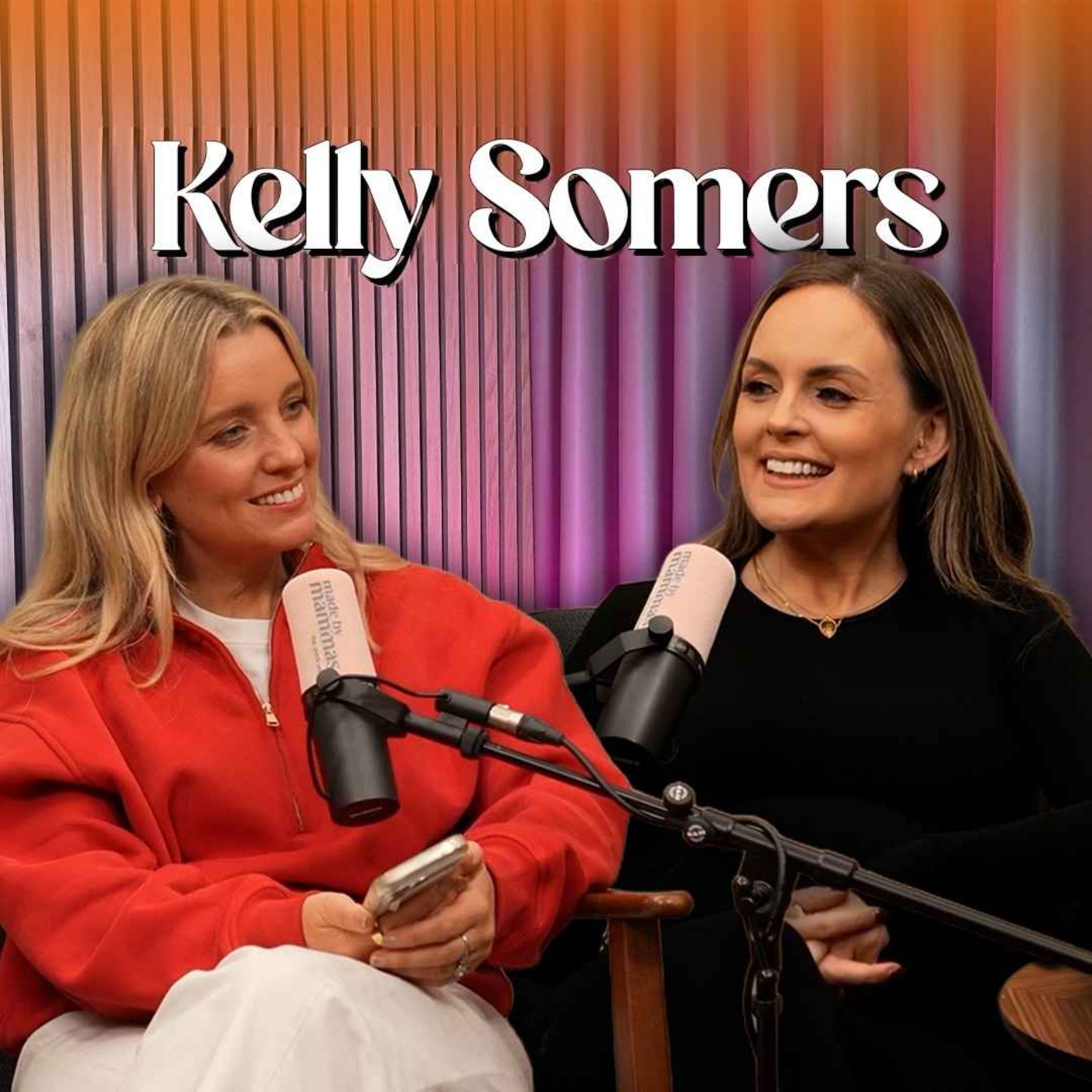
Made By Mammas welcomes sports presenter Kelly Somers, who discusses her diagnosis with PMOS and the fertility journey that led to two pregnancies. Kelly also reveals how she kept her second pregnancy private whilst fronting Women's World Cup coverage, and reflects on how motherhood has shifted her priorities and ambitions.
Topics PMOS fertility diagnosis, working while pregnant, Women's World Cup, football presenting career, co-sleeping toddlers, second baby preparation, mum guilt reframed
Mentioned in this episode Kelly Somers, Gabby Logan, Harry Kane, Victoria Beckham
Chapters
- 0:01:42 Introducing Kelly Somers
- 0:02:25 Kelly's career in football presenting
- 0:05:35 Home life and toddler sleep struggles
- 0:15:38 Fertility journey and PMOS diagnosis
- 0:22:08 Falling pregnant naturally
- 0:34:09 Secretly pregnant at the Women's World Cup
- 0:43:08 How motherhood changed Kelly's outlook
- 0:53:04 Best parenting advice: mistakes and mum guilt
Partner with Made By Mammas
Made By Mammas is produced by Audio Always. We work with brands on sponsorship, advertising and partnerships across our network of podcasts, reaching engaged listeners and viewers.
Advertising categories Parenting, Pregnancy, Menopause, Parenting Babies And Toddlers, Infertility
Show notes
Sport presenter Kelly Somers joins us to talk about her road to motherhood, from living with PMOS (Polyendocrine Metabolic Ovarian Syndrome) to fronting live coverage of the Women’s World Cup while secretly pregnant. Kelly gets candid about fertility, keeping a pregnancy under wraps in a high-pressure job, and what it’s really like being a mum working in sport.
Find a new episode every Tuesday & Friday and in the meantime check out Made By Mammas on Instagram: @madebymammas.
Made By Mammas® is an Audio Always production.
Hosted on Acast. See acast.com/privacy for more information.
Full transcript
Zoe Hardman 0:01:02 Hello and welcome to Made by Mamas, the podcast. I'm Zoe Hardman.
Georgia Dayton 0:01:09 And I'm Georgia Dayton.
Zoe Hardman 0:01:10 And this is your parenting safe space where no conversation is off limits. With 5 kids between G and I, we have seen a lot.
Georgia Dayton 0:01:17 We really have. Each week we'll be joined by some famous faces and experts, and we'll chat about the brands and products that have saved us along the way.
Zoe Hardman 0:01:25 In short, we are the parenting podcast Before we get started, hit subscribe or follow so you're the first to know when each episode lands.
Georgia Dayton 0:01:33 And they're on Tuesdays and Fridays.
Zoe Hardman 0:01:34 And it really helps if you leave a rating and a review.
Georgia Dayton 0:01:37 You can also find us on Instagram, we're on @madebymummas.
Zoe Hardman 0:01:40 But for now, George, should we get into it?
Georgia Dayton 0:01:42 Joining us on the podcast today, we have got a presenter, and I know that Zoe would be gutted to be missing this one today. Um, sports presenter, first-time mum, soon to be Mum of 2, it's Kelly Summers.
Kelly Somers 0:01:59 I'm still not used to people saying that, like, I'm heavily pregnant, but it's still like, oh my gosh, 2 little people are gonna be my problem. Yeah, well, no, not my problem, my responsibility. It's a blessing, but it's getting real now.
Georgia Dayton 0:02:11 Yeah, I know, I think when people start referring to you as like, soon to be mum of 2, you're like, oh yeah, oh yeah, this isn't pretend.
Kelly Somers 0:02:18 No, it's happening, I've still got a little while, but So, yes, it's ramping up now. But anyway, no, it is a really exciting time as well.
Georgia Dayton 0:02:25 Just for people listening who don't know what you do, do you want to just give us a little bit of background?
Kelly Somers 0:02:31 Yeah, so I mainly work for BBC and the Premier League, but I'm a freelance, mainly football presenter. I was with England at the World Cup this summer, and if you saw, this is the easiest way to like the mainstream people that maybe aren't your diehard football fans, If you saw the Harry Kane interview where he lost his voice this summer, that was me who did that interview.
Georgia Dayton 0:02:51 That was you.
Kelly Somers 0:02:51 Which was nothing to do with me, it was pure luck in that instance where he came over and yeah, he'd just not got a voice and we went viral kind of between us, I suppose. So yeah, that's what I do, I interview footballers. I work heavily on Fantasy Premier League, which I've actually realised now, like people nod along, but a lot of people's partners play that. I was in Mallorca a couple of weeks ago and my daughter started playing. with another little boy and the dad was like, not doing a podcast, a fantasy pod this week.
Kelly Somers 0:03:21 And I was like, oh, I was like, yeah, I did one in my hotel room yesterday morning actually. So yeah, I do a lot of interviewing. I've got a football interview series on the BBC. So I go around and interview current and ex-footballers, go to games, yeah, that kind of thing.
Georgia Dayton 0:03:34 How did you get into it? Were you always into football?
Kelly Somers 0:03:37 So I was and still am really, I clarify, I like, say I'm a girly girl, I am, I like makeup, all of that kind of thing, but my mum always went to football.
Georgia Dayton 0:03:46 Oh, right.
Kelly Somers 0:03:47 So that's why it's always been normal for me.
Georgia Dayton 0:03:50 Yeah.
Kelly Somers 0:03:50 So my mum went to football. Sorry, I've had a cough this whole pregnancy. When you get ill when you're pregnant, you can't take anything. No. So sorry if I'm gonna keep doing that. Yeah, my mum went to football and it was just normal and I wasn't interested. And then we're Watford fans in our house, for our sins, and they got to a playoff final and I just wanted to go. And my mum was a bit like, waste of money, she won't like this. And I fell in love with it.
Georgia Dayton 0:04:15 You loved it.
Kelly Somers 0:04:16 And I think I was 8.
Georgia Dayton 0:04:17 Oh, wow.
Kelly Somers 0:04:18 So I was really young and like, I know it now from like being around friends with kids, a lot of kids, when you take them to football, they're more interested in the noise, the colour and everything. But my mum said straight away, she could tell I was a bit more like asking why things were happening. And from then on, I then went through, I think the inevitable phase everyone goes through, the tomboy.
Kelly Somers 0:04:37 I wanna like football, I'm gonna wear a football kit all the time. And then I kind of realised, You didn't need to do that. Then I won a journalism competition to go in the press box at Watford, realised I could kind of combine it both and yeah, all these years later.
Georgia Dayton 0:04:50 That's so exciting. It is really cool and I think it's so nice as well, like for, you know, you had your mum who loved football, but for girls now, you know, being able to turn on the screen and see more women.
Kelly Somers 0:05:02 It's great, there was people, I often think that people say to me, oh, you're like, little girls look up to you and they do, they message me and stuff on Instagram, younger girls and younger boys too. But there were like people like Gabby Logan who is still on our TV screens now.
Georgia Dayton 0:05:16 Yeah, of course.
Kelly Somers 0:05:17 She was someone that I looked up to then. So I think people like that are like the real trailblazers. But the good thing now is there is more of us. There's still not enough, but there's more. Yeah.
Speaker H 0:05:26 And tell us a little bit about your home life. You've got a little girl and one on the way. How's your morning been? What's the normal day like?
Kelly Somers 0:05:35 This morning's been okay. At the moment we're going through, trying to get her to sleep in her own bed. So, she's 3 in a few weeks and do you know what? I cannot complain. She's not easy, no child is easy.
Georgia Dayton 0:05:48 Yeah.
Kelly Somers 0:05:48 But she's very, she's not really boisterous. She's been an early talker, so she's always been able to tell us what's wrong.
Kelly Somers 0:05:56 She's very articulate. Like, I don't think she always knows what she's saying, but like yesterday she said, mummy, this dinner is unbelievable. It took her ages to get unbelievable, but she's very good at talking and, She's so good in so many ways, but sleep was a bit of an issue. She slept till she was 6 months, then didn't sleep from 6 to 18 months. And given the job I do and some early mornings, oh, we ended up co-sleeping because it was the only way we could get her to sleep.
Kelly Somers 0:06:22 Yeah. And then this summer when we were like, we're gonna have another baby soon, this— we've got to get her in her own room. Her room's ready. And so she was the one that said, yeah, I want to sleep in my own bed because I've got like a cute little floor It's like a house.
Speaker H 0:06:35 Yeah.
Kelly Somers 0:06:36 Made it all really lovely in there. She loves her room, but getting her to stay in there through the night is, is tough. Um, and so last night it was a lot of wakes between 7 and midnight, which I can deal with because I'm still awake pretty much. And then my partner went in and eventually got her to stay. The night before, it was 3 wake-ups, like 2, 3, 4.
Speaker H 0:06:57 Oh.
Kelly Somers 0:06:57 And then it's that whole thing, isn't it, of like, I think as a parent you're constantly compromising between I need, I know the long-term thing to do here to get this right is to keep putting her back in her bed, but it's also being tossed up with, I need sleep, I need to look after myself here, I'm heavily pregnant, I can't keep getting up.
Speaker H 0:07:15 Yeah.
Kelly Somers 0:07:15 So I think half 5 in the morning I gave up, but last night she did the earlier wake-ups and then slept, so I feel like I probably had 8 hours sleep.
Speaker H 0:07:24 Do you think you would be doing it if you didn't have a baby on the way? Or is that like the motivation?
Kelly Somers 0:07:29 Yeah, I think probably for an easy life.
Speaker H 0:07:31 Yeah.
Kelly Somers 0:07:32 Because I feel like everything else that she's done, she's done at her own pace and she's, I breastfed for a lot longer than I expected and I was so scared to stop for her, but she just kind of stopped one day. It just, I was away a little bit for work and then she just kind of didn't ask 'cause she was speaking by the time I stopped.
Kelly Somers 0:07:49 She wasn't interested and I just kept giving bottle and it just became, And I think I would have just hoped that sleep would have become the same thing. But yeah, this has definitely accelerated it. And that's probably what my partner would say is one of the good things about us having another baby is, 'cause he for ages was like, Kelly, we need to get her out of our bed, which we do, we did.
Speaker H 0:08:07 Why?
Kelly Somers 0:08:08 She's still—
Speaker H 0:08:09 'Cause it's funny, 'cause when Zoe and I had our first, like co-sleeping was like this bad thing. I can't even describe it to you.
Kelly Somers 0:08:17 It changed a bit, hasn't it?
Speaker H 0:08:18 Everyone you spoke to would be like, oh my God, you can't do that. Basically, it would be like, your relationship will be over, you know, you're gonna squash the bed, Like, it was like this real scaremongering thing. So it was something that we didn't even consider doing because it felt so scary. And then obviously we've been doing this podcast for 10 years or whatever.
Kelly Somers 0:08:39 Yeah.
Speaker H 0:08:39 And the narrative has changed so much when it comes to co-sleeping. And now I'm like, oh my God, I think I need another baby so I can co-sleep.
Kelly Somers 0:08:46 Do you know what, I flip between the constant— and I think this is a constant motherhood thing where I flip between the They're only young for so long. One day I'll long for her to want to be in my bed. And there is something really lovely about, like, she does, I know when she wakes in the night, she just snuggles up to me, but she's bigger now. We've got a king-size bed and it's just not always practical. And the amount of mornings we wake up where I'm here, my partner's here and she's there.
Speaker H 0:09:10 She's across, yeah.
Kelly Somers 0:09:11 And we're both clinging to the edge and we aren't sleeping well. And it's like, the only person sleeping well here is the 2-year-old who would sleep well Like, when she's asleep, I think you could hang her upside down. We don't. Yeah.
Kelly Somers 0:09:23 And she would sleep. So it's like, actually, for our own well-being. But then there is mornings like this morning when she— because she came in at like half 5 in the end. No, no, this morning. This is how tired I am.
Kelly Somers 0:09:34 You can't remember this morning. Actually, once she went to sleep, she didn't come in till 7. And so then I put her in and she's fine. And then it's really lovely. She kind of nestles in for a bit and then she starts like— and the first thing you hear is her going, mummy, and it's really sweet and I know one day I'll long for that.
Kelly Somers 0:09:49 So I'm, I guess I want a happy medium really.
Speaker H 0:09:52 Yeah, you're in that.
Kelly Somers 0:09:53 But I constantly have that thing of, in a couple of months, there's gonna be a baby there that is gonna be waking every few hours that will then wake the then 3-year-old. We might never sleep.
Speaker H 0:10:04 Yeah, that could be chaos. So I get it.
Kelly Somers 0:10:07 That's why I keep, every time I'm like, oh, it's lovely having her in the bed, I have to remember, It's lovely now, but come January, I'm gonna be demented.
Speaker H 0:10:17 Yeah, yeah, totally.
Kelly Somers 0:10:19 Yeah, that started by you asking me how my morning was, and I've just given you a whole history of how I can't get my child to sleep in their own bed.
Speaker H 0:10:26 That's handy for a podcast because it's awkward when people come on and ask, answer yes or no. We don't want that. We never want that.
Kelly Somers 0:10:33 The answer to your question, how was your morning, is actually, because I had more sleep than usual, Not too bad. Not too bad. And I got up, she got up fine, she got ready. You know those mornings where they just listen to you? They do it, yeah. She was excited because she's gone to swimming. Mummy was excited because I do like going swimming with her once I'm in, but the faff— she's at the age where I have to get in and I have to dunk my head under to show her that it's fine.
Speaker H 0:10:56 Yeah.
Kelly Somers 0:10:57 Um, and some Monday mornings it's just not— so this morning actually I was like, I'm quite happy that's not me.
Speaker H 0:11:01 Yeah, not there. Do you take a dressing gown? To the swimming pool.
Kelly Somers 0:11:05 Do you know what, myself, 'cause my partner's taking her this morning, we had the whole, we're still, 'cause she's only restarted recently. She went when she was really little, then we moved, couldn't find a warm enough pool. I know that sounds really bougie.
Speaker H 0:11:16 No, no, no, no, I get that.
Kelly Somers 0:11:16 I think when they're that little as well.
Speaker H 0:11:17 Yeah, and also you don't want them to be put off, that's what I think.
Kelly Somers 0:11:21 Like holiday, in the summer when we went, it was too cold for her and she hated it.
Speaker H 0:11:23 Yeah, exactly, yeah.
Kelly Somers 0:11:25 But we had it this morning where, and you know, like the constant, how does a dad parent, how does the mum parent? So I packed her bag and he was, oh, you've not put a towel in. I was like, well, last time the towels I put in, were dry, so I just thought I'd let you pick what towels you want. And he was like, oh yeah, we just take one and share it. And I was like, what?
Speaker H 0:11:41 Oh, rogue.
Kelly Somers 0:11:42 And he was like, well, I just get her out, wrap her up in it, and then it's quick. And then I get in there, and then she's small, so I can still use the rest of the towel.
Kelly Somers 0:11:50 And I was like, why are you being so tight with towels? Um, but there must have been some method, whereas I, I leave, you know, like the hooded one. Yeah, for her, I leave that by the pool, so as soon as she comes out, I wrap her in that. And then I don't want to be cold, so I just wrap myself in a towel. But there's no showers at these pools, so there is a case of like, just get yourself dry and get out of there as soon as possible.
Kelly Somers 0:12:11 Yeah, get the car really warm, get home as soon as possible, and then she'll— then it's all right. I think she'll be in the bath around now, actually. So, but yeah, it was interesting where I was like, we then started having, you know, those conversations you never think you're gonna have as parents. Like, we're talking about what towel you should be taking to a swimming lesson and getting into— not— it wasn't an argument, but like a little debate. I was like, this is so boring, just take whatever towel.
Kelly Somers 0:12:31 Yeah, it doesn't matter as long as I don't care.
Speaker H 0:12:34 I remember saying to my husband, like, exactly the same situation. I actually, second time around, I didn't want to do any of the swimming stuff because I didn't want to get into the pool.
Georgia Dayton 0:12:43 And so I'd be like, take a dressing gown for you, right? Because I was like, it was like the biggest game changer for me because then I'd just like be warm in a dressing gown and not standing there in the swim. 'Cause you sort them out first. Yeah, sort them all out, like, then they're all happy and then I could sort myself out. And he was like, I'm not taking a dressing gown.
Kelly Somers 0:13:00 Like, literally, he was like, I don't know if I've seen anyone do that.
Georgia Dayton 0:13:04 Neither have I. And he was like, I'm not taking a dressing gown, are you joking? What do you think I am?
Speaker H 0:13:09 And I was like, what do you mean? It's just a dressing gown. And then I remember having a big argument over taking a dressing gown and how over the top he thought that was and how like it was really like, I don't know, I just, yeah.
Kelly Somers 0:13:22 Maybe don't take a dressing gown. I sometimes think like some of the conversations you have as parents If someone could have told you. Yeah, if anyone else could hear. Yeah, yeah, it's ridiculous. Then you, like, later, like, even this morning I was thinking, why was I moaning that he wasn't taking 2 towels? If anything, he saved me a bit of washing.
Speaker H 0:13:37 Yeah, yeah, like, it is. No, it is, you're right.
Georgia Dayton 0:13:41 We'll be right back after this short break.
Zoe Hardman 0:15:25 Welcome back to this episode of Made by Mamas. Now, where were we?
Speaker H 0:15:27 Just before we get back on to today's parenting, talk to us a little bit about your fertility journey. I know you've spoken about PCOS. Um, just, yeah, just take us back.
Kelly Somers 0:15:38 I think journey is the word.
Speaker H 0:15:40 Yeah.
Kelly Somers 0:15:40 Um, because obviously I'm incredibly fortunate to have one, nearly two, two children. Um, I was put on the pill very, very young, and no judgement to my mum for doing this because I think 20-odd years ago when, like, if there was— I had really bad acne.
Speaker H 0:15:56 Yeah, I was on the pill really young.
Kelly Somers 0:15:57 And I started my period really young. But when the acne was there, there was no connection that it could be hormonal because I started my periods young. So it was like, what do we do? We treat the acne in isolation. Whereas I think now we're getting better as a society at looking at things more holistically, so to speak. So I was just put on the pill, not the really serious— there was like, I remember there was various ones, but it was, it was a pill that essentially regulated my periods from when I was 13, 14. Yeah, I think I was the same.
Speaker H 0:16:27 Yeah.
Kelly Somers 0:16:28 Kind of have, have your body altered, I suppose, and go against what it was trying to do. And looking back, the skin was just caused by hormonal imbalance because that's what PCOS is. It's not actually called PCOS now. They've re— oh, it's called P— I don't want to say this wrong because you get a lot of, um, pushback. I call it PCOS because that was what it was called when I was diagnosed, but I now know that I think it might be called PMOS. Thank you. Yes, there we go. Yeah, so PMOS is now what it's called. Um, I think, because I think they've added in— why am I going to try and guess?
Speaker H 0:17:05 Menstrual?
Kelly Somers 0:17:06 Yeah, yeah, but I can't remember what the rest of it is anyway.
Speaker H 0:17:10 Metabolic. Metabolic, there we go.
Kelly Somers 0:17:13 So yeah, I went on the pill and then when I was 18, I was, I think it was my first term at uni, came back for Christmas and I obviously overdid it at uni. Came back, I was getting really bad headaches, but just thought, just not looking after ourselves. Like all of us were a bit unwell. Came back and then went Christmas tree shopping with my mum, felt really ill. And that's like my favourite thing to do.
Kelly Somers 0:17:33 And then I came back and basically lost all feeling and like, I remember being on a laptop, got home, my mum was— I couldn't like help putting the tree up, which is really not me. I was on a laptop like typing away, and then all of a sudden I dropped the laptop and like I lost all feeling. And our automatic reaction was, it's a stroke.
Speaker H 0:17:49 Stroke, yeah.
Kelly Somers 0:17:50 So mum called an ambulance.
Kelly Somers 0:17:51 Must have been really scary for her. Within 15 minutes it all came back and it was fine. And so they investigated for a stroke, but it was called sensory aura. But I had to have loads of tests and like brain scans and stuff for them to realise that. Obviously, as soon as they do that, they take you straight off the pill.
Kelly Somers 0:18:05 And then there was my body basically unregulated for the first time. And my body was probably like, so that was probably like 4 or 5 years after I'd been on the pill. My body was like trying to refine, recalibrate, I suppose. Yeah. And I'd read up and I knew that after coming off the pill, it can take a couple of years to go back to normal cycles.
Kelly Somers 0:18:23 So I was having like really big cycles, but didn't think anything of it because I was like, that's just my body. And then I realised I was like 26, 27. And it was still happening. And then I started to get the pain and the acne was back. And I think as you get older, you want to know more about your body.
Speaker H 0:18:39 Yeah, yeah, totally.
Kelly Somers 0:18:40 And so I started to go to the doctors and there wasn't really answers. And then I think I was about 28 when they said, right, we think you've got endometriosis. And I was like, it didn't add up because I had friends with endometriosis and I feel like I was around a lot of people with it. more of an understanding of it.
Kelly Somers 0:18:59 And I was literally one appointment away from having the operation to remove it. And the lady that I saw, I just got really lucky, the last person I saw, and she said, if you're not sure, you're not trying for a baby now, and you're not in excruciating pain, don't have the— if you were my daughter, I should— I'm not— she said, I'm not allowed to give you advice, but the one thing I would say is if you were my daughter, I'd tell you not to have it. And I was like, yeah, that's amazing. And I got lucky because she was just being a nice human.
Speaker H 0:19:24 Yeah.
Kelly Somers 0:19:25 And then I moved back to London around that point and I went and I paid to go privately. And very quickly, they, as soon as they scanned, did all the tests, they were like, yeah, it's PCOS because that's what it was called then. And that felt amazing to know, but also was really scary. But everyone always flips at you. Don't worry, Victoria Beckham's got it and she's got 4 kids. Yeah. And it's like, yeah, but I can give you 100 examples of people who don't.
Speaker H 0:19:48 So when they gave you the diagnosis, was that, instantly at that age where your mind went to fertility?
Kelly Somers 0:19:54 Yeah, yeah, because I could never— I always wanted to be a mum. Yeah, but because I was so hell-bent, I look back on my 20s and I was just— I left uni, I was going to do a postgrad in journalism, I didn't because I got a job working at Bournemouth.
Kelly Somers 0:20:09 I worked in the press department there and kind of did my training on the job, so to speak. Yeah, then got kind of spotted and got a job working for the Premier League as a junior presenter. But all of this time, even when I was doing those jobs, I was going out and like at weekends I was doing work experience at TalkSport and working for free at all these places to get experience. So my whole 20s were dedicated to working and carving out my career.
Speaker H 0:20:32 Yeah.
Kelly Somers 0:20:33 But then as this fertility stuff in the background was going on and some of my friends were starting to have children, I was like, am I being really foolish here? And I'm going to get to my mid-30s and then it's too late. Yes. Or there's been a big problem that I didn't know about.
Speaker H 0:20:42 Yeah, totally.
Kelly Somers 0:20:43 So that's why I needed the answers. And then when I got the answer, then you go, Okay, I've got a bit of a decision here now. Do I— and I'm a worrier and overthinker, and it just— I think it reframed. My partner's in the same industry, and we wanted children, but it wasn't an immediate thing. And I just said to him, I think maybe we've, we've got to rethink this.
Kelly Somers 0:21:07 Um, yeah. And I just did a lot more research and tried the lifestyle changes and things. But even when you get diagnosed with this, there's different types of PMOS, you can have the insulin-resistant one. And I was never really sure which one I had. So I started to get my cycles monitored and they said, you are ovulating.
Kelly Somers 0:21:22 But I never knew when, like— Right. A normal cycle is 28 days. You ovulate around day 14. I would ovulate, I would have a cycle that would, some months I'd have cycles that would be 35 days and I'd ovulate on like day 28, which is very late. And then I'd be worried, well, in that 7 days, is that enough for the body to do what it wants, it needs to do?
Kelly Somers 0:21:42 Some months I would, like, I remember during the Euro 2021, because I was stressed, I had a 65-day cycle and you feel horrible when you're having a 65-day cycle. So it was, I think it just reframed how I thought about it and made me go, okay, I don't have all the time in the world now. Like I've got to prioritise different things.
Speaker H 0:21:58 Yeah. And so, so you obviously tried diet, you tried like all the different things. How did you come to fall pregnant? How? Do you know what?
Kelly Somers 0:22:08 And this is the, this is the thing where, We can go back to Victoria Beckham example. Maybe you can use me as one.
Kelly Somers 0:22:14 I fell pregnant pretty, pretty easily, naturally in the end. With my daughter, I did do the whole diet. I did a few months of like, I think I'm not very good. I've got a real sweet tooth. I'm not a huge drinker, but I like a glass of wine.
Kelly Somers 0:22:29 And I just didn't drink, did all the healthy eating stuff, just got my body into a good place. And we fell pregnant really, really quickly. And I felt, it was really weird. Once I fell pregnant, I felt released. Like I was like, I've been worrying about this probably since I came off the pill really.
Kelly Somers 0:22:46 And actually my body can do it, but I did have to go and get my cycles monitored. I had to go privately and had to pay. So each month someone basically go, now, because normal ovulation tests didn't work.
Speaker H 0:23:01 So you couldn't have used the sticks or any of that?
Kelly Somers 0:23:03 That said, I did, in the end, I did use the sticks. 'Cause he would say to me, the man, he's incredible. He's based in Harley Street and in Hertfordshire. He's really old now, but he does it for the love. He's been like knighted and stuff.
Speaker H 0:23:17 Oh my God. And he's amazing.
Kelly Somers 0:23:18 I was just really lucky that I was introduced to him through an acupuncturist. 'Cause again, I went down the acupuncture route. I wanted to go down through every route. And he's, yeah, he's absolutely amazing.
Kelly Somers 0:23:29 And he would, he could literally, honestly, he could literally scan you and go, give you a full diagnosis. He's amazing. And he would say, don't go and get those expensive tests. He was like, but I think from looking at this, Monday, Tuesday, or Wednesday, use just the really cheap ones. And even like during my first pregnancy, I remember like 5 days after ovulation and conception, he could tell from the scan, he was like, I think this is going to be a successful pregnancy.
Kelly Somers 0:23:54 And I was like, nah, you can't see that. And he was right. So I had a combination of the sticks did work in the end, but only because— He had— Yeah.
Speaker H 0:24:04 It wouldn't have been the right time.
Kelly Somers 0:24:05 I wouldn't have known it was that time of the month.
Speaker H 0:24:07 That's so interesting.
Kelly Somers 0:24:09 Because my hormones are completely off balance.
Speaker H 0:24:11 Yeah. And then, well, how about after you had your daughter? Were your cycles still—
Kelly Somers 0:24:17 So I write down all of my cycles. I've literally got a note on my iPhone probably since 2019, I reckon, 2020. I know it's that far back because I remember there's, COVID within that.
Speaker H 0:24:31 Yeah.
Kelly Somers 0:24:32 And it's like, and I'll often, I'll just write down my symptoms, like anything slightly out of the ordinary, just so that I can track it. It's a way of having control over something really I have very little control of. And yeah, after my daughter, so my daughter was born in November 2023 and I was fuming actually because I had a period in January and I breastfed and I was like, that means I've not even had a whole year of not having periods.
Speaker H 0:24:56 That's not fair.
Kelly Somers 0:24:58 Um, and at first, if I look back, they were like 28 days and I was like, I'm cured.
Speaker H 0:25:03 Yeah.
Kelly Somers 0:25:03 I wasn't. 6 months later, like, and I actually, because I ended up in a C-section with my daughter, I've ended up with adenomyosis as well, which is like endometriosis but just slightly different. And the tissue lining grows on the, I think it's on the uterus. I can't remember, to be honest. I haven't looked into that one too much because I found it quite overwhelming when they said to me, oh, there's, there's like tissue and stuff in the wrong place. And I was like, no, I don't need anything else.
Speaker H 0:25:29 Yeah, yeah, yeah, totally. Um, and so now obviously you're pregnant again, which is amazing.
Kelly Somers 0:25:35 I had to go through the same process again.
Speaker H 0:25:37 You did? Okay, fine. So it was exactly the same again. So looking back, and say if your daughter came to you with these symptoms, what would you suggest to her? So she's 20. I hope.
Kelly Somers 0:25:52 When I look at the changes, even when I was diagnosed at 28, so that's 6 years, 7 years ago now, I always think I'm older than I am. I think society has changed even since then, and I think the research and the awareness and people talking about it, and that was why it was quite important for me to talk about it because you only ever hear the people, Everyone only cares about the end journey, the end result. And that's what I feel like as a society, it's like, oh, she's got 2 children. No one cares about the journey going back to the first one you said.
Speaker H 0:26:24 Yeah, exactly.
Kelly Somers 0:26:25 And like the stress and the mental toll that it can take on, kind of take on you. And I think I would just say to her, keep pushing. You have to be your own advocate.
Kelly Somers 0:26:33 No one else cares if you have a baby or not, only you do. And if you know something's not right, like, so I had some problems at the beginning of this year. Well, after my C-section with my daughter, the pain, it just wasn't quite right. And again, I went back to Bill, and he was the one that in the end was like, I think you've got adenomyosis. But I went through the NHS and they said that I'd got a cyst and they wanted to operate on the cyst.
Kelly Somers 0:26:57 And that's why I went back to Bill, because I was like, I don't want to have an operation I don't need to have. And I went back to Bill and he was like, you haven't got a cyst. But where I was having a period each month, all of the stuff from the C-section was building up and my body almost has to clear it out every month. I think that's basically what he meant. That's the way I interpreted it.
Speaker H 0:27:16 Yeah, yeah, yeah.
Kelly Somers 0:27:17 And so I was very fortunate there that, 'cause I could have just had an unnecessary operation again on the NHS and I chose not to. But I think it's like, go with your gut and push. But I also feel very fortunate that I can afford to go privately when I need to because what scares me is there are so many people that must be misdiagnosed.
Speaker H 0:27:36 Yeah, I was gonna say, I think, what's so important about having all these conversations is just like, even someone listening to this might be like, oh, my friend says that they've got those sorts of symptoms. Oh, maybe they should do this. And having the information is amazing, but equally, I can imagine when you're told you have something like that, the worry with not being able to have a child can just—
Kelly Somers 0:28:02 It's also, I think there was like an element of when you're told it, everyone's like, well, you've got that, move on now. Like, you deal with that. It's not life-threatening, although PMOS can actually have longer-term problems further down the line in terms of like higher risk of diabetes and things like that.
Kelly Somers 0:28:20 Right, yeah. So we shouldn't isolate it to just a fertility problem because it's not. Like, I don't know how it can affect me later in life. Hopefully it won't. It hasn't affected my fertility, but you just don't know.
Kelly Somers 0:28:30 And I think there is, there's so many symptoms. Also, there's so many overlapping symptoms. I almost don't blame some of the doctors that thought it was endometriosis.
Speaker H 0:28:38 Yeah.
Kelly Somers 0:28:39 But I went with my gut, and that's what I'd say to my daughter. I think it's just like, go for you, trust your gut, advocate for yourself, and keep pushing. Like, the beginning of this year when I had some problems again, the NHS were just like, no, no, no, everything's fine. And it's like, it's not. And it wasn't. And it got solved and it was all fine in the end. But had I not gone back to Bill again It wouldn't have been.
Speaker H 0:29:02 Yeah, and I guess as well, like, you don't, you never know, like, if you find out in your early 20s that you have something like this, does that then change your whole trajectory? And you think to yourself, oh, I'm gonna have kids earlier because I don't know how long I've got. And I guess just having all of the answers and, yeah, resources.
Kelly Somers 0:29:21 The other thing I would say is don't Google too much. Yeah, exactly, yeah. 'Cause you can go into a spiral. And I think that's what's quite scary in that, sometimes there's a dismissal from health people, and that is not any slight on the NHS at all, by the way, because I think women's health is—
Speaker H 0:29:36 It's just underfunded. It's just underfunded.
Kelly Somers 0:29:39 And I think the more people that have conversations about it will hopefully, hopefully change that. But you can kind of be just dismissed. And that, that is, it's the mental side of things. Yeah.
Speaker H 0:29:51 Because it's not just having that thing in isolation. what that means for your life.
Kelly Somers 0:29:57 Yeah, I guess.
Speaker H 0:29:58 Yeah, in so many ways.
Kelly Somers 0:29:59 Because if probably had I been— I often think about this— had I been diagnosed like 23, 24, would I have prior, like, thought, okay, I'm not gonna prioritise my career as much? Yeah. And maybe have children younger? I don't know. Yeah, I'm glad I didn't. Like, it's all worked out incredibly well. I'm very, very lucky.
Speaker H 0:30:17 But yeah, it's actually mad that fertility can have such an impact on a woman's life because you said like, yeah, I think I had my first at 26, which is quite young, I guess, like to have—
Kelly Somers 0:30:31 It's probably younger now, isn't it?
Speaker H 0:30:32 Yeah, it is younger now and I think to myself, if I'd have thought I had something like that, I could have even done that even earlier because I would have thought, well, you know, I've got a partner, we live together, and that would have been the main focus. But yeah, it's wild that that's such a consideration.
Kelly Somers 0:30:52 I've been with my partner now for, it'll be 12 and a half years.
Speaker H 0:30:59 Yeah.
Kelly Somers 0:30:59 And so we could have, we met when we were, or we got together when I was like 22, 23, but I don't think either of us financially or career-wise were in the right place, but maybe that would have changed.
Speaker H 0:31:11 Yeah, it's, it's, but— And that was when we did get the diagnosis.
Kelly Somers 0:31:15 Um, it was just before COVID then COVID happened, and then we got engaged, and then it was like, okay, this is something to really think about now. We haven't really got an excuse. Like, we'd bought a place together, we were more settled. I mean, both of us work in an industry that's not very settled, but we're more settled than we had been.
Speaker H 0:31:33 Yeah.
Kelly Somers 0:31:34 So it was like, okay, now this is the time. And I think he also knew, and particularly with the second actually, because we'd always said that we wanted like a bigger age gap.
Speaker H 0:31:42 Yeah.
Kelly Somers 0:31:43 Um, I'm actually really happy that the age gap is literally going to be 3 years now. I'm really pleased with that. But I'd always thought, oh, it'll be 4 or 5 years to enable, like, so that my daughter's in school before the next one comes along to make it easier with my work. But actually, once I found out about the adenomyosis, I had some problems at the beginning of this year again, and I was just like, what am I waiting for?
Speaker H 0:32:04 Yeah.
Kelly Somers 0:32:05 And I think my partner, my partner in particular, I don't think he'd mind me saying this, would have was the one that was like, let's wait, let's wait. And I was like, I can't because this is consuming me all the time. And yes, that's a bad personality trait of mine in that something does take over my head, but I think he saw the effect it was having on me.
Speaker H 0:32:20 Yeah, but it does, and I think it's so natural. We'll be right back after this short break.
Zoe Hardman 0:34:06 Welcome back to this episode of Made by Mamas. Now, where were we?
Speaker H 0:34:09 So let's talk about the imminent arrival. No, no, I don't mean to sound like my life's ending. No, how are you feeling? How are you— how do you feel about giving your daughter a sibling?
Kelly Somers 0:34:22 Do you know what, she is so excited. Like, we didn't tell her. I mean, we told everyone quite late because I was pregnant at the World Cup, but I didn't really want the world— I didn't want people to know at that point. I just wanted to go and do a job.
Speaker H 0:34:35 Yeah.
Kelly Somers 0:34:36 Just get on with it.
Speaker H 0:34:37 You don't want people to ask you about it.
Kelly Somers 0:34:39 No, I just didn't want to be the pregnant presenter, the pregnant reporter. I just wanted to be the— like, I was just doing a job.
Kelly Somers 0:34:45 I also didn't want to worry all my colleagues because I think when you're around a pregnant person, like, I've worked with some lovely people that I know would just worry about me. And I didn't want that. I knew I was fine. I knew what I needed to do to be fine. I'm also very much of the mindset during my pregnancies, I think maybe because I work with a lot of men and in an industry where pregnant people aren't the most common, although it's becoming more, I just wanted to get on with it.
Kelly Somers 0:35:07 But we, I can't remember the question now. That is baby brain. What did you ask me?
Speaker H 0:35:13 Just how are you feeling about giving your drink to a sipper?
Kelly Somers 0:35:16 So we didn't tell her until we got back. And she was so excited. And she has been like every morning she wakes up and says, can I kiss the baby? Um, she talks to it now because I've said, well, he or she can hear you. Um, she talks a lot when we're out, can I buy that for the baby? And when we meet new people, she says, I'm getting another baby. It's very much her baby. It's her baby.
Speaker H 0:35:37 This is not my baby.
Kelly Somers 0:35:38 I should correct myself there. Um, so she seems very excited, but of course she doesn't know the reality.
Speaker H 0:35:42 Yeah, yeah, yeah.
Kelly Somers 0:35:44 So I feel, I feel really positive about it because she is So positive about it, but obviously I am nervous because you do hear of, and my Instagram algorithm at the moment is very much like, oh, baby number 2's on the way, but your relationship with baby number 1 will never be the same. And it's like, or like, I don't know, it's, yeah, there's loads of like, and it's talking about like all the brain changes she'll go through and all the ways you can stop this being like a—
Speaker H 0:36:11 Obviously, I think that's really not helpful. No, but that's what social media does, doesn't it? Yeah, 'cause I'm an only child So am I. Oh, are you? Oh, interesting. So I was quite happy having one child and—
Kelly Somers 0:36:25 See, I was the opposite. Really? 'Cause I was an only child and my partner was one of 3 and he's got—
Speaker H 0:36:29 Oh, see, my husband's one of 4.
Kelly Somers 0:36:30 And he's got 2 half sisters as well.
Speaker H 0:36:32 Yeah.
Kelly Somers 0:36:32 And he would have been probably quite happy just with one.
Speaker H 0:36:35 Oh, see, I was happy with having one and so when I actually, we didn't plan to have a second, it just sort of happened. It wasn't like, I definitely don't want, but it just happened.
Kelly Somers 0:36:46 Don't go on record saying you didn't want your second child.
Speaker H 0:36:51 And then it obviously happened, but for the pregnancy, I really worried, and I'm not actually a worrier, but I really worried about like, oh my God, have I ruined my son's life?
Kelly Somers 0:37:02 Like, has he— See, I haven't had those thoughts yet.
Speaker H 0:37:03 Yeah, but I didn't know why, but had I started reading all that brain stuff, I think I would have been like—
Kelly Somers 0:37:11 I think it's because my daughter is, she's, I mean, she's not even 3 yet, she's about to turn 3, as I said, I'm not gonna pretend she's a child genius. She's not, like, I'm not one of those mums that thinks my child's really clever, but she does tend to articulate how she feels. We've had one thing when she was crying one day and she said, I don't want that baby to come. And I was like, okay, well, too late. Yeah. But on the whole, we could talk to her a lot about it. Like, we've got books. When we told her, I did a lot of reading into how to tell her.
Speaker H 0:37:38 Yes.
Kelly Somers 0:37:39 And I don't, who knows if it's actually right.
Speaker H 0:37:41 Yeah.
Kelly Somers 0:37:42 But like, we got her a balloon 'cause she loves balloons.
Kelly Somers 0:37:43 And to be honest, at first she was more excited about the balloon than the baby. But we got like books that, and there's like one and the little girl in it, no, little boy, I can't remember which way around it is, goes, he's gonna become a big, is it kind of, I think big, yeah, she's gonna become a big sister. And the mummy goes into hospital, she goes to granny's house, mummy goes to hospital in the car. So she, my little girl knows that that's what's gonna happen. Like she'll go to my mum's and she like, every time she goes to my mum's at the moment, she goes, oh, you going to hospital?
Kelly Somers 0:38:15 No, not yet. So I think, I've tried to help her understand what's coming and she knows that it's gonna be Halloween, or it's her dad's birthday this weekend. She knows it's gonna be Halloween, then her birthday, then mummy's birthday, 'cause I'm a Christmas baby too, then Christmas, and then around Christmas time, baby's gonna come.
Speaker H 0:38:29 Yeah.
Kelly Somers 0:38:29 So she kind of knows. You don't know how much they know, do you really?
Speaker H 0:38:33 No, no, no, no, you don't.
Kelly Somers 0:38:34 It's like all I can do is try and give her the information.
Speaker H 0:38:37 Yeah, of course.
Kelly Somers 0:38:37 And I feel like I've done all I can at the moment. And things like people said to me, get her a present from the baby.
Speaker H 0:38:44 I did that, to be fair.
Kelly Somers 0:38:44 Yeah, and all that kind of thing, like, I'm gonna do the best I can. She's really close to my mum, so, and I know my mum will be around a lot, so.
Georgia Dayton 0:38:52 Yeah, my son actually now still, maybe he doesn't believe this anymore, but maybe last year he said to me, you know when Gigi bought me that Hot Wheels thing? And I was like, yeah, you know, like, no, no, yeah, was it it? Yeah. How did she do that? Oh no, he said later I was asking for logistics. How did she do that? It was in the hospital. She had, and I'm thinking to myself, mate, surely you know. How old is he? He's nearly 10. He was like, at the time when he said it, he was nearly 10.
Speaker H 0:39:26 He's over 10 now, but he still remembered that she'd bought him a Hot Wheels thing when she was born and he couldn't quite like—
Kelly Somers 0:39:32 That shows it's important. I must not forget this present now.
Speaker H 0:39:35 Throw together that, she'd done that because I think for ages he'd always like, oh, my baby sister got me this. And then obviously as you got older, he was like, oh, that's what Gigi got me when she kept— and then the penny starts to drop like, hang on a minute, you fooled me there. Like, you bought that.
Kelly Somers 0:39:51 I'm hoping I've got a few years before she realises. Yeah, no, she's not going to. But the fact that your son still talks about it at age 10, I am not gonna forget to tell that person.
Speaker H 0:39:57 He still does and I really do think that was like, I don't know, just what he was used to. We had a 3-year age gap and I think he was used to being an only child for those 3 years. And that was almost like, oh my God, how amazing. I know he was, he was fine.
Kelly Somers 0:40:14 Was he?
Speaker H 0:40:14 Yeah, yeah, yeah, absolutely.
Kelly Somers 0:40:16 Like, no worries. I think my daughter will be because she's really good with like other babies and really kind with them and really gentle. And she's seen a couple of her other friends have siblings and she talks about brothers and sisters a lot. So I think she gets it. I am worried about like a week after the baby comes, when the reality hits and if she's like, this baby's not going anywhere. Yeah, yeah. That's the bit, but I feel quite positive about how we're preparing and how she's reacted so far.
Speaker H 0:40:43 I honestly, I think I had all of these, like I had all the worries before and then it was totally fine. I mean, now sometimes we have like, I don't know, like for instance, there'll be nights where Gigi will stay at my mum's 'cause she's got something on the next day or whatever. And it'd be just me, my husband and my son, he's like, Like the good old days.
Kelly Somers 0:41:01 You know, like he really played into that. I think that's important though, isn't it? I've read that as well, like you have to give them one-on-one time and because he'd only ever had one-on-one time before they had my daughter and so you can't, their life has changed overnight so you need to almost like ease them into it or give them snippets of one-on-one.
Speaker H 0:41:17 We took him to like Diggerland a couple of weeks after she was born and he had like a day on his own.
Kelly Somers 0:41:24 Oh my gosh, postpartum going to Diggerland, you are a hero.
Speaker H 0:41:27 I swear it's really different when it's like the second time. I mean, I wouldn't have done that the first time, but yeah, we did really make those days where he was just on his own with us and like my mum was around and could—
Kelly Somers 0:41:40 That's the thing, at the moment my daughter goes to my mum on a Thursday night because I work Friday mornings in central London and I'll be taking a couple of months off from that, but she still will go to my mum's on a Thursday night because my mum takes her to a dance class on a Friday morning she needs that bit of normality.
Speaker H 0:41:56 Yeah.
Kelly Somers 0:41:57 And we'll probably need that bit of time just to have one. And it's like, she's— she only goes to preschool a couple of mornings a week at the moment, um, but in January her funding kicks in, which is amazing, so we can send her a little bit more.
Speaker H 0:42:09 Yeah.
Kelly Somers 0:42:10 Um, but we're gonna test her on a couple of full days over the next few weeks so that she doesn't feel like in January she's just being—
Speaker H 0:42:15 Yeah, being sent to us. Kind of thing. Yes, yeah, yeah.
Kelly Somers 0:42:18 Um, but she loves preschool and she keeps asking asking to stay longer, so I'm like, okay, it feels, I mean, you can never plan as a parent, it feels like everything's coming together at the right time, but—
Speaker H 0:42:26 Yeah, no, we had exactly the same. Gigi was born in June, and then in September, Axel went to preschool full-time, like 5 days a week, 9 till 3 or whatever it was then, and it was like, oh my God, this plan was so good. Yeah, it feels like it's gonna work well, but— We've no plan.
Kelly Somers 0:42:44 I don't think you can ever really plan as a parent. That's what scares me, I'm like, It all feels like it's going quite well at the moment.
Speaker H 0:42:49 And it's scary to say out loud.
Kelly Somers 0:42:51 So she'll go to 2 and a half days because that's what we'll be entitled to, but they're incredibly flexible, her preschool. The only thing that's really annoying about preschools is that they don't open during summer holidays and kids' holidays. But she loves going there, so I'll deal with the holidays when they come.
Speaker H 0:43:08 Just before we wrap up, is there anything that's really surprised you about being a mum? Like how you've changed or things that you've actually really liked? I became a cliché.
Kelly Somers 0:43:17 Did you? focused on my work before, and I still am.
Kelly Somers 0:43:22 I really, I am focused, but in a completely different way. Like, I, I remember saying to everyone when I had my daughter, so it was in November and there was a men's international break. So it's where— Yeah. Basically where the league season pauses so that England can play. And I worked on the England games back then, and I was like, well, I'll miss that international break, but then I'll be back a few weeks later and I'll do this.
Kelly Somers 0:43:45 And everyone was like, okay. But to their credit, no one said you can't do that. But I think I had my daughter and then straight away you become that, oh my gosh, like, your world just changes and I don't think you get it. And I became what I saw all my friends become and I always swore I wouldn't. Yeah.
Kelly Somers 0:44:06 And I remember saying to my mum, oh, hundreds, thousands of people have babies every day, like, I can just get a nanny. I can just— there's loads of— we'll have a nanny for when the nursery hours don't work. We'll do this. And then I found handing my baby over really, really hard. My daughter only started preschool when she was 2 and a half.
Speaker H 0:44:23 You didn't want any?
Kelly Somers 0:44:26 No, I found it really, really hard, but I did have to continue to work because the industry I'm in. And like, my mum is like honestly an angel, and she retired shortly after, and she's because I work weird hours, football's often in evenings, weekends, nursery and preschool can't help me.
Speaker H 0:44:42 Yeah.
Kelly Somers 0:44:43 And she's enabled me to keep going as I did, but I didn't realise how, how your whole— it's a cliché, isn't it? And someone listens to this that isn't a parent will be like, yeah, whatever. Your whole priorities change. Yeah. Like, you can't even— you're needed in a way that you— I think, I think I put too much pressure on myself as well to do too much.
Speaker H 0:45:05 Yeah.
Kelly Somers 0:45:06 Because I didn't want to breastfeed and I was adamant I wasn't going to breastfeed.
Speaker H 0:45:09 Really? Yeah, I breastfed until she was 2 and a half. Oh wow, that's amazing.
Kelly Somers 0:45:14 But I think I'm quite a defiant person.
Kelly Somers 0:45:17 I was like, I'm going to show that you can work. I'm going to do that. I can do all of these things at once. And I probably, to my own detriment, like we all do as parents, there was a lot. Yeah, I just pushed myself too far with it, but not with the breastfeeding.
Kelly Somers 0:45:30 I don't regret that at all. Um, but yeah, I've just waffled around that. I just, when I look back on it, it's funny because I've thought about it a lot recently. I've gone back to this point 3 years ago where I'm like, I don't even recognise that person now. Wow.
Kelly Somers 0:45:44 I don't. I, I thought completely differently. I, it's made me value my relationships more. Like, I'm so much closer with my mum, even my friends. And like, I know a lot of people say it, but I've apologised to friends that had babies before me.
Speaker H 0:45:59 Yeah, I'm the same.
Kelly Somers 0:45:59 Because I didn't get it and someone that was so hell-bent on their career and so hell-bent on being successful, I couldn't understand how people, I can say it now, how to take time out to have children. I didn't, I was like, you can do both. And if you're like, why would you? But now I get it, I completely get it. And nothing's more important than being a parent to me.
Speaker H 0:46:21 That's really interesting because I do, I think there are some—
Kelly Somers 0:46:24 I feel really guilty saying it, but I kind of— No, no, no, no.
Speaker H 0:46:26 There's just so many people who think, like, I don't mean this in this way, but like, you know, you'll have a baby, like, tick, and then you don't actually think of the emotional side of that. All you think of is like the logistical side.
Kelly Somers 0:46:40 Yeah, that's all I thought about.
Speaker H 0:46:41 Right, I'll have a baby, how long roughly will I be to recover? A month, okay, cool, then I can outsource this, this, this, and this, and that will all be fine.
Kelly Somers 0:46:49 Then life goes back to normal, I'm the same person.
Speaker H 0:46:50 Yeah.
Kelly Somers 0:46:50 I still do this, this, and this. But you don't. And even if you have the time to do those other things, you feel guilty for doing it. Like, yeah, I don't know, it's— your brain just changes. Like, when she goes to preschool, if I'm not doing something when she's at preschool still now, I'm like, well, she should be with me.
Speaker H 0:47:07 Yeah, I know, I get that.
Kelly Somers 0:47:09 Like, that's really bad that I'm shipping my child off. The reality is she's learning. Like, she came home and told me all about autumn the other day. I was like, oh my gosh, I wouldn't have— like, the way they taught, I was like, And then I looked on the notes on her preschool app and I was like, that's amazing.
Kelly Somers 0:47:22 Like, these teachers are incredible that they're teaching her that and she's not even 3. So going there is actually really good for her. And I'm now just about coming to the point of going, it's okay. I've got a massage booked on Wednesday when she's at preschool. I'm like, whoa.
Kelly Somers 0:47:35 But I'm like, that's— she's really excited to go. She's really happy to go and she's learning. I'm getting something back. And then Wednesday afternoon we'll have a lovely afternoon together.
Speaker H 0:47:45 Yeah.
Kelly Somers 0:47:46 But I just think you're so right in terms of, as we think we can outsource everything, you're just gonna go back to normal. Some people, some people—
Speaker H 0:47:53 Some people can do that and I think everyone's experience is different. I was the opposite to you. So I had, I mean, I had a career before having kids. Like I had a really good job and all things like that.
Georgia Dayton 0:48:04 But my husband used to play football actually. And so everything was always focused on him. That's the only way to describe it. Like the world revolved around him. Like it just did. And I think I did, I've just always known that and like, so that's just the way it was. I didn't know, I didn't question it. And so then when I had my first, I genuinely thought I wouldn't go back to work, I think.
Kelly Somers 0:48:26 You did?
Georgia Dayton 0:48:26 Yeah, because I thought, how will I? Because we focus on him and everything he's doing. And then I quite, I mean, I enjoy all the home things. Like I love cooking and I love all those things and I always did. And so I was like, oh, That's what I'll do. But then having him weirdly made me not want to rely on my husband, which is so odd.
Kelly Somers 0:48:47 No, I get that.
Georgia Dayton 0:48:48 Because then I was like, what, I can't rely on you? Like, even though I can, but I just had this change in, like, I thought my whole year off I had, I was like, right, what am I gonna do? I need to be successful on my own because what if something happens to him, then it's, my whole, Everything changed and now I think I'm way more ambitious than I was before because now I feel the responsibility.
Kelly Somers 0:49:16 Yeah, I think the responsibility is what changes you.
Georgia Dayton 0:49:19 It's huge, yeah.
Kelly Somers 0:49:20 Because I'm still incredibly ambitious, like I'm saying there that now my daughter's my priority, obviously she is, but I had ambition before but now I channel it in a completely different way and I'm better with my time in terms of like, when I do things and I say no to things, which is so empowering. When I look back, I used to say yes to everything. Yeah. Because I enjoyed it and that was my sole focus. Whereas now I can go, oh, I'll go to work for that because that's, I don't know, financially, career-wise, or gonna fulfil me in another way. I still need my work, but what I need from my work is completely different.
Speaker H 0:49:53 Yes.
Kelly Somers 0:49:53 Like, it gives me something completely different and she's given me something completely different.
Speaker H 0:49:58 Yeah.
Kelly Somers 0:49:58 That I didn't know I needed and they both feed into each other.
Speaker H 0:50:01 Yeah, no, no, no, I, I— And that's what, that's what I like.
Kelly Somers 0:50:03 I've said it to a few of my friends since that have kind of had children or found out they're pregnant or wanted to have children. Don't— and people said it to me, and you, you can't, you can't plan for anything when you've got a child, like logistically in any way, but you cannot plan how you'll feel. You don't know.
Speaker H 0:50:21 You don't know how it takes you. Yeah.
Kelly Somers 0:50:23 And so the best laid plans, because maybe it won't change you But I genuinely believe it changes everyone to some degree.
Speaker H 0:50:30 In some way, yeah.
Kelly Somers 0:50:31 To some degree, it's just to which degree. And I would like to think that my colleagues listening to this would still be like, 'cause even with this child, I'm working right up until it. And I've said there's certain things that it will depend on the birth and everything. I've also realised this, I was so scared of having a C-section last time.
Speaker H 0:50:47 Oh, right.
Kelly Somers 0:50:48 But that was mainly because of work, if I'm honest, because I was like, I don't want to be not able to drive for 6 weeks because I really thought I was still going to be able to work. It's wild. Whereas this time, I still don't quite know what's going to happen with my birth, um, but I'm a bit more laid back about it because I'm like, whatever will happen will happen, and I will deal with what happens after. That also goes back to me having really understanding colleagues and family and people around me to help. And I know not everyone has that, but I just don't think you know what parenthood is going to do to you.
Speaker H 0:51:19 No.
Kelly Somers 0:51:19 Don't try and predict it. I actually also think it's a biological thing. I think your brain changes. and you don't, like, the hormones and everything changes and I don't think you even know you're changing. It's only like when you come out of it a couple of years later that you look back and go, oh my gosh. And it's recently where I've really reflected on it more because I'm going through it all again. And I think I'm, I wonder if I'll change again.
Speaker H 0:51:42 Yeah, yeah, I don't know. I just, I look at like my friendship group from like being at school and—
Kelly Somers 0:51:49 I do that a lot actually.
Speaker H 0:51:49 Yeah, and we're like, It's really funny how we've— there's only one who isn't a parent yet.
Kelly Somers 0:51:57 Same as us, actually.
Speaker H 0:51:58 Although she's got a dog. And so we're all like, oh my gosh, she's gonna be an absolute nightmare when she has kids, 'cause now we've seen how she is with the dog. But she might not be, but it is funny how all of our characters have changed massively. But we've all, with your schoolmates, you still have obviously— Yeah, you've got common ground, haven't you? But there's that one person who still wants to go to Vegas and like do all of this. And like, we're like, you've got the wrong group of friends now.
Kelly Somers 0:52:25 It's just, I don't know, everyone talks so much about being a parent changing you, but I think it's just everyone changes to a point and I think you just go with it. And I think it can feel quite scary beforehand, but I just think your body takes over. Your body knows and your brain knows how to ensure you cope postpartum eventually, I think. And how life will change. I don't think it will change as much this time, but who knows?
Speaker H 0:52:52 Well, yeah, you don't know. Just before we wrap up, we always like to ask our guests what the best piece of advice that they've been given, or that they would give some, you know, like if your friend was having a baby, what would you say?
Kelly Somers 0:53:04 Don't— and I apply this in every aspect of life— don't be afraid to make mistakes, because we all make mistakes. No one is a perfect parent. And you learn from every mistake you make in parenthood very fast. Yeah, obviously I'm not saying like mistakes in terms of like leaving the baby in the bath or like something.
Kelly Somers 0:53:23 Yeah, yeah, but like the little things, like sometimes, yeah, you will, I don't know, give them the bottle at slightly the wrong time, get your nap schedule slightly wrong, it'll ruin your whole day. Yeah, but every day is a new day and you learn from every mistake you make. I don't know anyone that doesn't make mistakes as a parent. Of course.
Georgia Dayton 0:53:39 Of course.
Kelly Somers 0:53:39 And I think that's all kind of part of the life. Like, no one is a perfect parent. And the other thing, probably even more important, is I've spoken to a lot of people about mum guilt recently. Mum guilt is— I don't think this will make anyone feel better— everyone has mum guilt, and it's really healthy in terms of it means you're a good parent.
Speaker H 0:53:57 Yeah, because if you don't care—
Kelly Somers 0:53:59 I've tried to reframe mum guilt. Yeah, I agree with you actually, because you know what, yeah, it means you really care and it means you're desperate to make the the right decision.
Speaker H 0:54:05 Yeah.
Kelly Somers 0:54:06 And it goes, it goes back to the don't make mistakes. I had this so much because of being freelance, and I know you've had lots of people on this show say similar, like, it's very different. You, you don't— I don't get paid for going to work.
Speaker H 0:54:17 Yeah, you don't get—
Kelly Somers 0:54:18 So I can't have the full year off. And I— that does mean that particularly in that first year, I felt terrible every time. And I used to write down the pros and cons of everything. I still do to a point.
Speaker H 0:54:30 Do you?
Kelly Somers 0:54:30 And You just have to, I write it down and that makes me feel better. And you just have to go in the end, okay, the pros slightly outweigh that. Or I always try and feel, think how I feel after the job or being away. But actually the fact that I am, I've tried to reframe it in my brain. The fact that I think so intently and I worry so much is a good sign. It means I'm a good mum. So when you get mum guilt, try and reframe it because I don't think it's a bad thing. But that said, it's still a horrible feeling.
Georgia Dayton 0:54:57 No, of course it is. And I think it evolves as well as you get old, you know, as the kids get older and everything. Like right now I have like, I was way more chill when the kids were younger than I am now.
Kelly Somers 0:55:07 Oh, does that mean I'm gonna get less chill?
Georgia Dayton 0:55:09 No, no, no, 'cause you might be the other way around, do you know what I mean? Like I feel guilty about things that I didn't expect to feel guilty about. Like it's just really, it's an odd, it's really, yeah.
Kelly Somers 0:55:21 I just think as a parent we just worry too much. Yeah, we do. But worrying is normal and that's what I mean, like the 2 biggest things they're about. Because if you didn't, your kids would just be on the street feral.
Georgia Dayton 0:55:30 Yeah, having the thought and the worry is— yeah, you're right. You're absolutely right. I really try because I'm a worrier. I'm an anxious person.
Kelly Somers 0:55:38 That's my disposition. But I've really tried to every time I have a worry, and it sometimes takes me a day or so. Don't get me wrong, I still get lost in the fog and the heavy thinking and the overthinking. And it's sometimes I now don't make a decision quickly, and I'll say to my agent sometimes, just give me Give me a minute. Let me talk to my partner about this because he's much more black and white than me.
Kelly Somers 0:55:56 Give me a day or so. Let me talk it through with him. Let me, my brain process it, and then I will decide on things. And I think that's the same with like mistakes as well. It goes back, they all link in in terms of mum guilt.
Kelly Somers 0:56:08 We all feel guilty, but ultimately I think it's good.
Speaker H 0:56:11 I love that. Thank you so much. Thank you. Sorry, I've waffled a lot. Amazing. That's what we want. Thank you.
This transcript was generated automatically and may contain errors.