
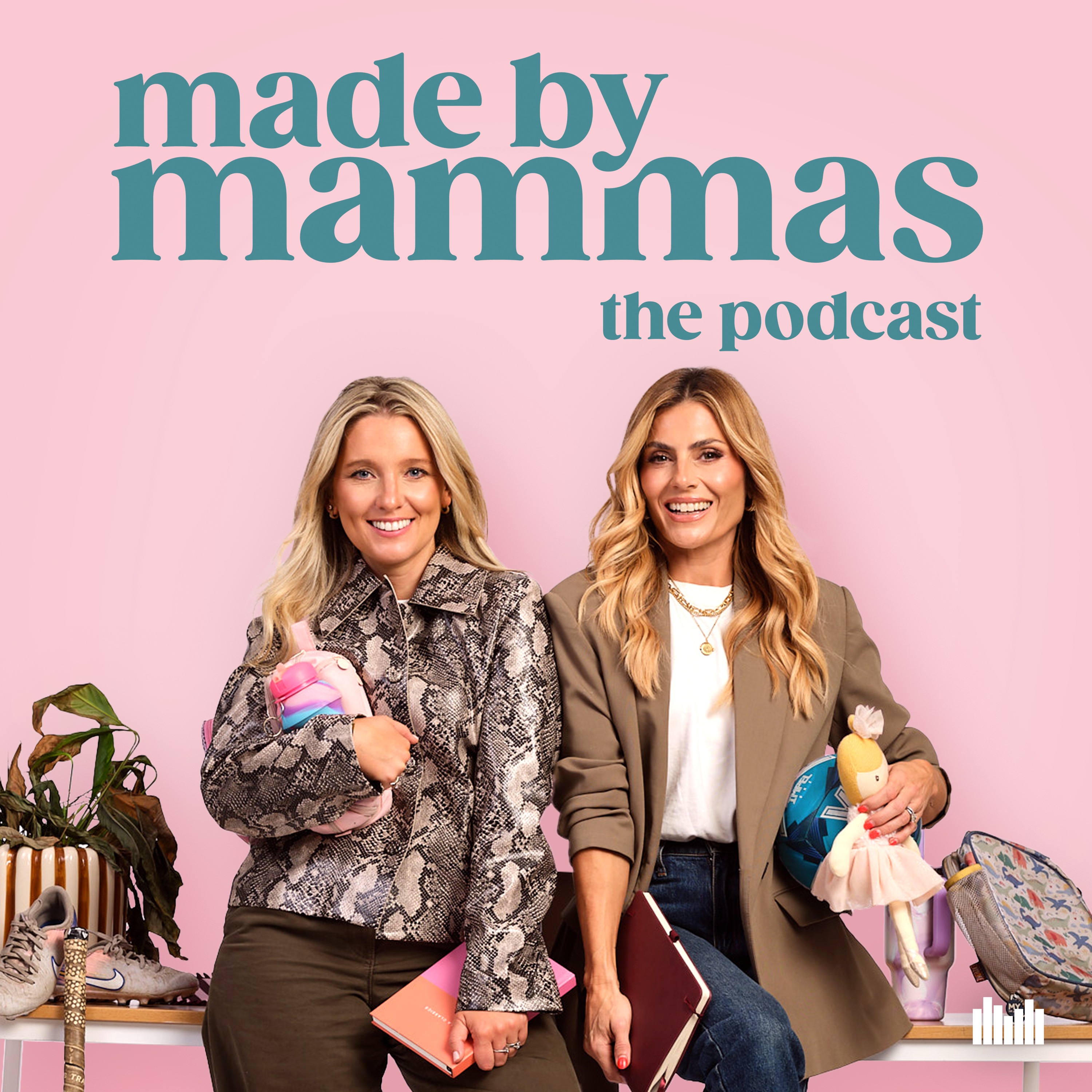
In this episode of Made by Mammas, Zoe Hardman is joined by her mother Carol for a listener Q&A. Carol reflects on raising Zoe, discussing parenting regrets, boundaries, and the challenges of Zoe's teenage years, while Zoe shares how becoming a mother herself has shaped her view of her own upbringing. The pair also touch on grandparenting, gender equality, and Carol's beauty secrets.
Topics mother-daughter relationships, teenage rebellion, setting boundaries, grandparenting role, parenting regrets, gender stereotypes, 1980s childhood, beauty and skincare
Mentioned in this episode Zoe Hardman, Georgia Dayton
Chapters
- 0:01:40 Introducing Carol: Zoe's Mum Takes the Mic
- 0:02:39 Parenting Regrets and What Carol Loved About Raising Zoe
- 0:03:50 Teenage Rebellion and a Difficult Period
- 0:05:42 Grandparenting: The Joy Without the Grot
- 0:07:35 Boundaries, Freedom and What Carol Would Do Differently
- 0:13:51 Is Parenting Harder Today?
- 0:20:16 Setting Boundaries with the Grandchildren
- 0:31:11 Carol's Best Beauty Secrets
Partner with Made By Mammas
Made By Mammas is produced by Audio Always. We work with brands on sponsorship, advertising and partnerships across our network of podcasts, reaching engaged listeners and viewers.
Advertising categories Parenting, Parenting Children Aged4-11, Parenting Teens
Show notes
This week, Zoe is joined by her mum Carol – a Made by Mammas legend who has been referenced, quoted and talked about on this podcast more times than we can count, but has never actually sat down in front of a mic… until now!
Carol reflects on raising Zoe through the rebellious years, whether she set enough boundaries and what she’d do differently knowing what she knows now whilst Zoe opens up about what it was like on the other side of that and how becoming a mum herself changed the way she sees her own childhood.
Hosted on Acast. See acast.com/privacy for more information.
Full transcript
Zoe Hardman 0:01:03 Hello and welcome to Made by Mamas, the podcast. I'm Zoe Hardman.
Georgia Dayton 0:01:09 And I'm Georgia Dayton.
Zoe Hardman 0:01:10 And this is your parenting safe space where no conversation is off limits. With 5 kids between G and I, we have seen a lot.
Georgia Dayton 0:01:18 We really have. Each week we'll be joined by some famous faces and experts, and we'll chat about the brands and products that have saved us along the way. In short, we're the parenting podcast for you. Before we get started, we want to thank our amazing sponsor,
Zoe Hardman 0:01:28 Before we get started, hit subscribe or follow so you're the first to know when each episode lands.
Georgia Dayton 0:01:33 And they're on Tuesdays and Fridays.
Zoe Hardman 0:01:34 And it really helps if you leave a rating and a review.
Georgia Dayton 0:01:37 You can also find us on Instagram. We're on @madebymummas.
Zoe Hardman 0:01:40 But for now, George, should we get into it? Hello and welcome to Friday's episode of the podcast. Uh, an absolute treat on the podcast today because for the first time ever, even though she's featured heavily on the podcast, but I can get away with it because I know that she hasn't listened to many episodes, it's my mum Carol. Yeah. Well, welcome to my lovely studio.
Carol 0:02:04 Well, thank you very much. It's a great— can I just say, it's a really great honour to be here. I've watched you grow and, and everything else, and it's fantastic.
Zoe Hardman 0:02:15 Well, you do feature heavily on the pod, Mum, so I'm quite pleased that you're here to sit down because—
Carol 0:02:19 What, to prove that I actually exist?
Zoe Hardman 0:02:21 No, to answer, to answer all the questions that everyone sent in. What we thought we'd do today is a little Q&A, so the listeners have sent in their questions for you and I to answer. We've only got 30 minutes, so I'm going to crack straight on with them, and I'm going to kick off with this one. It's quite a big one, um, but Dee says, have you got any parenting regrets?
Carol 0:02:39 Gosh, that is a big one, actually.
Zoe Hardman 0:02:41 We've only got 30 minutes.
Carol 0:02:42 Yes, I know, I won't take that long. I'll gabble through. Um, parenting regrets, not many, actually. Uh, I was very fortunate, or dads and I were very fortunate, actually, to bring you up in a completely different era when children were still allowed to be children for much longer than they are. And we did some amazing things as a family, and that created and in a fabulous bond. And I think from that we've actually grown into adult people— well, you've grown into adult people. And I think I don't actually have many regrets. No, honestly, no.
Zoe Hardman 0:03:18 Okay, there you go. Um, what quality do you love most about Zoe? Will I be able to get out the studio? Will my head be able to fit out?
Carol 0:03:27 What do I love about Zoe? How positive you are. How focused you are, how tenacious you are, brutally honest on occasion, great fun, a joy to have around, and somebody I love very much.
Zoe Hardman 0:03:45 Mum, that's lovely. Thank you. I mean, I can be a pain in the arse sometimes, as we all can.
Carol 0:03:49 Oh yes, that's true.
Zoe Hardman 0:03:50 Because we know we're not all perfect. But do you know what? I think, I think we've had such an interesting relationship, I think, over the years because we were so close growing up, weren't we? And then the teenage years, weren't that great for either of us. You know, you were going through menopause, I was going off the rails at sort of 14, 15. That was quite a tricky period. And I think a lot of people go through that period where the mother starts becoming perimenopausal and the teenager starts to become quite rebellious. And that happened to us on quite a sort of—
Carol 0:04:21 Yes, I mean, and you went into a state of rebelliousness, and you did some pretty—
Zoe Hardman 0:04:29 Let's talk about me. Yeah. Go on.
Carol 0:04:30 About, about what else?
Zoe Hardman 0:04:34 Well, maybe about, about you. And, and obviously, like, you went through some stuff, and that was difficult for us as teenagers to hold.
Carol 0:04:41 Yes.
Zoe Hardman 0:04:42 And that, and that was, that was difficult too. I mean, obviously I was a rebellious teenager, but you— I, I, what I think, what I'm trying to get at is that we've navigated some quite deep oceans.
Carol 0:04:53 Yes, I'd say that was very fair comment. And we have. And I suppose the thing that has really now is coming out because we have a very close relationship and I understand you, I think. And I think at the time it seems momentous. And in comparison to other people, you did a minor rebellion. And I think we reacted in quite an old-fashioned way because it was that generation. I had great support from dads, from your father, who was amazing and solid and rock solid. And I think you're right. I mean, we were both doing our own thing to a certain extent. Yeah.
Zoe Hardman 0:05:34 How does being a mum compare to being a grandparent?
Carol 0:05:37 Oh, completely different. Completely different.
Carol 0:05:42 I mean, the grandchildren, Kit and Luna, are just joy unbounded. I don't have to really— I mean, I do sometimes say, please don't do that. But apart from that, it's just you are allowed to be somebody magical in their life And I think they respond to that because they are able to be themselves in a different way. They don't have to prove anything. Grandparents really are there to be somebody that they can just enjoy themselves as well.
Carol 0:06:17 And I think that's hugely important. And I think the input of grandparents cannot be underestimated. I wish very much that we lived a bit closer, but on the other hand, we have you undiluted for 3 weeks every year. That is fantastic. So, it's very, very different because you don't get the grot.
Carol 0:06:36 What you do is get the joy.
Zoe Hardman 0:06:38 Yeah, yeah, that is definitely something that you pro— yeah, I guess parents, or sorry, grandparents who are here and they're very active in their grandkids' lives and they're looking after them 2, 3 times a week and they have them for weekends and stuff probably do get the grot. And I think you probably get the best bit because you dip in and dip out and we come to you. And yeah, do you take your role as grandparents seriously?
Carol 0:07:02 Oh, that's a really interesting question. I don't quite know how to answer that. I mean, what, to give them wise words?
Zoe Hardman 0:07:12 Well, no, as in for you. What does it— how does it make you feel? Do you take that role seriously for you?
Carol 0:07:18 Well, yes. I mean, I, I don't quite know how I'm supposed to feel. I mean, I— what I feel is great love, and I just don't have to define what a grandparent should feel. They are just part of me, part of you, and I love them.
Zoe Hardman 0:07:34 Yeah.
Carol 0:07:35 It's simple.
Zoe Hardman 0:07:35 If you were bringing up kids now, is there anything that you would do differently?
Carol 0:07:39 Well, I certainly would definitely curtail screen time. I mean, there's so many studies now, and if I knew now about screen time and all the rest of it, I wouldn't even let an iPod in the house. iPod? What's that? An iPad in the house. only because it's just not doing them any favours and they're not developing in the same way, and then they have problems in that direction. So I don't think that's really answered your question inasmuch that what would I do differently now? Well, I can't really— again, I can't really answer that because it's different.
Zoe Hardman 0:08:20 But as in— maybe I can help— as in There were obviously decisions that you made as a parent, some brilliant, some not so brilliant, as we all do. Would you do— if you had kids now in 2026, if I was— if you were 43 and I was 10, 15, whatever, would you do anything differently now from the way that you brought me up? Would you do anything differently now?
Carol 0:08:43 No, I don't think so. I, I do.
Zoe Hardman 0:08:46 Because this is interesting. Can we talk about boundaries? Because I'd like to talk about boundaries on the podcast, because I don't think that there was many boundaries around, which spoke about, right? Which is good and bad because we were brought up in a very free household. We could basically do what we wanted when we wanted. We could smoke, we could drink, we could do X, Y, and Z. There wasn't much kind of like— we went on holiday when we were 14 years old. We went away for 2 weeks without parents.
Carol 0:09:12 You did, but you did have an older sister.
Zoe Hardman 0:09:15 Who was 16. I'm not saying it's a bad thing. I'm just, I'm wanting to— if you think back on that and you think, would you do that now?
Carol 0:09:21 Well, not now because it— the world is so different. I certainly wouldn't let 14-year-olds to go off alone on holiday. No, absolutely not. But it was quite— well, it was more innocent than it is now, let's put it that way.
Zoe Hardman 0:09:33 Yeah.
Carol 0:09:34 And I think, you know, the world is so different in the 40-year span that you've been around. I mean, it's been a 100 and— well, I don't know, 180-degree turn. But I mean, we are into unknown, uncharted territory now. And I think that people are so— themselves are so different as well, you know. I I think children in many ways, because of these safety issues and the this and the that and the other, actually don't grow in independence in the same way that you did. And you were hugely independent. I mean, from the age of 3 when you refused to wear clothes that you didn't want to wear, and it's quite true.
Zoe Hardman 0:10:17 No change.
Carol 0:10:18 Yes. So you very much were your own person and you were encouraged to be your own person. I like that. I think that's very important as a parent. I think you must realise that your children are not you. And again, I think you've spoken about this, and just because you are a broadcaster, maybe Luna certainly won't be.
Zoe Hardman 0:10:42 Yeah.
Carol 0:10:43 You know, allow them to find their own path, allow them to find their own independence. These days it has to be done within the confines of the safety issue, and that's the single biggest difference. there's a lot of emphasis put on, oh, you know, can't do that, can't do the other, breaking that rule, doing that, keep safe, don't chance it.
Carol 0:11:06 Children have to be allowed to fall out of trees. They have to be allowed to express their individuality. And it's— but again, it's all different. You were— you did run wild. And also there was always Kenya in the background, and that influenced you hugely.
Carol 0:11:27 And in the kids really still run wild to a very large extent, and I love that because they're able to talk to— they're individuals and they talk to people.
Zoe Hardman 0:11:35 Um, what was your parenting motto?
Carol 0:11:39 Wow, okay. It's the things in life you don't do you regret.
Zoe Hardman 0:11:43 But is that related to parenting?
Carol 0:11:45 Yes.
Zoe Hardman 0:11:45 What do you mean?
Carol 0:11:46 Well, I mean, you're an experiment, aren't you? Um, of course, every child you have is an experiment.
Zoe Hardman 0:11:55 But like, as in What did you have, something that you kind of thought about that you sort of lived by when you were bringing me and Catherine up?
Carol 0:12:03 No. Oh, well, well, okay. No, I'll come back to that one. Obviously you give them values. That's quite different from a motto. You give the values that count in life. And I think it's far more important than a motto that your children actually are really truly good people. They're not unkind. They're not— they don't steal. They don't badmouth people, whatever level you're at with a child. And that they come out as being caring and sharing and willing to help others. And I think that's hugely important. I love the young. I love the young. And want to open doors for them and to encourage them to step through. And that's another very important part.
Zoe Hardman 0:12:57 I love that. Do you think it's easier or harder for parents in 2026 to when Zoe was a teenager?
Carol 0:13:05 Yeah, I think it's much harder today. Much harder. Because so much has been lost. The spontaneity, the simple things. I keep using the word joy because to me, bringing up children when I did was a— not always, but on occasions, absolute joy. And it was very simple and it was very true. On occasions? Well, no, the majority— oh, go on, pick me up on that one.
Zoe Hardman 0:13:33 How insolent is she? Not all the time, but on occasions. I mean, that is quite— yeah, okay, so sometimes there was joy and sometimes there wasn't joy, which is how we all feel. I think it's really important to say it. Exactly. Yeah, I hear you. I'm just taking the mickey out of you. I know you are. And why do you think Why do you think that was the case? Why do you think— do you think we've lost the joy?
Carol 0:13:51 I think it's become too regulated. I think the children have become too conscious of who they are, what they're doing. Is this the right thing to— it's a really fine balance between giving children a good set of values and then asking them to just throw them all away on occasion when they can just jump in and build a mud hut. You know, it's Sorry, I'm getting confused here because in many ways that's a two-tier question. On the emotional level, I think, and you could answer this, um, you say that we didn't give you enough boundaries. Well, maybe not, but then on the other hand, you were quite wilful.
Zoe Hardman 0:14:39 Yeah, absolutely. Yeah, that's how, that's how we were raised. And I think that that's—
Carol 0:14:44 Exactly.
Zoe Hardman 0:14:44 Yeah.
Carol 0:14:45 Um, but the whole point of this is that I still think it's much harder to raise children today because of the expectations. Um, little girls want to look perfect, all this sort of thing. There's plenty of time to look perfect.
Zoe Hardman 0:14:58 That's really interesting because actually there's so much research done that the way that, um, the way that we are now being so much more conscious of giving our children, you know, especially our girls, um, the, the voice— they don't have to be the perfect little girl, that actually they can be bold and, and brash and loud and unapologetic, and they can be CEOs and they can be leaders. Whereas actually, when we were raised— not by you and Dad, because actually I think Catherine and I, I mean, we look like we've been raised by wolves. We had the worst haircuts in the most ridiculous outfits.
Zoe Hardman 0:15:32 But that's the— that was the '80s. That was the '80s. No, no, it was great. I love— I loved it. We were, we were raised bold.
Zoe Hardman 0:15:39 But a lot of, a lot of young girls in that era were seen but not heard. And we're fight— we've— we as our generation have been fighting against that for a long time. And that's why feminism is where it is at the moment. And that's why we're trying to fight for that equality, because we didn't have it growing up. And you didn't have it growing up.
Zoe Hardman 0:15:59 No. At all, if you think about it. No. Um, so I think you've done an amazing job in that space because you taught us to fight against the system and that actually you know, if you want to be heard, you have to shout the loudest.
Carol 0:16:11 Yeah, very much so. Yeah, but okay, I take that, and thank you. I just think, I just think that— so how are you viewing girls today? What are they doing that is different to what you're— you would do?
Zoe Hardman 0:16:24 Well, we're being CEOs. So let's start with that.
Zoe Hardman 0:16:29 Let's just start. I mean, we've got a long way to go, but I, I think we have to put— we had to— we've had to push so hard against the gender stereotypes of what a girl should be and what a boy should be. And we're still having to do that now, but there's so much more. For me, just the awareness around it, the conversations, you know, making sure that our girls know that they can do exactly what our boys can do. And I— yeah, there's a long way to go, but I do think we've had to do— we've had to undo quite a lot of damage, actually.
Carol 0:17:00 Wow. Okay. Yes, I think I—
Zoe Hardman 0:17:03 it's a perception.
Carol 0:17:04 Every— yes, it is. And I, I take that one on board. Totally. I mean, it's interesting to note that I still know a lot about car mechanics, mechanical bits, because my father taught me.
Zoe Hardman 0:17:17 Yeah.
Carol 0:17:18 And so we were brought up differently as well. And so that goes down through the generations. And they didn't see, although obviously they did more than dads and I did, the difference between boys and girls. And you, It's all education. You've got to educate your girls. You've got to actually say, yes, you can be CEOs. Yes, you can do this, you can do that. Now, there may be a sacrifice to that, but at the same time, if that's what you want, then you must take that chance and go for it. I get that completely. I still think it's harder to raise children, and in particular girls today—
Zoe Hardman 0:17:58 Agreed. Agreed.
Carol 0:18:00 Than it used to be.
Zoe Hardman 0:18:00 Interesting that you think it's girls as well. I love— yeah, that's interesting as well. 'Cause I, yeah, yeah, I'm with you totally. I, I, I would love to just spend a week in the life of the '80s as a parent and see what it was like.
Carol 0:18:13 Oh, absolutely.
Zoe Hardman 0:18:14 Yeah, it would be interesting.
Carol 0:18:16 Yeah.
Georgia Dayton 0:18:17 We'll be right back after this short break.
Zoe Hardman 0:19:58 Welcome back to this episode of Made by Mamas. Now, where were we? Oh, this is interesting. So Eleanor says, Zoe, how did you manage boundaries about parenting choices with your mum? Do you know what, I don't think that we have ever had to have the conversation about boundaries because— with the kids, with my kids— because you don't live in this country.
Zoe Hardman 0:20:16 So it's like, if you were a grandparent that was here and looking after the kids twice or 3 times a week, then probably that conversation would have to have to be had. But we haven't had to go through that because we don't get to see each other that much. So the times that we do spend together, we just kind of want to have a lovely time. Yes, exactly. As a family.
Carol 0:20:34 I can't answer that.
Zoe Hardman 0:20:35 Yeah, but I— but in terms of boundaries, and boundaries are really important to me. And actually, when I had Luna, I had a feeling of— because, and this isn't a criticism at all, by the way, because you were the most fantastic mother— but I think sometimes, or retrospectively, I felt that I— the boundaries thing was— is really important to me. And setting out and making—
Carol 0:20:59 Would you have been happier with boundaries?
Zoe Hardman 0:21:00 I just— I think I needed to know. I know the care was always there because the love was always there, and it was a— as I've said, it was an amazing childhood. But I was very confused about what I could do, what I couldn't do, what I could get away with. So I just did it all. And there wasn't much stop button. And so I felt maybe like I experienced things too, too young. And that's also not your fault. That's not me saying that you should have done better. That was just the way that you did it.
Carol 0:21:30 It's your perception, and it's very valid.
Zoe Hardman 0:21:32 But it also made me the person that I am today. But what it did do was make me feel this with Luna that I, you know, I— it was a bit helicopter parenting at the beginning because I wanted to make sure that I was on top of everything and in control of everything. And, you know, that she was never alone for a second. And it's different now. You know, we're 10 years down the line with my— or 12 years with Isla and my parenting journey, so it does look different. But yeah, boundaries are really important to me.
Carol 0:21:57 Okay, that is interesting. I mean, don't forget, you went off to school in Switzerland at the age of 12.
Zoe Hardman 0:22:03 Yeah, I know.
Carol 0:22:04 Which made you hugely independent.
Zoe Hardman 0:22:06 Yeah.
Carol 0:22:06 And I think that set the scene for the rest of your early teenage years, all the way up actually. Yeah, I acknowledge that. And I— we should have been tougher with you and said no at that stage. And I think definitely. And you might have been very relieved because what you were landed with were decisions that were out of your control.
Zoe Hardman 0:22:31 This is what I'm trying to get to. Yeah, yeah.
Carol 0:22:33 And positions that you shouldn't have been in. And I think that's correct. Yeah.
Zoe Hardman 0:22:39 Thank you for hearing that.
Carol 0:22:41 Yeah, yeah, yeah.
Zoe Hardman 0:22:43 Someone says she must be so proud of you.
Carol 0:22:45 Ooh, am I proud of you? Immensely. Immensely. You've been such a— you've fulfilled all your dreams. That's what I really respect you for. And I remember at the age of 3, you said you had made the decision of what you wanted to do in life at the age of 3 when you actually opened the car door when we were going off on safari and saying, this is our car. And at that moment you made the decision that you were going to be a broadcaster. And I also remember when Valli, my sister, said to you, so what is plan B?
Zoe Hardman 0:23:26 Oh, I didn't like that comment. What? I remember not liking that comment when she said it.
Carol 0:23:31 Well, no, no, but it's true.
Zoe Hardman 0:23:32 No, no, yeah.
Carol 0:23:33 But, but, and she said, what is plan B? And you turn around and said, there is no plan B. You have been focused, tenacious. You've got there by hard graft. You weren't Well, you were discovered overnight actually, um, playing It's Straight. And but it, it's been a journey with the ups and the downs, and you've stuck the course, and I'm immensely proud of you.
Zoe Hardman 0:23:58 Thank you, that's really kind. It's not an easy journey, but it's been a brilliant one. Um, of all the achievements that Zoe has made, what are you most proud of Zoe for? In terms of career?
Carol 0:24:11 I, I think because you and Georgia have created it, it's when you won, I think it was a Silver Award in 2019, something like that.
Zoe Hardman 0:24:26 Yeah.
Carol 0:24:26 Uh, for best parenting podcast. And I, that blew me away because from nothing you created a vehicle which exposed so many things and you've helped so many people. And it's, you know, when you have— when you land a lovely contract, it's great, and you sit there and you're great at your job, but it's not yours. This is yours, and that's what I'm enormously proud of.
Zoe Hardman 0:24:52 She's nice, isn't she, my mum? She's a good egg. Sophie says, firstly, how bloody epic is this? Um, how do you feel about how open Zoe is about yours and her relationship on the podcast?
Carol 0:25:09 Well, I have to confess, I haven't listened to all of them. I didn't. Am I supposed to?
Zoe Hardman 0:25:18 Carol, be honest. It's fine. You've got a very busy life. You're not retired and just sitting around doing nothing.
Carol 0:25:25 No, I'm not. I'm definitely not. I presume she says some nice things and some derogatory things. I really don't know.
Zoe Hardman 0:25:37 They're all nice, Mum.
Carol 0:25:39 Are they?
Zoe Hardman 0:25:40 No.
Zoe Hardman 0:25:40 Do you know what? It's not about nice and not nice. I think it's— it's— I'm— I would never sit here and slate you. At the same time, I think it's important to— you will have your own story and your own narrative, which is also respected and held. And sometimes I probably get that wrong, and I will have a narrative that you might disagree with.
Zoe Hardman 0:25:58 And— but I'm— I, I think it's important because I think a lot of people— I think when you become a mother you suddenly start looking at your own relationship with your own mum, and you take all of the beautiful parts, and you think about the stuff that didn't maybe quite work out, and then you want to do better or keep, you know, or do the same with your own children. And that's not a blame thing, that's more of a— you dissect it a lot. I do anyway.
Carol 0:26:26 Well, you might. I don't.
Zoe Hardman 0:26:27 You don't? You don't think about things like that though, do you?
Carol 0:26:30 No, I mean, my relationship with my mother Was amazing. I mean, she was a wonderful woman and I enjoyed being in her company and we had a great time. I come from a very happy home. And as such, that is what I want with both of you to feel. And I think I've achieved that, is that you've always felt very loved. We might have got it wrong and there's no parenting handbook. But I do think by and large, Too much navel-gazing can be a bad thing because the instinct goes, you usually know what's right, and if it feels off, it's wrong. And definitely I've got it wrong over the years.
Zoe Hardman 0:27:14 So have I. I mean, we all do, don't we, as humans?
Carol 0:27:17 Of course we do. It's all part of being human.
Zoe Hardman 0:27:19 Yeah.
Carol 0:27:20 Yeah. So I don't think I answered the question, but anyway, it'll—
Zoe Hardman 0:27:25 In short, Sophie, she doesn't know because she doesn't listen to all the podcasts, which is totally fine. And we won't tell her. She also says it's extremely brave of you, Zoe, and I can't wait to listen. Do you prefer being a parent or grandparent?
Carol 0:27:42 Oh gosh. Well, they're both wonderful. I mean, they're so different, you can't really say one or the other. I mean, I'm not a traditional grandmother.
Carol 0:27:51 I'm really not. You know, I've been I admit that I'm in many ways, I'm really sad that I don't have more. I'm very sad I don't have more to do with them. That is a given. But at the same time, at the times I see them, it's wonderful.
Carol 0:28:08 And it is different because also I'm not in the same country, so therefore I'm not hands-on. And I think if you're hands-on, you have a closer relationship, obviously. But I Do I prefer being a parent or a grandparent? Wow, I've no idea really. They're so different.
Carol 0:28:28 I can't really— it's like apples and pears.
Zoe Hardman 0:28:30 Katie says, what was she like as a teenager? How did you cope? It's like Katie knows.
Carol 0:28:36 Well done, Katie, for asking the million-dollar question. Hmm, what was she like? She was in parts phenomenal. and in parts pretty horrendous. No, not horrendous, but you were quite tricky for a while. And I think, you know, the— Well, come on, this is a lot of truth.
Zoe Hardman 0:28:58 No, no, no, I'm laughing.
Carol 0:29:00 I'm laughing. So therefore, I could say in many parts, she sailed through her teenage years because she was who she was. But in some ways, she fell by the wayside. And I mean, we have been hauled up by various head headmasters over the years. Um, there were only 2 actually. One, no, one, one headmaster who thought your behaviour was inappropriate when— and then I— then we had a really—
Zoe Hardman 0:29:29 That was when I was wearing the denim shorts, do you remember? This is outrageous. Do you remember this?
Zoe Hardman 0:29:34 It was a school that I was at in Kent. Yeah. And we got let— in our last year of that prep school, we get to— we got to go into the local town and go and buy some sweets or whatever. And I was so, so pleased with my cutoff denim shorts and my oversized denim jacket which said Neighbours in the New World on the back. And I had purple dot Martins on, and they were quite short shorts, but I was only 12 at the time.
Zoe Hardman 0:29:52 Yeah. I mean, my body was developing, but not, you know, whatever. I don't even— I don't even need to caveat it. And I remember walking across the, the grounds to go into this— into Hawkerst, and I remember being called back in, like screamed, come in! And I got sat in this headmaster's office, and he said, what you are wearing is disgusting.
Zoe Hardman 0:30:13 How could you possibly think that they're an appropriate length shorts? I'll be calling your parents in. You know, what do you think you're doing to, you know, young men in the area? all this kind of stuff. And I, I remember just feeling so much shame and so, so uncomfortable and so sad about what I'd gone through.
Zoe Hardman 0:30:28 And it was like that moment I suddenly became a young woman hearing, like, that was completely wrong of him. Oh,
Carol 0:30:36 of course it was. Of course.
Zoe Hardman 0:30:37 Completely wrong.
Carol 0:30:38 Yeah.
Zoe Hardman 0:30:39 You know, our bodies should be celebrated. I wasn't being— why did he have to sexualize me at 12?
Carol 0:30:43 Well, that's the big question. That, that actually is a really deep question, because what was he doing sexualizing you at that age? It was, it was outrageous. And I think, you know, schools again are so different now, but I mean, in those days you were supposed to conform. And yet your school was pretty liberal when you think about it. I mean, you had a lot of freedom. You built camps, you stayed out, you did whatever. So I don't know.
Zoe Hardman 0:31:11 Yeah, it has stuck in my mind though. Um, we're just going to finish with this one, Mum. What's your best beauty secret? Someone puts you— someone's put, you look amazing. She looks amazing.
Carol 0:31:22 Thank you. Um, best beauty secret? Don't smoke. Absolutely do not smoke. I luckily had my tonsils out when I was 17. I'd just gone up to 5 a day, and from that moment on I've never smoked.
Zoe Hardman 0:31:36 People don't smoke anymore.
Carol 0:31:37 Oh well, if you're not smoking, you have nothing to give up then.
Zoe Hardman 0:31:40 What would be your beauty secret?
Carol 0:31:42 Cleanse your face. I have cleansed moisturised my face since I was 16, and I can honestly say I don't think I've— well, I might have missed one or two nights, but 99% of my time, every single evening, I take off my makeup and put on my moisturiser or whatever. Now here, it's quite a dry atmosphere, amazingly. Everybody thinks it's very, you know, humid or moist-laden, but it's not. It's actually in comparison, it's not.
Carol 0:32:14 So, and as you get older, you must change your beauty regime. Your skin today at my age is definitely not the same as Zoe's, and it's not the same as Luna's. And you must change your routine to suit your skin. And be honest, look at it and say, well, this isn't working. And get— try and get enough sleep.
Carol 0:32:33 That's a big one.
Zoe Hardman 0:32:34 Yeah.
Carol 0:32:35 It's all natural stuff.
Zoe Hardman 0:32:36 And don't smoke. Get some sleep and cleanse and tone every night. I love it. I just want to say the biggest thank you for coming on. It's been a treat to chat to you. Obviously I had to grill you a little bit, but then you grilled me, so it's fine. And to all of you guys for sending in your questions. Queen Carol, my mum on the podcast! Well done. Thanks, Mum.
Carol 0:32:57 Thank you.
This transcript was generated automatically and may contain errors.