
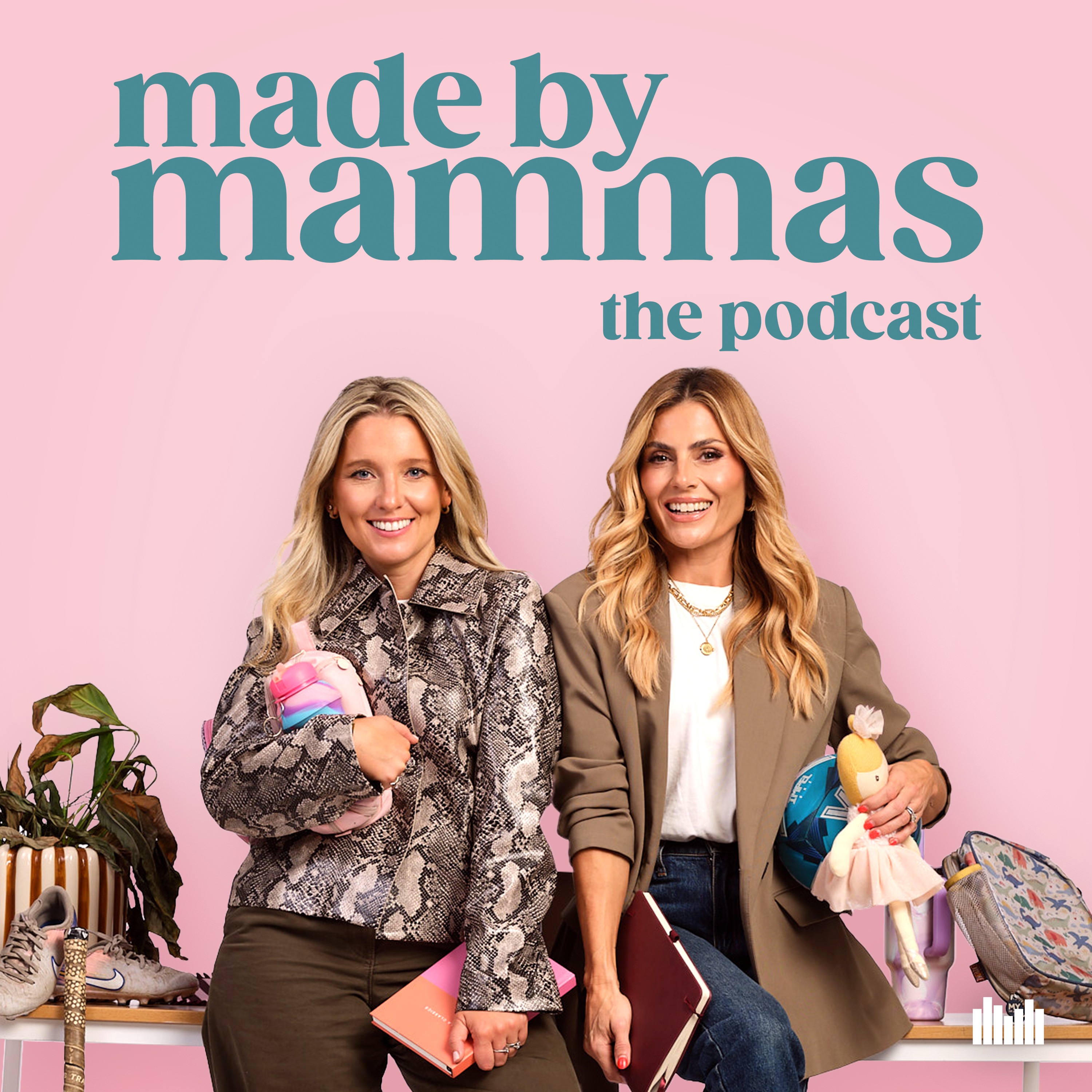
In this episode of Made By Mammas, Georgia Dayton is joined by psychologist Dr Tuesday to answer listeners' questions on parenting. They discuss why parents lose their tempers, how sensory overload and depleted capacity fuel rage, the concept of matrescence and its effect on identity and confidence, and how the mental load falls disproportionately on mothers.
Topics parental anger and rage, sensory overload parenting, mental load and partners, matrescence and identity, social comparison motherhood, decision fatigue, lost village alloparenting, rebuilding confidence after children
Mentioned in this episode Dr Tuesday, Alex Trippier
Chapters
- 0:01:40 Introducing Dr Tuesday
- 0:03:17 Dr Tuesday's background in psychology
- 0:06:38 Social media and motherhood
- 0:21:49 Listener Q&A: family support and resentment
- 0:25:39 How to stop losing your temper
- 0:31:46 Matrescence and lost confidence
- 0:39:07 The mental load explained
Partner with Made By Mammas
Made By Mammas is produced by Audio Always. We work with brands on sponsorship, advertising and partnerships across our network of podcasts, reaching engaged listeners and viewers.
Advertising categories Parenting, Social Networking, Bereavement, Parenting Children Aged4-11
Show notes
Georgia is flying solo this week! She’s joined by the brilliant Dr Tuesday for an honest, reassuring conversation about why we lose our tempers as parents and how to break the cycle.
In this episode, Dr Tuesday answers your questions on navigating intense sensory overload, resisting the trap of comparing yourself to other mums, and learning to give yourself a break when things get chaotic.
Find a new episode every Tuesday & Friday and in the meantime check out Made By Mammas on Instagram: @madebymammas.
Made By Mammas® is an Audio Always production.
Hosted on Acast. See acast.com/privacy for more information.
Full transcript
Zoe Hardman 0:01:02 Hello and welcome to Made by Mamas, the podcast. I'm Zoe Hardman.
Georgia Dayton 0:01:06 And I'm Georgia Dayton.
Zoe Hardman 0:01:07 And this is your parenting safe space where no conversation is off limits. With 5 kids between G and I, we have seen a lot.
Georgia Dayton 0:01:15 We really have. Each week we'll be joined by some famous faces and experts, and we'll chat about the brands and products that have saved us along the way. In short, we're the parenting podcast for you.
Zoe Hardman 0:01:25 Before we get started, hit subscribe or follow so you're the first to know when each episode lands. And they're on Tuesdays And it really helps if you leave a rating and a review.
Georgia Dayton 0:01:34 You can also find us on Instagram, we're on @madebymummas.
Zoe Hardman 0:01:37 But for now, George, should we get into it?
Georgia Dayton 0:01:40 Hello and welcome to Friday's episode of the podcast. It's just me again today, but I am joined by someone who definitely knows her stuff.
Georgia Dayton 0:01:50 Um, she's a psychologist, a mum of 3, and she talks a lot about navigating the messy middle of parenting, which I'm excited about. We've got you guys to send in your questions, but Let's welcome Dr. Tuesday to the podcast.
Georgia Dayton 0:02:05 Thank you very much. It's funny calling you Dr. Tuesday. Tuesday's fine.
Georgia Dayton 0:02:09 Tuesday is fine? Yeah, it's fine. Yeah, okay, cool. How's your morning been? What's been going on before we get into the questions?
Dr Tuesday 0:02:16 Not too horrendous, to be fair. I feel like I very much, I've lived a morning in my husband's shoes today where I've just like got up and got straight in the shower and like got ready for work and he's been dealing with The chaos.
Georgia Dayton 0:02:31 Nice.
Dr Tuesday 0:02:32 And normally, well, every day during the week, it's the other way around really. Um, so it's been kind of nice and I've just been like, right, see ya. Like, bye everyone. Husband's dropping everyone off everywhere and getting everyone ready. So, it's been kind of nice.
Georgia Dayton 0:02:47 That's good. Same with me actually today. Yeah. I actually had no kids this morning. Oh, wow. Yeah. They stayed at my parents' last night. Oh, wow. So, I just got up and got myself ready and Although I woke up with an insect bite on my forehead, which was enormous, and then I took antihistamine and now I'm hoping it's gone down, so.
Dr Tuesday 0:03:04 Yeah, I wouldn't have noticed it if you didn't.
Georgia Dayton 0:03:06 Fine, good, we're all good.
Georgia Dayton 0:03:09 But just before we get into the questions, you are a psychologist. Just tell us a little bit about your day-to-day and also sort of your background and how you got into that.
Dr Tuesday 0:03:17 Yeah, sure. So I'm a psychologist with an academic background, so I'm not the clinical kind of psychologist that would diagnose and treat people or offer that sort of support. I am the geeky, research-oriented, fact-finding psychologist who spent years in academia researching and just getting into the nitty-gritty details of various topics, teaching psychology students as well. My area of expertise was personality and individual differences, so what makes people who they are, like really I mean, getting really interested and really curious about various aspects of personality and individual differences, and then teaching that to hundreds of psychology students. So that's my background.
Dr Tuesday 0:04:08 And then when I became a mum, everything just was like scrambled egg for me. Yeah. It was like, this career doesn't make sense. What am I doing? This doesn't fit anymore.
Dr Tuesday 0:04:18 Who am I? What's this life that I'm I've been building that suddenly doesn't fit me anymore. And it all kind of unravelled itself very, very quickly. And I actually had said yes to a job when I was 7 months pregnant with my first at a new university, brand new department and everything, thinking, it'll be all right. I'll just have the baby.
Dr Tuesday 0:04:40 He'll go to nursery and I'll just go and do my job. And then he arrived and I was like, what a massive mistake that was. And I'd already agreed to turn up 6 months after he was born.
Georgia Dayton 0:04:53 Yeah.
Dr Tuesday 0:04:53 Not knowing, just not knowing the impact that it would have on me.
Dr Tuesday 0:04:57 Very much thinking like, he'll just fit in around my life. Like, I'll always be me. This is what I'll always enjoy. And yeah, it just felt like I was having a massive identity crisis on the other side of birth. I was like, I don't want to go.
Dr Tuesday 0:05:12 I don't want to work. I don't want to do this job anymore. It doesn't fit me anymore. But obviously had to, had to go and do it. And But very much of the mindset like, this is just a job, just get through it, just get through it.
Dr Tuesday 0:05:28 Like, I'll figure something out, I'll figure out a way forward. And have kind of been trying to figure it out for years ever since and have landed where I've landed, which is using my understanding of psychology and my ability to kind of translate what the research is saying to help us understand the intensity of motherhood. Yeah. The intensity of our emotional experiences. So I talk about them a lot, I write about them a lot.
Dr Tuesday 0:05:57 And that's kind of like my day-to-day is kind of researching, like looking into, you know, what the research says, translating it, talking about it, like creating content about it. And very quickly, I've grown a very lovely community of mothers who were just looking for words, just looking for a way of understanding.
Georgia Dayton 0:06:17 Yeah. What's going on?
Dr Tuesday 0:06:19 What the hell they're going through and like why it feels so hard and why they don't have the language for it. And why it feels so alienating in the, like, social media space that we find ourselves trying to live in at the same time as our messy, chaotic realities. It's very hard.
Georgia Dayton 0:06:38 What do you think, just before we get into the questions from the listeners, but what do you think the impact of social media, or what, if there is, on— there has been on motherhood in general? Because It feels like it's a, it's a big shift.
Dr Tuesday 0:06:54 Oh, massively.
Dr Tuesday 0:06:55 Like, we are— I mean, as millennials in particular, I know we talk about millennial motherhood a lot, um, but there is something very unique about our generation in that we are the first— well, we're what's known as digital natives. So, we were the first generation to really grow up with, you know, access to the internet and things like that. And then by the time we became mothers, we were navigating social media, which previous generations had not done. This was all new And so what this meant was that we were living in, we are living in 2 parallel worlds. One that's very unpredictable and chaotic and emotionally intense, and then you've got this shiny, curated wellness, crazy optimization space that just clashes.
Dr Tuesday 0:07:43 It clashes like hell with what we're actually living. And so the impact of that is massive. Yeah. Massive. But there is some hope in that there is research out there which shows that the impact of social media depends very much on how you use it.
Georgia Dayton 0:07:58 Right, okay.
Dr Tuesday 0:07:59 Right? So it's the passive scrolling and the comparison that tends to, especially within the context of loneliness, for instance, which I'm really interested in, that tends to feed loneliness. That kind of quietly watching what someone else is doing and measuring up your life to their success or how they look, or that we're all, we fall prey to that quite a lot. because we are, as humans, prone to social comparison. But research does show if you use it to actively engage and to have conversations and to connect in meaningful ways with other people, which I really try my best to do, that can actually combat loneliness.
Georgia Dayton 0:08:45 Yeah, 'cause I think with social media, so when Zoe and I had our first children, Luna and Axel, social media, particularly in the parenting space, was really glossy. And we would often laugh about it, but we had each other. So, we weren't looking at it like, oh my God, that person has got all their kids out in matching outfits and they're all asleep on the bed and they all look so beautiful. We would almost secretly laugh about it together. And we took it for what it was. It's just a pretty photo.
Dr Tuesday 0:09:22 That's amazing that you were able to do that.
Georgia Dayton 0:09:24 But we had each other to talk to. Then I think social media took a turn and it was very negative. So, everything was about how hard motherhood was and almost like, yes, the reality that loads of us face, but almost too, maybe too much. Right, right. And now I wonder if it's kind of coming round again to a bit more balance, I don't know. I think there's some people who like love talking about how much they love it and it's wonderful and they're skipping through the fields. Then you've got people who talk about, you know, how really, really difficult it is. And I think there's a kind of maybe 2 camps.
Dr Tuesday 0:10:03 Yes.
Georgia Dayton 0:10:04 And I don't know which one is right.
Dr Tuesday 0:10:06 It's fascinating though that like you even perceive it as 2 camps because that, that is how our algorithms kind of set us up in that there's— it kind of promotes a very binary thinking. It's either this or that when actually it's both and everything in between, right?
Dr Tuesday 0:10:21 It's not. And you know, our algorithms very much craft our news feeds to tailor it to what we look at and what we're interested in. And so, you know, the fact that some people, it sounds like everyone's talking negatively about social media, it's your algorithm giving you what it thinks that you're going to be interested in, right? And if you only see the positives, it's your algorithm giving you, you know, what you're interested in. I would like to hope that we are kind of shifting toward a balance.
Dr Tuesday 0:10:50 I mean, it's what I see more of because that's what I actively create, right? Yeah. And that's what I actively seek. But I do also see very harmful sides of it. And I get, you know, a very small minority, but criticisms as well from strangers on the internet who will, you know, show up to remind you of the life that you chose and how dare you say something like that.
Dr Tuesday 0:11:15 And, you know, some of the time it's from other women and mothers, which is—
Georgia Dayton 0:11:18 Yeah.
Dr Tuesday 0:11:19 You know, the painful part for lots of women, because it's like, You're not helping us by, you know, by saying, yeah, you chose this.
Georgia Dayton 0:11:27 Yeah, exactly.
Dr Tuesday 0:11:30 Um, but I, I very much had that view of social media, the one you're talking about, when you became a mum for the first time. I had that, but I didn't have anyone to speak to.
Georgia Dayton 0:11:40 Yeah.
Dr Tuesday 0:11:41 So I felt very isolated. Yeah, very isolated. I was the first of my friends to have a baby, so I spent a lot of time alone, and I tried to go to the baby classes, but just couldn't.
Dr Tuesday 0:11:54 It felt more isolating to go to the baby classes. I also had a very intense, highly sensitive baby who was not content a lot of the time, and it felt very hard for me to get him out and about and to do things with him. And because I was struggling as well with that, finding it very overwhelming. So, to me, it was like the easiest thing is just close down. Just don't do anything.
Dr Tuesday 0:12:18 So, I then turned to social media and saw the matching outfits and the wholesome days out and the filtered, like— Yeah. family moments, and it felt like, why can't it be like that for me? Why am I having this ugly version of it? It must be something about me. It must be something— because that's the loop your brain goes on.
Dr Tuesday 0:12:37 It's like, well, if it's supposed to look like that, why does it feel like this for me? And what does that say?
Georgia Dayton 0:12:43 Yeah.
Dr Tuesday 0:12:43 What does that say about who I am? Maybe I'm not built for it. Maybe I wasn't supposed to do this. There's a lot of thoughts that we can end up like getting really stuck in.
Georgia Dayton 0:12:52 Yeah, and I think that can, you know, that's in all aspects of life through social media.
Dr Tuesday 0:12:58 Completely, completely.
Georgia Dayton 0:12:59 You know, I think we try on Made by Mamas in particular to talk about, you know, for instance, the school holidays.
Georgia Dayton 0:13:05 You know, people listening right now, you'll have seen, okay, I went on a lovely holiday last week, maybe when you listen to this a couple of weeks ago, Zoe's away, you think everybody's away and you don't see actually what That's a small snippet and the rest of the holidays is me dropping kids off to camp, me working from the office and the kids coming in every 5 minutes asking me for something. It's actually really messy and we do try to show that that is, that's how it is and it can be really good and there are amazing times.
Dr Tuesday 0:13:41 Of course.
Georgia Dayton 0:13:42 But also, it's not like that always and also half the time when it's bad, you haven't got a camera.
Dr Tuesday 0:13:49 No.
Georgia Dayton 0:13:49 And that's just the reality of it, isn't it? It's much easier to take pictures of pretty things and good moments than it is to take pictures of bad ones.
Dr Tuesday 0:13:57 Yeah. It's so funny because I'll often, like, I mean, our household is particularly intense. We're a very neurodivergent household. There's a lot of noise, there's a lot of chaos, there's a lot of, like, conflict going on. And I set up my phone, just, I just put it in the corner of the kitchen just to capture I just set it up and I forget about it, genuinely. And so, I often catch—
Georgia Dayton 0:14:20 Do you?
Dr Tuesday 0:14:21 A lot of the bad moments, a lot of the really hard rubbish that goes on, and then I share it. And then, I mean, the overwhelming response is, oh my God, I feel normal. Like, this is literally my life. You've like, thank God I'm not the only one living this crazy chaos. But then obviously you get the ones, oh yeah, you're having a hard moment and then you think, oh, I'll just set up my phone and I'll just capture this. I'm like, no, actually it's the other way round. I set it up and then naturally, Of course, inevitably that happens.
Georgia Dayton 0:14:51 That's important though. That's a really important thing that you're doing to show that—
Dr Tuesday 0:14:54 It feels important.
Georgia Dayton 0:14:55 Yeah.
Dr Tuesday 0:14:56 Because I know for me, I need it.
Georgia Dayton 0:14:58 Yeah.
Dr Tuesday 0:14:58 I need to see someone else's chaos to feel like I'm normal. Yeah, no, no, no, I totally get that.
Georgia Dayton 0:15:04 And before, maybe you would, you know, chat to somebody about it, but the reality is that— We don't have that. We don't, because also, in lots of houses, both parents are working. So, whereas before, maybe somebody would have half an hour after the school run school drop-off to talk at the gates. We don't have that now. We don't have it. We're rushing off. We're picking up at different times because of after-school club and this, this, and this, rushing off to something else. So, you do miss that bit where you need to just know that someone else is having the same issue.
Dr Tuesday 0:15:35 Massively. And like, we talk about this lost village all the time, right? And so many people focus on like the physicality of that and like people supporting you day to day with logistics and having like grandparents or aunties and cousins nearby to like lend a hand.
Dr Tuesday 0:15:50 but it's bigger than that. It's what you just said. It's the little daily interactions that kind of help you feel like, I'm connected to something bigger. This is really normal. And I'm seen.
Dr Tuesday 0:16:03 I'm seen in this day-to-day crazy carnage that I'm living. But we don't have that really anymore. Yeah. So we turn to our phones, and if what we're seeing is glossy, optimised, you know, curated magic, it makes you feel like it creates a really big gap between what you're living.
Georgia Dayton 0:16:23 Yeah, life and—
Dr Tuesday 0:16:24 Yeah, and what you think you're supposed to be living. And, you know, that's the space where like shame comes in to set up camp and tells us, you know, there's something wrong with us.
Georgia Dayton 0:16:34 We'll be right back after this short break.
Georgia Dayton 0:18:07 So, we're obviously talking about social media narratives and how it feeds into parenting. I've noticed recently, there's been a big shift with people talking about, you have a different, like, you experience motherhood in a different way if, and it's like, if your kid sleeps, you are experiencing motherhood in a different way. Is that helpful? Because for me, I'm not in that stage anymore. No, I know. I'm really not, and I definitely had had kids that slept, and I used to feel guilty for not finding it so hard because I was rested. So I did understand, but I don't know how— are we just creating more division with that?
Dr Tuesday 0:18:50 Yeah, I hear that.
Georgia Dayton 0:18:50 But then is that, is that, is that a reality? Because it probably is.
Dr Tuesday 0:18:53 It, it— yeah, it is. And I say that, I do say that as someone who's had kids that haven't slept and who's had kids that have slept. So yeah, I know that the reality is fundamentally very different. Exactly. Like a broken person versus, you know, oh my God, I can scrape together a thought because I've had 12 hours.
Georgia Dayton 0:19:13 Exactly.
Dr Tuesday 0:19:14 It is totally different, but I get what you're saying in that it creates like a, you know, us versus them.
Georgia Dayton 0:19:20 Yeah. Or is it? I don't know. That's why I'm asking you. Because it's just something I've noticed recently.
Dr Tuesday 0:19:25 Yeah. I think I've heard people, I mean, I sit back as an observer with a lot of these things and I see arguments from both sides. So, it's like people saying, Well, we are shining a light on how hard it is. Yeah, valid, it is. And then I see other people say, well, yeah, but like you say, it's creating this us versus them mentality. And it's like, well, you know, your version is harder, so I can't complain about mine.
Georgia Dayton 0:19:51 Interesting.
Dr Tuesday 0:19:51 And it's quite minimising then, isn't it? Because what's hard? You know, it's all very relative. It's like there's always going to be someone who's juggling more, who has a more difficult reality than you. that it's going to be more intense for some people, but that doesn't mean your version isn't hard for you. It's very minimising in lots of ways, isn't it? It's like, well, I've got it harder than you, so you don't have the right.
Georgia Dayton 0:20:17 You don't have to worry. Yeah. And we talk about it as well with support, you know, like, yeah, I've got parents that live down the road from me now. I've lived both. I've had it where they lived away, and I know that it has made my life 110% easier.
Dr Tuesday 0:20:32 Completely.
Georgia Dayton 0:20:32 But then there are other challenges with that and it's that whole thing, you know, people say, oh, I know Zoe has a nanny a few days a week at home. Oh, well, you can't complain because you've got this. It's just not, it's so nuanced. Like, there's so much and I just think it's really unhealthy that we're all like digging against—
Dr Tuesday 0:20:54 Competing.
Georgia Dayton 0:20:54 Yeah.
Dr Tuesday 0:20:55 It's like this one-up sort of mentality of, well, I've got it harder.
Georgia Dayton 0:21:00 Yeah.
Dr Tuesday 0:21:00 Why are we doing this? Why are we struggling to get to the hardest point?
Georgia Dayton 0:21:04 Yeah.
Dr Tuesday 0:21:04 Why are we like fighting each other? Like, yes, it's valid. Your experience is valid. That is so hard not to sleep. Good God, that is hard. Sleep is a fundamental human need. Yes, it is. We break, we break without it.
Georgia Dayton 0:21:16 Yeah, it is.
Dr Tuesday 0:21:17 That is undeniable. But that doesn't mean that I can't say that I'm finding some parts of what I'm living hard. It's all very valid. Yeah. It's all very human.
Georgia Dayton 0:21:26 Yeah.
Dr Tuesday 0:21:27 Why are we trying to diminish someone else's experience just to prove a point. We don't have to do that. We don't have to do it.
Georgia Dayton 0:21:35 It's so true, and that's a good reminder, 'cause I think we can all feel like that sometimes. Yeah, massively, massively. Right, let's get into some of the questions. Yeah, let's do it. Okay, this is a good one, 'cause this is what we've just spoken about.
Dr Tuesday 0:21:49 Let's go.
Georgia Dayton 0:21:49 Help, I can't help but feel bitter and sad at the lack of family support and how they show up for my kids.
Dr Tuesday 0:21:57 That is hard.
Georgia Dayton 0:21:58 Yeah.
Dr Tuesday 0:21:58 That is hard. First of all, that is totally valid. And it's like that bitterness is perhaps arriving where some expectation hasn't been met. Maybe it's like, I was expecting to have more support. I was expecting to have them to show up, and they haven't. And so, the bitterness arrives, and it's real, and it's valid. There isn't much more to say. There's no oh, you know, it's okay, other people have it worse. Yeah. Or, you know, any way around it, the bitterness is valid and real, and it's showing up as a response to something very real.
Georgia Dayton 0:22:35 Yeah.
Dr Tuesday 0:22:36 For you. Yeah.
Georgia Dayton 0:22:37 And how do you navigate bitterness if you do feel that way? What's the best way to try and navigate it?
Dr Tuesday 0:22:43 So bitterness is like related to resentment, isn't it? It's like I resent the fact that I haven't got help. Yeah.
Dr Tuesday 0:22:50 And resentment, like any other of our human feelings, is a signal. It's telling you that something isn't balanced here, that some equation is off. And when it comes to feeling resentment in the face of a lack of support, it's there to tell you, I'm carrying more than I expected to, than I feel like I have capacity to. I don't have bandwidth for this. It's like I'm not being seen in some partnership or relationship, which in this case is with the wife wider family, right?
Dr Tuesday 0:23:22 It's like, I'm not being supported by my wider family. I'm carrying more in this equation than I feel like I'm able to and I should be. Yeah. And I think resentment, the way to kind of meet resentment is with just a very honest acknowledgment of where it's coming from. Like, what am I carrying that feels too heavy?
Dr Tuesday 0:23:43 Where is it exactly that I feel like the balance is off and someone else needs to be helping me in this and needs to be carrying more than what they are? Which in this case is the Yeah. And then it's like an honest conversation with those people in your life. I hear it more often with partners than wider family, but it's like, we need to talk about this equation. Not in an attacking, you do nothing to help me kind of way, because defensiveness shuts it down and we don't actually get any further forward.
Dr Tuesday 0:24:17 But it's like, this is my experience of what this is like. I'm carrying X, Y, and Z, and it's breaking me. I have no capacity for all of the things I'm carrying, and I feel like I need help. Like, sit in your perspective of it, not what they're not doing. What does it feel like for you to be carrying too much?
Dr Tuesday 0:24:37 What are you carrying? Where is it too heavy? What do you wish someone else carried for you a bit? And speak from that rather than, you know—
Georgia Dayton 0:24:47 Yeah, you're not doing this, you're not doing that. Yeah, exactly.
Dr Tuesday 0:24:49 Which is the easier response, I think, sometimes, especially when we're in survival mode. When we just like, we want to find a way out, it's easier to say, you're not helping me with this. You're not like, help me. Someone help me. Basically, it's like a survival response, isn't it?
Georgia Dayton 0:25:05 Yeah. No, totally. Um, this one's actually quite funny. How to not lose your shit on the daily.
Dr Tuesday 0:25:11 Oh Lord. I'm still trying to figure that out. This one, this is a biggie. Losing your shit is a big one for lots of us because there's lots of shame wrapped up in that. It happens.
Georgia Dayton 0:25:24 Yeah.
Dr Tuesday 0:25:25 Losing your shit happens first and foremost. Let's just normalise that. Yeah, yeah, exactly. Let's just normalise that straight off the bat because I think that's another thing that's so stigmatised and so like, don't talk about this on social media. Don't admit to being an angry mum.
Georgia Dayton 0:25:39 Yeah.
Dr Tuesday 0:25:40 Or ragey mum.
Georgia Dayton 0:25:41 Or if you see somebody shouting at their children in public, it's so easy to be like—
Dr Tuesday 0:25:46 It is so easy. It is. But you have no context whatsoever. No, exactly.
Georgia Dayton 0:25:50 Yeah.
Dr Tuesday 0:25:51 It could be the 57th time she's asked them not to do that or, you know, whatever it is.
Dr Tuesday 0:25:56 Losing your shit comes down to capacity. Like we need nervous system capacity to be able to regulate ourselves. And when I say regulate ourselves, I mean create some distance between, I'm feeling really angry that I've had to ask 18 times for someone to put their shoes on or to not climb that piece of furniture or whatever it is. creating space between that feeling of like, I'm really unheard right now. No one's hearing this voice.
Dr Tuesday 0:26:26 And that makes me feel really powerless. And I'm going to just lose my shit on all of these children right now and just flip out. To create some space between those 2 things, to emotionally regulate that anger and that frustration, you need capacity.
Georgia Dayton 0:26:44 Yeah.
Dr Tuesday 0:26:44 You need nervous system capacity to be able to take a step back, Name what you're feeling and decide how you're going to make that feeling known.
Georgia Dayton 0:26:53 Yeah.
Dr Tuesday 0:26:54 Which a lot of us don't have the time or the capacity. Like, life comes at you fast and you just flip your lid, basically. The thinking part of your brain goes offline and the pure survival instinct comes out and you let it rip.
Georgia Dayton 0:27:08 Yeah.
Dr Tuesday 0:27:08 So, I think the how to not do it is you need capacity. But we need to then be more honest and mindful of what our capacity is, what's taking it, what's draining it away, and what's returning it to us. And I don't know about you, but my capacity, for instance, my capacity drains, which are really big ones, sensory input. I can't stand noise.
Georgia Dayton 0:27:34 Mhm.
Dr Tuesday 0:27:35 I find lights, too many things happening all at the same time, Clothes, certain clothes. I can't like certain fabrics. Mess, visual chaos sends me, sends me. I'm gone. Too many demands, phone notifications pinging, pinging, pinging. There are so many things that take capacity from us, right? And we all have them.
Georgia Dayton 0:28:00 Yeah, we do.
Dr Tuesday 0:28:01 Saying yes to too many things. Capacity's gone. Just demands of the situation. And I think we all need to be really honest about What's draining our capacity in our day-to-day life and what's returning it? If we're really honest, are we getting the sleep that our capacity needs, that gives it back to us? Are we saying no and holding our boundaries? Are we being mindful of our sensory needs as well in all of this? Most people who follow me on social media will be aware that I spend a lot of my days wearing ear defenders.
Georgia Dayton 0:28:35 Oh, do you? Yeah, I actually do. Annoying. In my house.
Dr Tuesday 0:28:37 Because my children are very sensory seeking, so they'll squeal or squawk or just high-pitched screams or bickering. I can't stand it. And so, I literally— and I flip my lid.
Georgia Dayton 0:28:50 Yeah.
Dr Tuesday 0:28:51 If too many noises are coming at me at once, I will flip out.
Georgia Dayton 0:28:54 Yeah.
Dr Tuesday 0:28:54 So, I try and reduce the sensory input so that I can deal more calmly with the situation, and it works like a treat.
Georgia Dayton 0:29:00 Yeah.
Dr Tuesday 0:29:01 And so many people are like, oh, you wear them around your kids. What kind of message is that sending to your kids? I'm like, that I prioritise my needs so that I can show up up in the way that I want to. Yeah, they wear ear defenders if they're going on the train or if they're going in loud spaces. Why can't I do the same thing? Yeah, as their mum, so that I'm able to maintain some capacity. Yeah, to regulate.
Georgia Dayton 0:29:22 It's— I find it really interesting, the things that, you know, trigger that, like, emotion of, like, people. Because what— why is it in cars that people are so angry? Is that what it— because I find it wild, some people are so angry in the car.
Dr Tuesday 0:29:38 Oh well, It's never really about the car though, is it? No. There are so many other things that have led to that moment. It's never, like the moment you're witnessing is never about the moment, like rarely about the moment.
Georgia Dayton 0:29:50 Yeah.
Dr Tuesday 0:29:50 Like for instance, at bedtime, I am known to lose my shit at times when I'm just like, my kids will try every delay tactic under the sun to try and have more time or to try and just mess around or whatever it is. You know they're tired and you know it's bedtime and you know you've had enough.
Georgia Dayton 0:30:10 Yeah.
Dr Tuesday 0:30:10 But I'll hit a point where I'm just like, no, like, I'm gonna blow up. But it's not about them not going to bed, it's about all of the drip, drip, drip, drip, drip of the day.
Georgia Dayton 0:30:20 Yeah.
Dr Tuesday 0:30:21 That is like, I'm overflowing. And I say that to them, I'm like, well, especially my eldest, I'm like, I've got nothing left.
Georgia Dayton 0:30:26 Yeah.
Dr Tuesday 0:30:27 I've literally got nothing left.
Georgia Dayton 0:30:29 Yeah.
Dr Tuesday 0:30:29 And that's why I have no patience at the minute, because I've given it out I've given all my patience out today and I have none left. And I'm so sorry that I've just shouted or whatever, but I have nothing left. And that's not about you, that's about me, my capacity. I need to recharge. And my 7-year-old has said to me in the past, he's like, it sounds like you need to be plugged in. I'm like, yeah, I do. I need to be charged up. I need to go to bed. I need to get off my screen and I need to just recharge.
Georgia Dayton 0:30:58 Yeah.
Dr Tuesday 0:30:58 And it's like explaining that to them in terms of capacity. capacity is really helpful because then I hear that mirrored back to me.
Georgia Dayton 0:31:05 Yeah, they've had enough. They've had enough.
Dr Tuesday 0:31:07 Yeah, like my 7-year-old will say that to me, like, I, I have no patience, or I'm getting really frustrated. I'm like, yeah, I feel that.
Georgia Dayton 0:31:13 Yeah. And I guess maybe that's the same as people in the car.
Dr Tuesday 0:31:16 It is. Yeah, they've just— the final thing is just like tip them over the edge.
Georgia Dayton 0:31:20 I don't know if you think this, but I always think like, you know, the people who let everyone go, like, you know, you stop, you let someone go, I'm like, they're having a good day.
Dr Tuesday 0:31:26 Yeah, they have capacity.
Georgia Dayton 0:31:28 And the people who And when they don't, they like storm on past. I'm like, oh, they're having a bad day. This is it. It's a capacity thing.
Dr Tuesday 0:31:35 I always say that it's a capacity, not a character thing.
Georgia Dayton 0:31:38 Yeah. Um, I used to be really confident at work, but motherhood has completely knocked my confidence. How do I rebuild it?
Dr Tuesday 0:31:46 Oh, that's a really hard one and, and something I have felt and lived through, and it's really, really difficult. I think, I mean, confidence is like a sureness of who you are, right? It's, it's like you feel really rooted in who you are and you feel connected to that. And when we become mothers, that connection is frayed a bit because of everything that we go through at a neurological level, right? We all— we, we're hearing more about matrescence.
Georgia Dayton 0:32:16 Yes. Um, at the moment, do you want to just explain to people who don't know? Absolutely.
Dr Tuesday 0:32:20 Yeah, so matrescence is a developmental period that we enter from pregnancy onwards. So in the same way that in adolescence, when we hit puberty, our brains and hormones undergo significant shifts that literally change our wiring, and we're kind of like in this liminal space between who we were and who we're becoming, the adults that we're becoming, motherhood does the same thing to us, and it's called matrescence. Our brains are rewired and undergo changes that morphologically similar to what we see in adolescence.
Dr Tuesday 0:32:56 You can see on brain imaging scans that our brains are restructured and rewired to make us basically the most effective child protection machines possible. Right. It's all— we're wired toward looking after these tiny humans that we're creating. And as we know, our hormones undergo significant shifts as well during all of that. Like, for instance, 3 days after giving birth, our hormones—
Georgia Dayton 0:33:20 Yeah, drop off.
Dr Tuesday 0:33:21 Drop off a cliff edge. And we hear a bit about the baby blues. which can occur around that time. But matrescence is this really awkward stage for lots of us.
Dr Tuesday 0:33:33 Some of us handle it better than others. It knocked me for 6, which is why, like I was saying earlier, on the other side of birth, I felt scrambled, which was me reacting to matrescence and the kind of fragmented version of my identity and my life that I found on the other side. Yeah. It was me having a really normal response response to a brain that's rewired. And so, I think this month, it sounds like a lack of confidence and sureness around who you are might very well be tied to the fact that you're in a very disorienting stage of your life.
Dr Tuesday 0:34:09 It's hard to feel like there's anything concrete to hold on to when you're in the middle of change. Yeah. I don't know how far along in that journey this person is, but it takes time for those pieces to kind of rearrange themselves and for you to feel connected and confident in what that is.
Georgia Dayton 0:34:29 Yeah, and I think just knowing that is really helpful.
Dr Tuesday 0:34:31 Just knowing that is really helpful.
Georgia Dayton 0:34:33 Yeah, because you wouldn't expect a teenager to have it all figured out and know who they are.
Dr Tuesday 0:34:38 Exactly, but why do we expect it of ourselves?
Georgia Dayton 0:34:40 Yeah, when there is such a huge shift. And I do think, yeah, like you say, some people do deal with it But maybe some people lean in completely into the new, like new them and the new life and all of that. And so absolutely, if you don't feel like that, then that's completely normal. But it is interesting that that is a genuine shift in your brain. Massively, yeah, massively.
Dr Tuesday 0:35:04 Like neurologically, it's there, there's evidence for it. And like you said, we wouldn't expect, like we talk a lot about awkward teenagers, right? Not having this confidence.
Dr Tuesday 0:35:15 And it's like, well, why would we expect ourselves to be any different when, you know, our brains have gone through something as significant as that? We still expect ourselves to be competent and confident and, you know, this like, I don't know, kind of glowing, gliding— Got it all together. Got it all together version. There's just no way. Like some people do, like you said, and that's amazing.
Dr Tuesday 0:35:38 Yeah, yeah, yeah. They absolutely rock it. I wasn't one of them. I was like, good God, my body. I'm like wearing a suit that the, you know, it just felt, everything felt really awkward to me.
Georgia Dayton 0:35:48 Felt wrong.
Dr Tuesday 0:35:49 Yeah, it took years, took years to recover.
Georgia Dayton 0:35:51 Wow.
Dr Tuesday 0:35:51 Yeah. Gosh.
Georgia Dayton 0:35:52 I just, yeah, I mean, like you said, it's a relatively new thing that people are starting to speak about.
Dr Tuesday 0:35:57 It is, it is. And I think, I'm hoping that it becomes, you know, it is going to become more and more mainstream and that society will be kinder. to mothers and be more understanding, more supportive.
Georgia Dayton 0:36:11 Yeah.
Dr Tuesday 0:36:11 You know, like, for instance, we've got the 6-week postnatal tick. You're off, you're healed, go forth and be a mum. But actually, we're still reconfiguring. And, you know, some, some research will show that it can take up to 2 years for our internal systems to resettle, like hormonally, for instance. Other work on like postnatal depletion has shown that it can take some women up to a decade to Yeah, to replenish the depletion that they're experiencing. Yeah, there's some—
Georgia Dayton 0:36:45 Wow.
Dr Tuesday 0:36:45 Like clinical work on postnatal depletion that has shown that some women in like this clinical practice that this doctor observed can take up to a year to replenish stocks that were given during pregnancy. Like nourishment-wise, nutrient-wise, feeding is massively draining on our resources. Sleep, as you just said, that's massively draining on us. And for some women, the level of depletion that we can experience is a decade worth of recovery.
Georgia Dayton 0:37:15 Oh my gosh, that's wild, isn't it?
Dr Tuesday 0:37:16 That is wild, isn't it?
Georgia Dayton 0:37:17 Yeah, it really is.
Georgia Dayton 0:37:19 We'll be right back after this short break.
Georgia Dayton 0:39:07 Some— well, there's a few actually around this. Okay. Because someone's put like, how do you explain the mental load to a partner who genuinely thinks everything is shared equally? I'm exhausted from making every decision in our house. Is this decision fatigue a real thing? There's loads of questions like that, to be fair.
Dr Tuesday 0:39:23 Okay.
Georgia Dayton 0:39:23 Um, I feel like I'm a project manager more than a wife. There's loads. Oh my gosh. Yeah. Talk us through how to explain the mental load to somebody who doesn't carry the mental load.
Dr Tuesday 0:39:35 Oh, so, I mean, this is a side note, but you really need to get him on here if you haven't. Alex Trippier, have you heard of him?
Georgia Dayton 0:39:41 No.
Dr Tuesday 0:39:41 His handle is Be a Good, Be a Happier Parent.
Georgia Dayton 0:39:45 Oh yes, I have heard of him.
Dr Tuesday 0:39:48 Oh my God, he is the pro in this.
Georgia Dayton 0:39:49 He hasn't been on, but yes, that is a great shout.
Dr Tuesday 0:39:52 He would be a great shout for you because this is his work as a dad explaining the mental load to dads.
Georgia Dayton 0:39:59 Oh, okay.
Dr Tuesday 0:40:00 incredible. I did a conversation with him recently. Yeah. It's on my page. And what was fascinating, talking to him as a dad who's kind of been converted almost from a dad who didn't understand why his wife was so angry and upset and overwhelmed all of the time when he really thought he was pulling his weight, to this dad who suddenly switched on to this mental load. Talking to him, it was fascinating because he was just like, Dad, They just don't see it. In so many ways, women are primed— well, from the very start, when we're girls, we're raised very differently to boys, right?
Georgia Dayton 0:40:41 Yeah.
Dr Tuesday 0:40:41 When it comes to our emotions, for instance, we're socialised to kind of prioritise other people, the harmony of the group. And so, is it any wonder that when we become mothers, we've got this same mentality where it's like, well, I've got to be the keeper of the harmony of this family. I'm the one who is responsible for keeping this moving, for keeping everything running as it should, for keeping everyone happy and well. We're socialised into that when we're girls. Explaining it to a husband who has been socialised very differently, very differently, is very, very hard.
Georgia Dayton 0:41:19 Yeah.
Dr Tuesday 0:41:19 And it's like, it's such a tangled web, isn't it? The mental load. It's like, it's not one thing. It's not a list. It's not like a neat sequence of events. It's like, One thing that will depend on the decision that you made for another thing that depends on the decision someone else made, that depends on someone else's need. It's all intertwined.
Georgia Dayton 0:41:41 Yeah.
Dr Tuesday 0:41:41 And it's really hard to tease apart. But I would say start with one thing that you're carrying, right? And unpack exactly everything that makes it into that list.
Dr Tuesday 0:41:54 So, the example that Alex and I talked about in our conversation was toothbrushing, right? Yeah. The kids' toothbrushing. What does it mean to be responsible for the kids' toothbrushing? Yeah.
Dr Tuesday 0:42:07 Right. Well, they all need to brush their teeth for a minimum of 2 minutes. They need to make sure that they understand that. They also all need toothbrushes. They all need toothpaste, but that child doesn't like that toothpaste because it's too spicy and you can't get that with the normal food shop.
Dr Tuesday 0:42:21 So, you need to order it from Amazon separate and you need to make sure that that arrives on time before you run out because they can't use the spicy toothpaste if their one runs out. So, you've got to be on top of that. And then when you go travelling, you have to make sure that, you know, you have— you've got toothbrushes, you've got all the toothpaste and everything like that, and you've got to make sure they're doing it twice a day and also make sure that they're actually doing it when they say that they have, because sometimes they haven't done it.
Georgia Dayton 0:42:46 And they're doing it properly.
Dr Tuesday 0:42:47 So, there's like suddenly one thing—
Georgia Dayton 0:42:50 Has got loads of different—
Dr Tuesday 0:42:51 You can see all the layers, right? But add that onto like shoes, like the kids' shoes, right? Have they got Got a pair of shoes. Yes.
Dr Tuesday 0:43:01 Okay. What size are they? Okay. They're this. Are they the right material?
Dr Tuesday 0:43:04 Are they the comfortable enough ones for the child? Like in my house, it's got to be a certain shoe. Yes. Okay. But are they getting too small?
Dr Tuesday 0:43:13 When are they going to get too small? Or are they getting a bit worn underneath? Can you get one so that— get another pair so that they're ready to go? Oh, but the shop that had them has run out. They no longer have that in stock.
Dr Tuesday 0:43:24 Where can I find that shoe? Mm-hmm. And it's like, you've got to be About 25 steps ahead.
Georgia Dayton 0:43:29 Yeah, with every touchpoint. Every single thing.
Dr Tuesday 0:43:33 And like, that's what Alex and I were saying. I was like, right, now take the toothpaste formula and apply that to everything.
Georgia Dayton 0:43:38 It's so funny that you picked the toothpaste thing because one of my friends, and I'm obviously not naming her because it was, you know, we had a big rant about it, her husband took a photo of the kids' toothbrushes and sent it to her, and he was like, Why are they brushing their teeth with these brushes?
Georgia Dayton 0:43:58 They're all running low and da, da, da, da, da, da, and all of this. And she was like, can you believe that? It's so rude. And I was like, in the time it took him to take that photo of you and sent it to you and had a go at you, he could have just ordered some and not mentioned it. And I was on, I actually still feel so cross about it now.
Dr Tuesday 0:44:25 I know, it's infuriating.
Georgia Dayton 0:44:27 And thing is, I get how it gets to that. It's not like— Oh, massively. I totally understand. When I first had the kids, my husband's job was a lot more, it was all-encompassing, it was very much, I took everything. And then when it sort of balanced out a bit and his job was less stressful and all of that and then mine was becoming more, we really, Like, hit.
Dr Tuesday 0:44:55 Massive.
Georgia Dayton 0:44:56 Yeah, because I had been doing all of those things and he didn't even realise those things existed. Yeah, exactly. And so, yes, he was wrong and sounded awful if I'd have explained it like in that situation with the toothpaste. Yeah. But actually, it was both our faults because I never let any of it off. And now we're— it's much, it's much better because he understands all of those small things. And I think if he ever sent me that toothbrush thing, he would— I think he'd be petrified for his life.
Dr Tuesday 0:45:22 Yeah, but it is so true. It's like what you pay attention to, right? And I think they just don't pay attention because they've never had to. They haven't had to.
Georgia Dayton 0:45:30 Exactly.
Dr Tuesday 0:45:31 And, um, like, you know, from the very beginning, we, we are trained and we're training ourselves to notice all of these things. Like, from the time— from the moment we're on maternity leave and like we've got these babies, our minds are like, we're so aware of how the system works. Yeah, we're the expert in how the system works. And they've never had to pay attention to the finer details in that way.
Georgia Dayton 0:45:52 No.
Dr Tuesday 0:45:53 And communicating that's really hard to them, right? And sometimes it takes that moment of tug of war. Just completely butting heads. Yeah, completely butting heads. And I've been there as well where it's like, like you, my husband has a very all-encompassing job. And so, for a long time, I've done everything, most of the things. And we've hit a point within recent years where it's like, It feels like tug of war. I'm like, no, I want, I need time. And he's like, no, well, I need time. And it's like, well, who's gonna do all the things?
Georgia Dayton 0:46:20 Yeah.
Dr Tuesday 0:46:21 Who's gonna do all the things? 'Cause they don't just get done. They don't, you know, some fairies don't come in and just wash all the clothes and fold them and put them away and make sure everyone's got the right size of everything and the right seasonal, like a coat that fits and the zip isn't broken. And all of the decisions that have to be made are often made by us. Sometimes it's hard to explain that. So it's like, start with one thing and then use that to just demonstrate how everything works.
Georgia Dayton 0:46:48 Yeah, I literally now, and if any of my friends entering motherhood, I say to them, I know you want to do everything from the start and I know you want to be the one who buys it all, does it all, all of that. I get it because it's natural, it's exciting as well. I don't know if it's just as parents we become really excited as well about what nappies to buy and you do all the research, I literally just don't do it, from day one. Just don't get into that. Don't do all of the things, just share it, or if you're doing it, say it.
Dr Tuesday 0:47:21 Yeah, yes, curate it.
Georgia Dayton 0:47:23 Yeah, just say it out loud so then somebody else knows.
Dr Tuesday 0:47:25 Yeah, exactly.
Georgia Dayton 0:47:26 'Cause I think I had that with my mum. My mum came to stay with us when I had Axel for a while, and then when we moved closer to them, and stayed with us 2 or 3 nights a week.
Georgia Dayton 0:47:40 And so she shared my mental load because she had been there from the start, so she knew all the things. And I didn't have that thing of like, you know, when you're leaving your kids with grandparents and you write this big long list of it. I didn't have to do any of that because she—
Dr Tuesday 0:47:55 She knew it.
Georgia Dayton 0:47:56 She knew it. And I now look back and I'm like, oh my God, that is such a big, that makes such a big difference.
Dr Tuesday 0:48:02 But it does, but that's what we had once upon a time. As human beings in our ancient caveman days, we engaged in something called alloparenting, where literally what you've just said, we raised our children in small groups with aunties and mothers and cousins and sisters who were all involved in raising those children. We literally shared the responsibility of raising children in a group. Is it any wonder then that where we are now, where we are completely isolated, we are completely on our own, We don't, so many people don't have that. I know.
Dr Tuesday 0:48:40 Like, is it any wonder that it's like utterly overwhelming? Like in the past, in our ancient past, if that happened, if a mother was isolated with her children, they wouldn't have survived. Like on their own, they wouldn't have survived. And yes, modern life looks very different, but like mentally we're holding all of this stuff completely on our own. And especially if you don't have a partner who shares it, like it's enough to break a person.
Georgia Dayton 0:49:05 Yeah, no, I agree. And it's just the small things. Like changing the toothbrushes, like buying new socks when they've run out.
Dr Tuesday 0:49:12 Yeah, absolutely everything.
Georgia Dayton 0:49:13 It's really stupid things, but just someone else just even knowing and just doing without saying, it's just like—
Dr Tuesday 0:49:20 It's massive cognitive fatigue. Yeah, it is. Massive, because it's constantly running hot.
Georgia Dayton 0:49:25 Yeah.
Dr Tuesday 0:49:26 Constantly running hot. We can't switch out from it. And so it's exhausting. And then you're hit with like a big decision that you need to make and it's like, I don't know what to do.
Georgia Dayton 0:49:34 Yeah, I can't even. I can't even. I can't even go there, no. Is it any wonder? Yeah, but I think we've run out of time. We hardly did any questions, but I think we've covered a lot. So I think it's fine. Thank you so much. But for anyone listening, where can we find you?
Dr Tuesday 0:49:49 On Instagram, on Facebook. I am on TikTok, but I'm not really there. I mean, I feel bad, I can't do it all, but it's all the same handle. I am Dr. Tuesday, and that's where you'll find me talking about this stuff.
Georgia Dayton 0:50:04 So good. Thank you so much. Thank you. Thanks for having me.
This transcript was generated automatically and may contain errors.