
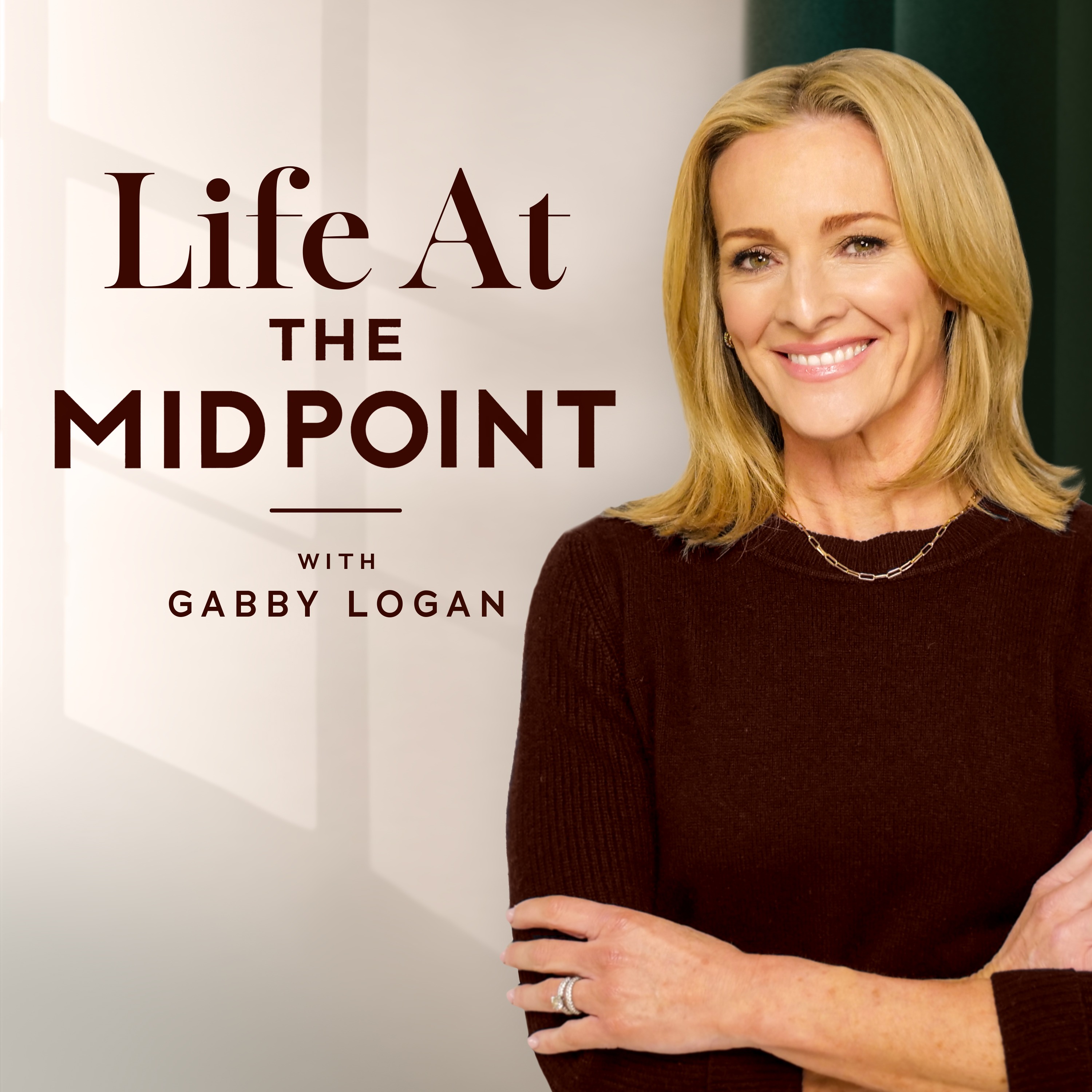
In this episode of The Midpoint, Gabby Logan speaks with Olivia Jackson, an elite stuntwoman who lost her arm and sustained severe injuries in a 2016 on-set accident while filming Resident Evil. Olivia discusses her long recovery, her Buddhist spiritual practice, and how meditation and embodied mindfulness have helped her manage chronic pain and rebuild a fulfilling life.
Topics stunt performer injury, chronic pain management, Buddhist meditation, phantom limb pain, trauma recovery, mindfulness and breathwork, adaptive sport and fitness
Mentioned in this episode Olivia Jackson
Chapters
- 0:01:14 Introducing Olivia Jackson
- 0:01:44 The accident and its aftermath
- 0:03:52 Recovery and physical resilience
- 0:07:31 Life without stunt work
- 0:12:05 Buddhism, pain and suffering
- 0:17:00 Horse riding and finding new joy
- 0:26:15 What meditation really means
- 0:35:46 Finding purpose and helping others heal
Partner with Life At The Midpoint
Life At The Midpoint is produced by Audio Always. We work with brands on sponsorship, advertising and partnerships across our network of podcasts, reaching engaged listeners and viewers.
Advertising categories Injuries, Equine Sports, Spirituality, Horse Racing, Buddhism
Show notes
Welcome back to The Midpoint, the podcast where we pause halfway through life’s journey to reflect on the moments that change us. Today’s guest is Olivia Jackson, an elite stuntwoman who has worked on some of the world’s biggest films.
In 2016, Olivia was involved in a serious on-set accident that resulted in the loss of her arm, bringing her career and life to a sudden halt. What followed became a powerful midpoint—one of recovery, resilience, and redefining who she is beyond the work she once knew. Today, we’re pleased to share her story and learn how her incredible resilience has ensured that her life is as fulfilled as before.
Hosted on Acast. See acast.com/privacy for more information.
Full transcript
Gabby Logan 0:01:14 Hello and welcome to The Midpoint. My guest today was living a high-energy, high-octane life of a successful stuntwoman. when an accident on the set of Resident Evil in South Africa resulted in horrific life-changing injuries. The force of a crash between the motorcycle she was riding and a crane operating a camera was so horrific it ripped off half her face. Her spine was severely damaged, and eventually her arm would be amputated after she'd spent 17 days in a coma.
Gabby Logan 0:01:44 She'll live the rest of her life managing the pain that results from that accident. And that is primarily what I want to talk to her about, because Olivia Jackson, as you can imagine, somebody with that kind of passion and energy, didn't sit still. As soon as she could start moving, she did. And she started using breathwork to help her manage that pain and not just exist, but to actually live a full and active life. She's a Muay Thai fighter, a dressage rider, and I think an all-round inspiration.
Gabby Logan 0:02:15 So let's
Gabby Logan 0:02:15 welcome Olivia to The Midpoint. Olivia, welcome to The Midpoint. Thank you so much for coming on.
Olivia Jackson 0:02:23 Oh, thank you. Thank you for having me.
Gabby Logan 0:02:25 I gave a little bit of your story in your introduction today. How are you talking about the day when your life changed forever?
Olivia Jackson 0:02:33 I'm better with it now. So yeah, I'm happy to talk about it.
Gabby Logan 0:02:37 I imagine a lot of it had to be pieced together for you. Afterwards in terms of people's recollections of the day?
Olivia Jackson 0:02:45 Well, strangely enough, I actually have quite a good memory of the day, like all the way up until the actual, just the actual accident, which is amazing. But because I was in a coma for a few weeks, there was some processing going on while I was in the coma. It was just a bit deformed. So when I woke up, I kind of knew what was going on. There was just so much fear, confusion, and all that.
Olivia Jackson 0:03:17 So it kind of took a little while for all the pieces to fall into place.
Olivia Jackson 0:03:24 But yeah, strangely enough, luckily enough for me, because my body was so broken, so severely injured in so many ways, I didn't even have space or time to worry about what's my life now and all that. So it actually saved me in some way from getting into the mental suffering from it because I just had to be 100% trying to fix my body. I had to learn to walk, I had to learn to sit and all that.
Gabby Logan 0:03:52 So you kind of almost kicked into gear as the sportswoman. that you were. You treat— you treated this like a process. This is, this is what we've got to do right now.
Olivia Jackson 0:04:04 Yeah. And the surgeon— so I was very fortunate to be in a very specific trauma ICU in Johannesburg, South Africa, because that's where we were filming. And the surgeons there in the ICU said the thing that saved my life was my mental strength, but also the physical strength of my body. Because they said if my shoulders and my back and all my muscles and bones weren't so strong from so many years of sports, I would've just got ripped off completely. My whole shoulder would've come off with the arm.
Gabby Logan 0:04:41 And that would've been you finished. There would've been no—
Olivia Jackson 0:04:45 Definitely.
Gabby Logan 0:04:45 Yeah. Because I mean, I've described some of your injuries in the introduction. And your face, which I can't believe, you know, you're a beautiful woman and you look fantastic today. I can't believe the injuries that you had on your face. When you woke up, you're dealing with the process of how to make everything work again and how are you going to use this body to do what you wanted to do with it. And there was a real positivity. There was also a physical side of this that was the aesthetic. of what had happened, and your face was, was very badly damaged. How, how quickly did you come to terms with that?
Olivia Jackson 0:05:26 I mean, that, that's been a really hard shift, actually. Um, I mean, you can't see now much on the camera, and I've got makeup on, but my face was degloved. So I've got a scar running all down my face here. Um, and if you don't know what degloved is, it's the skin's ripped away from the bone. So you could actually see my teeth through my face, apparently.
Gabby Logan 0:05:48 Wow.
Olivia Jackson 0:05:49 So yeah, the change in my face has been really challenging. I've got lots of scars everywhere and a little chunk like out my cheek here. But I guess at the same time, I've also moved into becoming middle-aged. So it's like a shift that's happening A double time, I guess.
Gabby Logan 0:06:13 And acceptance.
Olivia Jackson 0:06:14 Yeah, yeah.
Gabby Logan 0:06:16 You know, when you sometimes hear people say, oh, I love, I love these lines, or I love these scars because they remind me, you know, of what I've done in life. Are you, are you at that stage yet? You know, when you take, take your makeup off and you look in the mirror, do you, do you have that feeling?
Olivia Jackson 0:06:32 Well, I've got over my body because I've gone for so many medical legal assessments. And in my— over my body, I've got like over 2 metres of scarring. There's so much scarring. Um, but most of it I don't— I don't know. I think, as you say, acceptance. It's just what it is, really. And it's also been 10 years, so I'm quite used to it. Quite used to the face that I see in the mirror, although it's getting a little bit older.
Gabby Logan 0:06:59 It looks great.
Olivia Jackson 0:07:00 Yeah, thank you.
Gabby Logan 0:07:02 Um, and, and the other thing about your transition from from before and after with an accident like this is you had this incredible, I described kind of high-octane, high-energy life as a stuntwoman, knowing that, or at least I imagine feeling that wasn't gonna be coming back anytime soon, that lifestyle that you had, which you obviously loved. How kind of, how did you deal with that to start off with?
Olivia Jackson 0:07:31 I mean, that's been the hardest part, actually. You know, the, the love of my life was motocross. I absolutely loved motocross. I miss motocross more than I miss my left arm, that's for sure.
Gabby Logan 0:07:45 Really?
Olivia Jackson 0:07:46 Um, and yeah, I was too— I was a stunt performer.
Olivia Jackson 0:07:49 I was always, always, always physical, riding motocross, training martial arts, travelling a lot, just hiking far, doing lots of things. I just loved that. It brought me so much joy. But in the beginning, when I was injured, there was a kind of denial phase where I thought I'd get back on a motorbike, I'd get back to doing these things. But soon I realised just how broken my body was or is.
Olivia Jackson 0:08:16 But I'm just the type of person that just gets on with it, acceptance. This is what it is. And what can I do to make my life as it is better? How can I still enjoy my life? So I still, I still train martial arts still to the day.
Gabby Logan 0:08:32 And I've seen the videos, they're incredible.
Olivia Jackson 0:08:34 Thank you.
Gabby Logan 0:08:35 And you fight?
Olivia Jackson 0:08:37 Uh, not anymore. I used to professionally, but in Thailand, but not anymore. No, I spar very, very lightly with the people in my gym, and they're very careful with me because no one can hit me in the head because my paralysis and blah blah blah. But yeah, it's like a timid version, but hey.
Gabby Logan 0:08:55 Do you get a little bit of the buzz, a bit of the adrenaline?
Olivia Jackson 0:08:58 Yeah, it's just a really good feeling. You know, it's such a tight community in martial arts. We have so much fun, we have so much laughter, and it's just really fun to move your body in that way. So, and I've been doing it for, you know, 25 years, so I just really love it. So it's just nice to do it even though it's a little timid version. Yeah.
Gabby Logan 0:09:20 And there are obviously the physical, the emotional, and there's relationships around you that that will change when something like this happens, because not everybody can accept or deal with that, can they? They can't understand how to behave. You don't know what people are going to do until they're tested. And I imagine there were people around you who really stepped up and others who perhaps didn't.
Olivia Jackson 0:09:49 The amazing part when I was first injured was the whole stunt community across the world were just so Incredible. And the public as well. They're just so incredible the way they supported me, and still to the day. And, you know, my family and my friends are always there. I don't notice anyone that didn't quite step up, but there's a definite shift in relationship with a lot of people because I guess I'm stepping into a different reality, right? Yeah. And how I relate to people.
Gabby Logan 0:10:21 So were you finding that difficult? Did you ever find it hard to, to not feel some kind of resentment about, you know, people who were moving on with their careers in the stunt, you know, community, or even having families and, you know, things that you thought your life might present?
Olivia Jackson 0:10:39 Yeah, I think for me social media was very challenging. I went off completely off social media for an entire year because It was very hard to see. I mean, social media is just, you know, it's hard. You don't even know if it's real or not. But I was seeing all my friends and my colleagues, like, doing all these cool movies and travelling all these cool places. I mean, I was just— I just felt really stuck where I was. So that was very hard emotionally. But I'm really grateful that I have a very longstanding spiritual practice, and that's, that's really, really carried me through the whole way.
Gabby Logan 0:11:19 And that was something you were doing before the accident?
Olivia Jackson 0:11:22 Yeah, I'm so, I'm so lucky. They're so grateful. I started to be a Buddhist when I was 18, in like the year 2000 or something. Yeah.
Gabby Logan 0:11:33 And that, and that you feel has been enormously beneficial in, in terms of your your journey to wellness?
Olivia Jackson 0:11:40 Oh yeah, so, so beneficial. I remember right from when I was in hospital, just lying there all night long, just all I wanted to do was scream in pain. And I just came back to like what I learned through Buddhism and the, the way that they teach you to be with suffering. And oh my God, it's just been so helpful. And through the years, you know, it's become now my life really.
Gabby Logan 0:12:05 Yeah. And that's what I wanted to really get into today was, was that and how you are dealing with the pain. So can you tell us, for people who don't know anything about Buddhism, what you are taught in terms of pain and how to deal with it?
Olivia Jackson 0:12:17 Well, there are many different ways to look at it, but pain and suffering are not the same thing. Pain is just pain, whether it is physical, whether it is emotional, but it is the way that we respond to that that creates the amount that we suffer from it. So Buddhism, and not just Buddhism, but a deep spiritual practice and a really embodied practice where you really go on an inward journey, it's so transforming and really helps you to deal with any life situation, whether that's physical pain, emotional pain, stress, or whatever it is.
Gabby Logan 0:12:59 So how does that look in practice? Is that meditation, or is that breathing? Because I know breathing is something that you have talked about being enormously beneficial for your pain management.
Olivia Jackson 0:13:12 And there are breathing practices, but that's not normally my style. For me, the, the style of practice that I do, it's a very embodied practice. So it's a lot of meditation. Um, so I do a lot of meditation myself and go on retreat quite a lot, and I teach meditation. But it's a very embodied style where you really just go inward.
Olivia Jackson 0:13:34 It's not about trying to be quiet in the mind or anything like that, or create a certain mindset. It's really just going inward, like, what is going on in my inner processes right now? How does that feel? How can, can I just be with that? Or am I in constant reaction to that?
Olivia Jackson 0:13:56 Um, and then by getting used to being with your inner processes, whatever those might be, it just brings you into a different relationship with them. So there's less inner conflict, and you just can feel more grounded and calm, um, even amongst chaos.
Gabby Logan 0:14:15 So the pain that you experience— and I've seen the images of your spine after the accident, and your back is, is an area that still has to be, to be managed, obviously. That, that pain you can eradicate through, through that practice, or, or at least take to a point that you're, you're able to function on a, on a daily basis?
Olivia Jackson 0:14:36 Well, the thing about my pain is nothing takes it away. Medicine doesn't take it away, surgeries, nothing takes it away. And when you know that you're going to be in pain for the rest of your life, every moment Of every day. It's a very different mind shift. It's a very— you have to take a very different perspective with it.
Gabby Logan 0:14:57 So right now, sitting there, are you, are you uncomfortable?
Olivia Jackson 0:15:02 Very. I'm always uncomfortable. So right now I've got like loads of neuropathic, uh, phantom pain going through my entire left arm that, you know, it's not there, but I feel like it's there. But only in the form of pain. And it feels like electric shocks, flesh-eating termites, you just name it. It's like an orchestra of pain all the way up through my neck and some of my face. My whole spine is in pain, my pelvis, my hips, all my muscles along my spine, my neck, my head.
Gabby Logan 0:15:38 So how are you having— how are you having this conversation with me and also managing to produce smiles?
Olivia Jackson 0:15:45 Well, that's the thing. Um, the ideal, especially with a spiritual practice, is, is not have to go into war with the pain or the emotional pain, but let it be there.
Olivia Jackson 0:15:59 If you can get rid of it, great. But if you can't, can you let it be there, but still, still do your life anyway? You know, can I just be with this pain in my body? It's a— so acceptance is a big part, accepting that it's there and just becoming friends with it in a way. So really spending time with it.
Olivia Jackson 0:16:21 And the more this spend— more time that you spend with it, the less of a threat it becomes. So you get to a point where you can just be in all that pain, but still have a conversation, still smile, still go out and having fun with my friends, still do martial arts.
Gabby Logan 0:16:38 And horse riding, I know, has become something as well that you, you, you, as you, I mean, as you would, you go through life-threatening injuries, your back is left looking like, you know, it's concertinaed and you lose an arm and you decide to pick up horse riding. What has that brought to your life, that relationship with a horse?
Olivia Jackson 0:17:00 I love horses. They're such incredible animals. I love them so much. And Riding them is fun, but just as an animal, the relationship is so incredible.
Olivia Jackson 0:17:14 And I actually, I had horse ridden before. I was training a little bit of horse stuff for stunts, but not— I was just a total beginner. And when I was able to drive my car again after the accident, about a year after the accident, I was driving down the road past about a mile from my house, and I saw this little sign on the side of the road that said horse riding lessons. So I was like, oh, okay, I'll go in there. So I pulled in there and said I wanted to start horse riding, and that was the beginning of my journey.
Olivia Jackson 0:17:45 But it was amazing. I love horses so much. They bring you so much joy. And
Gabby Logan 0:17:49 yeah, do they— my daughter's got horses and they've been around us for a long time. Do, do you think they get you? Do they— the energy that you get from a horse, you kind of really feel that they understand?
Olivia Jackson 0:18:03 For me, they really mirror you. So you can't hide. And this is quite interesting from a spiritual perspective as well, because we work a lot with energy in the body. And horses, you can't hide from them. You can't pretend that you're not stressed or pretend that you're not scared. And they pick up on it so quickly. They pick up on it in very tiny bodily movements that we as humans wouldn't pick up on. But, um, so it was very interesting to work with them in that perspective.
Gabby Logan 0:18:35 And did you, did you feel, because your horse presumably hadn't been ridden by— well, the first time you got a horse, not necessarily been ridden by somebody who had one arm— did you feel the horse reacting to that and kind of accommodating you?
Olivia Jackson 0:18:51 Yeah, it's not easy to find a horse that will accommodate it. Some are too sensitive and they get too stressed because it's a very different feeling for them in the mouth. I had unique reins made for myself where I could work one-handed. But, you know, I'd have to go and try horses and just see how they felt with it and how we clicked as well. So it wasn't easy finding a horse. And I, of course, really needed a safe horse, which is hard to find. Yeah.
Gabby Logan 0:19:20 One that's not too spooky and— But you found that, you found that relationship eventually, didn't you?
Olivia Jackson 0:19:26 Yeah. I need things, I needed a safe horse, but I like to have fun too. I like going out galloping fast, but it must stop when I want it to stop. Yeah.
Gabby Logan 0:19:37 So, the daredevil in you, the woman that wanted to take risks is still there and still needs that kind of scratch itching.
Olivia Jackson 0:19:45 Yeah, definitely. I'm still me. I'm just in a broken body, but it's still— I can still do things. So.
Gabby Logan 0:19:54 If I'd met you 11 years ago, take away all the physical things that have happened, what would I have noticed that was different about you as a person? Are you calmer now? Are you wiser?
Olivia Jackson 0:20:46 I'm probably quieter, I'd say. There's been quite a big shift in the last 10 years. When before the accident, I was quite wild and free and very confident and extrovert.
Olivia Jackson 0:21:03 But I'm naturally an introvert growing up. But after the accident, I went, everything goes inward. you know, your energy gets very dampened down and you find your way again, you know, kind of like finding your sense of identity again. But in the last 3 years, there's been quite a radical shift for me where I've kind of found that really innate, joyful, alive energy again. So it's kind of come alive in me, which has been amazing through my spiritual practice and meditation.
Olivia Jackson 0:21:37 Um, so now maybe not too different, um, except a little bit quieter. Yeah.
Gabby Logan 0:21:42 And coming, coming through the period of life, this, this kind of midlife period, will you experience the same kind of symptoms of change that, that women experience through their 40s and 50s? Or has your body already kind of had a radical shift in that sense? Because I know sometimes trauma can, can bring on menopause earlier in life?
Olivia Jackson 0:22:05 Yeah, I'm not sure how it will work with me. A bit differently, I'd say, because one of the strange symptoms that I had from my head injury— so I had a very traumatic, a big traumatic brain injury, and one of the big shifts that happened in my body was major hormonal changes. So I didn't produce melatonin for a long time and I actually fell pregnant more than once to the point where I had to go to the doctor. I took so many pregnancy tests, all positive. So I went to the doctor and I wasn't pregnant. It was the strangest thing. And I even had breast milk, actually.
Gabby Logan 0:22:47 Oh my gosh.
Olivia Jackson 0:22:48 And, and the reason why I found out was I was just totally randomly walking down the stairs in my house. And I just had this thought in my head that thought, I feel like I'm pregnant.
Olivia Jackson 0:23:01 I don't even know what that means, but it came to my mind. And then I thought, hang on, when last did I have my period? So I tested and I was pregnant. Went to the doctor and there's no— I wasn't pregnant. And it turns out that when you have a major head trauma, your hormones get all confused.
Olivia Jackson 0:23:22 And you produce— I was producing, I think it's called progesterone is the hormone. Yeah. So I was producing a massive amount of that, which is why I got breast milk.
Olivia Jackson 0:23:35 So yeah, I guess I've already gone through quite a few changes in that way. So it'd be interesting to see how— what happens when I get to menopause. Maybe I'll skip it.
Gabby Logan 0:23:45 Are you, are you under an endocrinologist or a female health doctor who is kind of looking at that already?
Olivia Jackson 0:23:53 Yeah, I've tried to see lots of specialists for it, including endocrinologists, and I just couldn't find any answers actually. It just came back to, well, this is how it is really.
Gabby Logan 0:24:07 And the head injury, the head injury itself, how, how did you get through that? And what, what were the kind of manifestations of the, of the head injury at first?
Olivia Jackson 0:24:20 Oh, the head injury was awful in the beginning, you know, mixed with the drugs that they give you in hospital. I had the scariest hallucinations, honestly.
Olivia Jackson 0:24:32 I was— I'll try to escape from the hospital once because I was convinced 100%, even with my eyes open or closed, that everyone was a zombie because I had got to watching um, The Walking Dead before. So that was like in my mind. So I thought everyone was zombies and I was trying to escape. I couldn't because I was paralysed and stuck to the bed, but it was very scary. And that took a little while to kind of go away.
Olivia Jackson 0:25:01 Um, and then it just, you know, became a lot about the hormone issues that I have. And, um—
Gabby Logan 0:25:06 So your memory is good?
Olivia Jackson 0:25:08 My memory now is very good because of all the meditation that I do.
Gabby Logan 0:25:13 Mm-hmm.
Olivia Jackson 0:25:14 It was really bad. I could hardly remember one moment to the next. And my brain— my brain is slower, but it was much slower before. So speaking was very difficult. Using my tongue was very difficult. Um, telling a story was difficult. Um, but, but now through lots of meditation, my memory's pretty sharp. If it happens in front of me, if I'm aware, I'm like sharp on it. So yeah.
Gabby Logan 0:25:41 So, so the meditation, you, you attribute the, the progress to the meditation that you've been doing in terms of your, um, vocal skills and your, and your memory working?
Olivia Jackson 0:25:51 Yeah, I think specifically my memory, because through lots of— through years of meditation, you become really present with whatever's happening. And if you're really present with something without the you know, stuff going on behind the scene or without being distracted in thoughts or other stuff. It goes, you know, you just remember it so clearly.
Gabby Logan 0:26:15 So, what does meditation, what does it actually mean to you? Because a lot of people say, I can't meditate. I, you know, I get distracted by everything that's going on. When you say meditation, what are you talking about?
Olivia Jackson 0:26:31 Well, that's the thing most people think. If you don't meditate and you think about meditation pretty much all the time, they think that you're going to clear all the thoughts in your head and think nothing. That's not it at all.
Olivia Jackson 0:26:45 Good. You can do that kind of meditation, but it's not really that helpful because, as I was saying before, it's beneficial for your meditation to help you in your daily life, right? Because you're only meditating for an hour or 10 minutes in the morning, and then you live the rest of your life. So it needs to really support your life. And so if you just sit for half an hour in the morning and clear your head of thoughts, it's not really— you know, it's quiet, but it's not really going to happen.
Olivia Jackson 0:27:17 Then you go into your chaotic life.
Gabby Logan 0:27:18 Mm-hmm.
Olivia Jackson 0:27:20 So the style of meditation that I do is just being present with whatever's there. So just First of all, there's a journey where you have to learn to go inward. So instead of being a million miles an hour, they're just coming back.
Olivia Jackson 0:27:36 It's very embodied. So coming back to your body. So instead of just being in the head, just really feeling your body. And that can be a different process for everybody, because we're all in a different relationship with our body. Mm-hmm.
Olivia Jackson 0:27:52 So yeah, it's just really embodied and being present in the body. And if you're, if you're thinking, that's fine. Can you just be, can you just witness the thinking? And in time, it just, the whole feeling of your whole body and your being really just becomes really spacious and open. And there's a lot more allowing.
Olivia Jackson 0:28:15 So every life, just, you just let life flow. Like it wants to flow. Yeah.
Gabby Logan 0:28:20 So would you say your life flows almost all the time because of that?
Olivia Jackson 0:28:29 Well, I'm not perfect, but I'm much more, yeah, compared to what I used to be before I did so, so much meditation.
Olivia Jackson 0:28:40 I'm a lot more easy with things. So like talking about the pain, Yeah, there's pain there, and it's a lot of pain.
Olivia Jackson 0:28:50 20 years ago, I'd be screaming if I had this amount of pain, but now I can much more easily just be with that. And if I'm really stressed, of course I get stressed. It's not like you become Buddhist and you don't get stressed anymore. But if I'm stressed, can I still feel okay within that? If I'm really nervous to do something, Can I just do it anyway and let myself be nervous?
Olivia Jackson 0:29:15 So in that way, I feel much more in flow and kind of at peace with yourself.
Gabby Logan 0:29:20 I feel very peaceful looking at all the gong baths behind you, actually. They're making me feel quite relaxed because I've only experienced it once, but it is an incredibly deeply relaxing thing. Do you do that for other people, or is that for yourself?
Olivia Jackson 0:29:37 No, I was doing it for other people, but actually it's physically very demanding. Because if you go to a gong bath or a sound bath, you just get there and you lie down and like, oh, this is great. But the person setting it up, especially if I'm renting a place, a hall or something, it takes me an hour to set up and an hour to do it and an hour to break down, and then I've got an hour to unpack. So physically— for my back injuries, it was just too demanding. So now I do it for like 1 or 2 people in my home and just very chilled, more for friends really, and for myself.
Gabby Logan 0:30:12 Yeah, I was going to say you can do it for yourself and still get the same sense of relaxation.
Olivia Jackson 0:30:16 Yeah, I love it. It's, it's amazing. So sometimes if I'm in, for whatever reason, I don't feel like meditating. Sometimes I'll just— I've got everything set up there, so I'll just spend an hour rather Just playing with the instruments.
Gabby Logan 0:30:31 And, and your relationship, your, your relationship, life relationship broke down after the accident. Did you— were you worried or concerned at that point that you would never have the confidence to, to enter into new relationships? Was that something—
Olivia Jackson 0:30:50 Are you talking about a romantic relationship?
Gabby Logan 0:30:53 Yeah, yeah.
Olivia Jackson 0:30:55 And yeah, I think when my romantic relationship broke down, it was, it was a major shift again. You know, I live in a foreign country. I don't have family around. I don't have very long-term friends around.
Gabby Logan 0:31:08 Hmm.
Olivia Jackson 0:31:09 It was very scary for me financially, emotionally, everything, mentally, um, which I'm still kind of processing now.
Olivia Jackson 0:31:18 It has— hasn't been too long, but I think I've gone through a phase where there's so much healing that's been going on in the past years. I actually feel in a position now where I feel in a very good position where I don't feel like I need something from someone else, as in a romantic partner. There's a— there's been some years where I really just need to find that within myself to be really healed as much as I can, content within myself. You know, it sounds really cheesy, but find happiness from within myself so that I'm in a position where I'm not needing to be loved by someone or needing support from someone. You know, I could find that within myself.
Olivia Jackson 0:32:08 So I don't know, I just haven't met anyone yet.
Gabby Logan 0:32:11 But if, but if, but if you did, you feel now that you have the confidence to enter into a new relationship if that came across your path?
Olivia Jackson 0:32:20 Yeah, definitely. I am very scared of getting stuck in a difficult relationship again. That is a bit scary for me. I would have to pick very wisely. But I am also a little bit uncomfortable, I would say, with my physical my physicality. Because the last time I got into a relationship, um, with my ex-husband, it was before the accident, and my body was, you know, fit, strong, healthy, sexy. But I just feel it would be a bit strange for me now. But
Gabby Logan 0:32:58 do you feel a bit more vulnerable?
Olivia Jackson 0:33:00 Yeah, I feel, I feel, um, I don't feel sexy. My physical body doesn't feel sexy. Um, and yeah, more vulnerable, I guess.
Gabby Logan 0:33:14 So that's something you still probably would do some work on to get to a point where there's, there's more acceptance to come almost in that respect.
Olivia Jackson 0:33:24 Yeah. And I, and I think it would have to be the right person anyway. I think when you, when you have, when there's genuine love there, it's a bit different.
Gabby Logan 0:33:33 Yeah, exactly. Yeah. When there's a genuine connection, it goes beyond, doesn't it? And that, that can then make you feel very differently about— I mean, you must be, you must have very conflicting kind of feelings about your body. On the one hand, it is incredible. It is here. And the things that it can still do is just, just amazing that it has served you beyond the accident in the way it has.
Olivia Jackson 0:33:59 Yeah.
Olivia Jackson 0:33:59 I mean, as you said, that's the thing, this body, in some ways, it's It's just really sad because it's really— I'm so skinny and I can't put on weight. So there's nothing I can eat that makes me put on weight. I feel very skinny and kind of I'm getting a little older and I'm very fragile.
Olivia Jackson 0:34:19 But at the same time— and I'm full of pain. But at the same time, this same body is the body that got through all that stuff. Yeah. that survived that accident, which is, you know, not many people in the world have survived an accident and injuries like that. This body did that, and this body can still go out and do martial arts.
Olivia Jackson 0:34:42 It's still horse riding and do all those things. So yeah.
Gabby Logan 0:34:45 And so has there been a point where you've thought that you understood why it happened? And I don't mean why the accident on that day happened, but why it happened to you. Olivia, and what you had to learn? Or do you still wonder, why me?
Olivia Jackson 0:35:02 I don't wonder why me, but— and I don't know, I don't ever think, I don't think why it happened, um, to me specifically. I just feel like it is what it is,
Gabby Logan 0:35:19 you know, because some people, they feel like they suddenly had a purpose beyond the accident, or they, you know, whatever it was, the life-changing moment that physically changed them, maybe they then see a purpose for, for some other reason. Have you— because your purpose before was, you know, you described it so articulately about, yeah, being on set and having this, this, you know, this great career. Have you found the next purpose?
Olivia Jackson 0:35:46 Yeah, I think it's really brought me back into relationship with that Before the accident, even though I was Buddhist already, my life was very much about me. It is my career. I am doing this next movie, working with this next actress, and earning this amount of money, etc. And I am racing this race in motocross and doing all this stuff.
Olivia Jackson 0:36:13 But when that is all just stripped away, It kind of really brought me back into relationship with who am I beneath that action? What's more important than all that stuff? And brought me back into deeper relationship with my spiritual practice and really getting to know myself more deeply.
Olivia Jackson 0:36:34 And I guess finding purpose in sharing that incredible healing that it's brought me, that I've learned from my teacher, Rob Preece. over the years. Oh, it's just so healing and so transforming for my life and those around me, my Buddhist friends. Um, and I've now, you know, bringing that to other people as well, supporting people on their journey of healing, physical and emotional. Yeah.
Gabby Logan 0:37:02 So your, your purpose is, is to help heal others then?
Olivia Jackson 0:37:06 Yeah. Yeah. It's more like facilitating more than helping, because I don't think of it in ways like, I know, and this is how you do it. Yeah, it's more like, this is my journey and this is how it's really helped me, and this is how it transforms your life. Um, so, you know, sharing with others and how— and it's also very personal, so seeing how it works for them.
Gabby Logan 0:37:34 And I think if I'm listening to this and I'm intrigued about how this might help me if I was feeling pain, I suppose the question I would want to know as well is, do you do that alongside pain relief still, like orthodox medicine? Do you have to take medication alongside it?
Olivia Jackson 0:37:49 Um, yeah, I take, um, one kind of modern medication now. I used to be on 13 different painkillers.
Gabby Logan 0:38:01 Wow.
Olivia Jackson 0:38:01 All at the maximum dosage. And you're talking 2 different types of oxys, all these strong, strong, strong medications. I have a picture of all the tablets I used to take, like 50-something tablets in a day. But now over the years, as my relationship with the pain got a bit more comfortable, more healthy, I was able to drop the medication one by one, very little bit at a time. And I'm now on one tablet that's, that's dropped to quite a low dosage. So
Gabby Logan 0:38:35 Well, that's amazing. That's incredible. Yeah. Well, keep going and keep being an inspiration. Your social media, I think, uh, for anybody who hasn't seen it, is, is well worth a look. And, and you definitely have got an incredible fighting spirit, Olivia. So thank you. I'm sure you will continue to inspire others on their healing journey. And you've made me want to go and put myself in for a gong bath, that's for sure. Thank you so much for coming on The Midpoint.
Olivia Jackson 0:39:03 My pleasure. Thank you very much for having me.
This transcript was generated automatically and may contain errors.